Emerald Fennell has repeatedly described “Wuthering Heights” not as a direct adaptation of Emily Brontë's gothic classic, but as her 14-year-old self’s interpretation of it. Rather than bringing both halves of the novel, in all its density, to the screen, she focused on what kept her glued to the page (and turned on) as a teenager: the complicated romance and retribution between Catherine and Heathcliff.
At every turn, the blockbuster romance, starring Margot Robbie and Jacob Elordi, unfolds like a teen’s bodice-ripper fantasia: There’s an anachronistic avant-pop soundtrack from Charli xcx, fairy-tale-like costumes, restrained kisses in the rain. And lots and lots of ribbons.
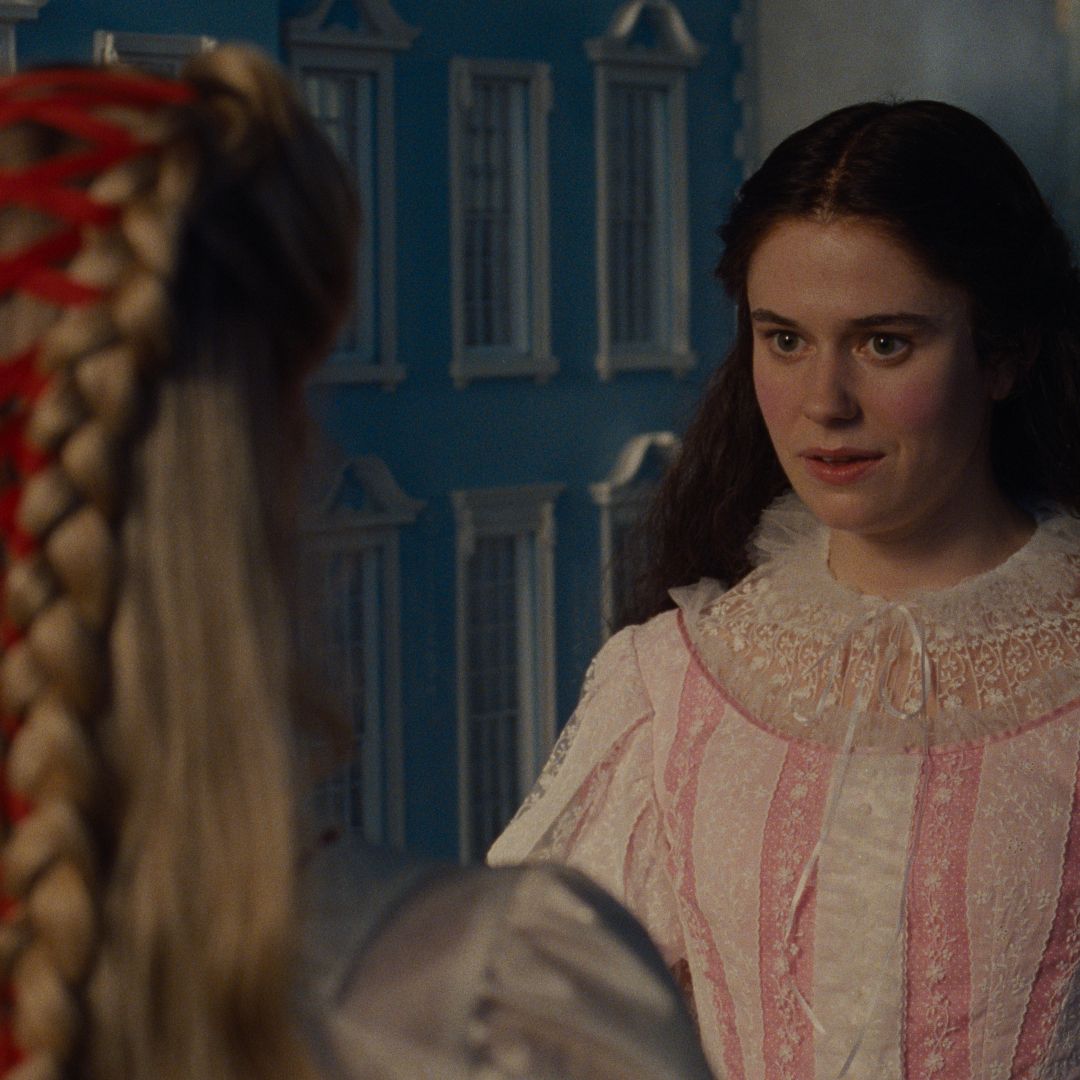
The feminine accessories aren’t just pretty to look at; they are a deliberate tie-in to Fennell’s interpretation of the source material. In the film, ribbons, bows, and braids, inherently synonymous with girlhood, come to symbolize how the things that frighten and awaken our sexuality in our youth shouldn’t be suppressed.
It’s Alison Olivier’s character, Isabella, in particular, whose journey embodies the symbolism behind the ribbons. At her residence, Thushcross Grange, the wealthy, sheltered young woman spends her days in a room dedicated to sashes and bows, making creations like dolls crafted from human hair. While her proclivities may make her appear naive, her girlishness ultimately comes to represent her own self-discovery and how she revels in control.

Siân Miller (who previously collaborated with Fennell on Saltburn) came on board, she was thrilled to find a character obsessed with ribbonry. “She’s an expert in her confinement,” Miller tells Marie Claire of Isabella. “But what's incredible is that sort of childlike innocence for her age. She’s very little-princess-like.”
That youthfulness informed Miller’s artistic direction. “It really turned into, Okay, what we want to do is try to show something where Cathy is Isabella's doll,” she explains. (In terms of inspiration, Miller says Fennell came prepared with extensive mood boards; while Miller looked to Pinterest references of Old Hollywood and historical paintings of Lovelock hairstyles.)

Miller describes Isabella as being about “administering a sense of control.” So it’s by design that Isabella becomes the character who brings the kink. When she and Heathcliffe elope, and she consents to his requests of dominance and submission, Miller notes that “you see her blossoming as a woman.”
“You see this part of her that's emerging—that's just been woken up. As alarming as it might be to some people in the audience, it is coming from her,” Miller continues. “It’s very interesting to see that transformation from somebody who appeared so quintessentially dressed up like a child-like, young woman.”

In the second part of Isabella’s arc, her hair is now worn loose, but bows and rosettes still line her gowns. Oliver plays the character like she’s constantly frothing at the mouth, eager for something more, but she’s still the woman with the ribbon room in these fetishistic scenes; she’s just now allowed herself to come undone.
“Wuthering Heights” is simply the latest chapter in the recent proliferation of bows and conversations about the reclaiming of girlhood in pop culture and fashion. The discourse perhaps last reached a fever pitch when Robbie’s last major blockbuster produced under her LuckyChap banner, Barbie, hit theaters in summer 2023. But Fennell’s ribbons are less about reclamation than motifs to unravel—and ones that fit into the cultural/stylistic moment that’s proven here to stay in its own way. They speak to how closely innocence and danger can coexist, especially for young women coming into their own, like they’re bound together in a tight knot. It’s perhaps what Fennell felt at 14, and how she’s looking back on that moment with new eyes in the form of her latest film—all tied up in a bow.