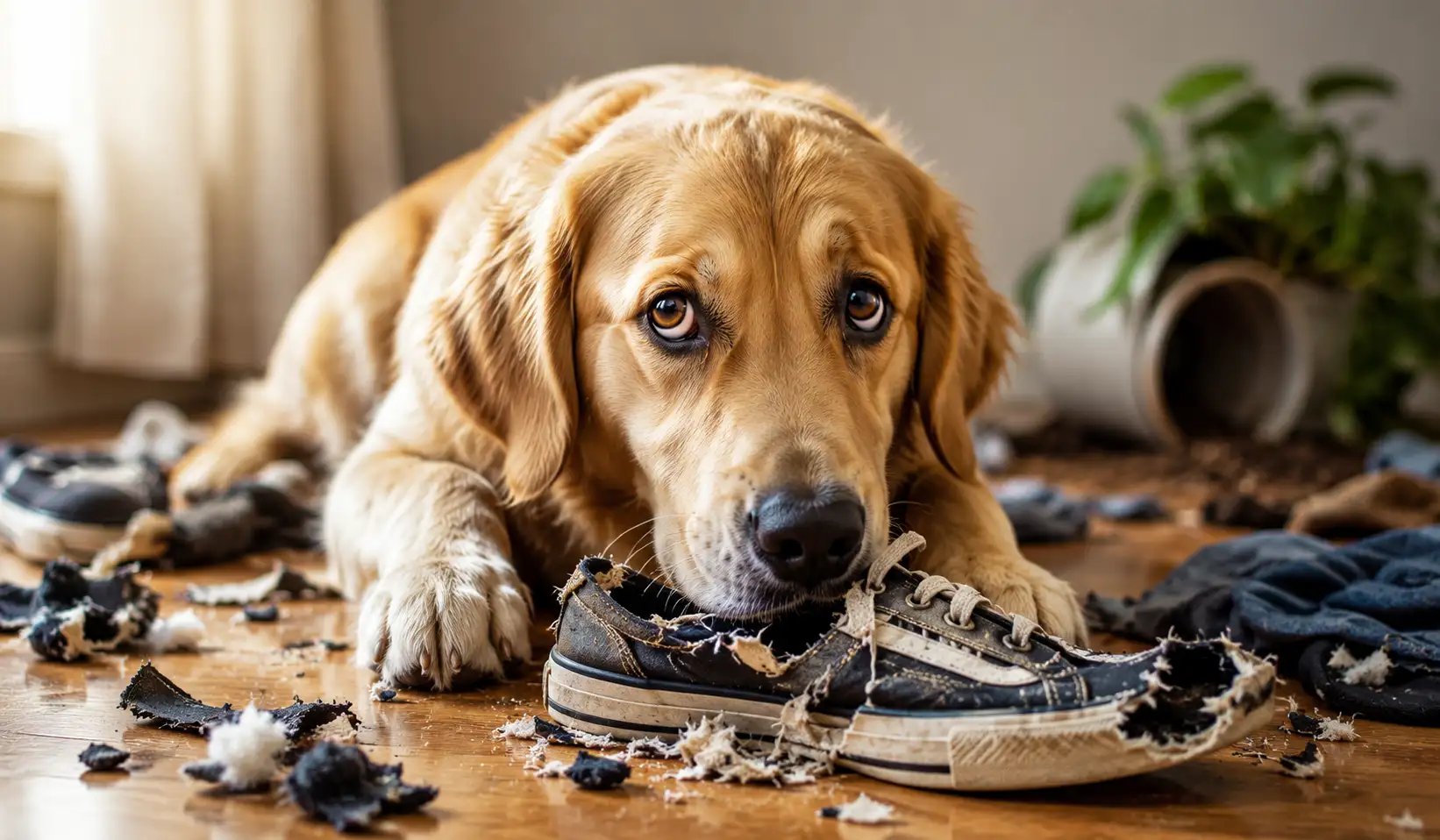
Millions of Americans are convinced they've seen the look. A torn-up couch cushion lies on the floor, the trash can has been raided, or a favorite shoe has been chewed beyond repair. Before a single word is spoken, the family dog lowers its head, avoids eye contact, and slowly backs away. To many pet owners, the message seems obvious: "My dog knows it did something wrong." But scientists who study canine behavior say that familiar expression may not be guilt at all. Instead, it could be one of the biggest misunderstandings in the relationship between humans and dogs.
As more owners embrace reward-based training and seek expert-backed advice, understanding what dogs are really communicating has become more important than ever.
Why do dogs look guilty after they've done something wrong?
The answer begins with one of the most influential studies in canine behavior research. In 2009, Alexandra Horowitz, a dog cognition researcher at Barnard College in New York, designed an experiment to test whether dogs truly show guilt or whether people simply interpret their behavior that way.