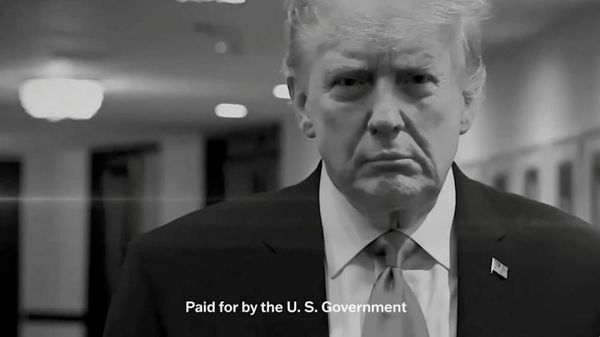
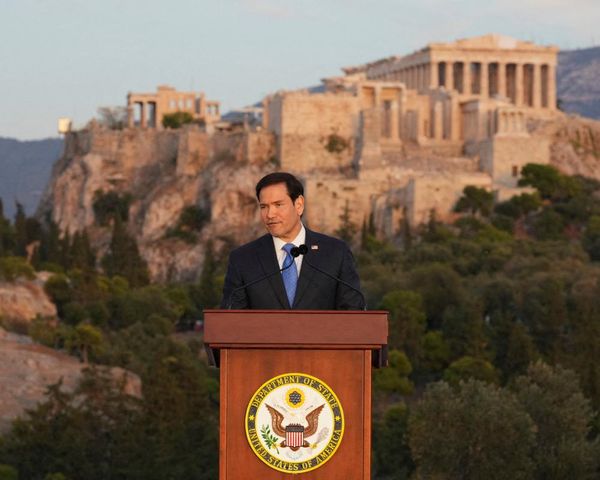
President Donald Trump started peace negotiations over Ukraine with dramatic flair. Although he had been expected to send his envoy Keith Kellogg to present a peace plan at the Munich Security Conference this week, Trump instead had a phone call with Russian President Vladimir Putin, announcing on Wednesday morning that they "agreed to have our respective teams start negotiations immediately." Along with the peace talks, the two countries announced a surprise prisoner exchange. And Trump snubbed Kellogg, leaving him out of the announced negotiating team.
European governments panicked at the notion that they would be left out of any final deal. "Peace can only be achieved together. And that means with Ukraine, and with the Europeans," German Foreign Minister Annalena Baerbock told reporters. "There will be no just and lasting peace in Ukraine without the participation of Europeans," French Foreign Minister Jean-Noël Barrot said to France's cabinet. Leaders across Europe made similar statements.
The talks about Ukraine are about more than Ukraine, and everybody on both sides of the Atlantic knows it. The new Trump administration seems eager to draw back from America's post-World War II role as Europe's military protector. In a speech on Wednesday, a few hours before Trump's announcement, U.S. Secretary of Defense Pete Hegseth called on the other members of the North Atlantic Treaty Organization (NATO) to pick up the tab for defending Ukraine and Europe.