Get all your news in one place.
100's of premium titles.
One app.
Start reading
The Guardian - UK
The Guardian - UK
World
Nesrine Malik

Is the growing use of GLP-1s reshaping ideas of Black beauty?

Illustration: Black women surfing on injectables with tape measure in the foreground.
Creating layers of desirability … a class-based mission to lose weight may be behind wider usage of GLP-1’s. Illustration: Hannah Buckman

These days, I barely make it through the week without seeing news about what weight-loss medications, such as Ozempic and Mounjaro, can now supposedly achieve. Beyond the health benefits of shedding fat, “GLP-1” medications are also touted to treat addiction, and, as reported recently, even lowering the risk of breast cancer. But the extreme weight loss fuelled by these drugs is also reshaping beauty standards.

In this week’s edition, I’m digging into whether Black beauty ideals across the diaspora are under threat from the spread of weight-loss medication. It’s a delicate conversation that I’ve been eager to have for a while.

How are GLP-1s affecting the diaspora?

Before we get into it, a disclaimer: I believe that GLP-1s are a Good Thing™. These drugs, which mimic a natural hormone in the body called glucagon‑like peptide‑1, were initially designed to manage type 2 diabetes by regulating blood sugar, slowing digestion and reducing appetite. I come from Sudan, which, like the surrounding east African region, and many parts of the Caribbean, is blighted by diabetes. The disease is so ubiquitous that many are resigned to getting it at some point in life, and suffer through symptoms ranging from regular loss of consciousness to amputations. For Black communities, who face numerous socioeconomic factors that increase their chances of getting diabetes, GLP-1s potentially pose health benefits that are nothing short of revolutionary.

But. But. I worry about its effect on how we relate to curvy bodies across the diaspora. There was something precious and confidence-building about growing up in a Sudanese culture, where I hardly ever witnessed someone tell a girl to lose weight. If anything, the affectionate hint was the opposite. In Sudan, in the run-up to a wedding, mothers and grandmothers would sometimes make a thick pudding to feed brides – the very opposite of going on a crash diet to fit into a wedding dress. With the rise of weight-loss drugs, I wonder if this appreciation of healthy, fuller bodies is under threat.

***

From ‘big size’ to ‘slim, tiny

Uptake varies among Black people globally, with weight-loss drug distribution dependent on robust health insurance systems, or publicly funded prescriptions. But reports suggest that the majority-Black countries where usage has increased most are developing economies with a growing middle class. That class is exposed to global trends and has the disposable income to participate in them. On the African continent, reports of accelerating use of weight-loss drugs are coming from countries with larger middle classes, such as South Africa, Ghana, and Kenya. The whole business seems to have become imbued with connotations of social mobility.

I’ve been following the weight-loss journey of one Kenyan influencer on Instagram for more than a year, and have been struck by how closely her other hundreds of thousands of followers seemed to be tracking her process. As she updated them on the granular details of her liposuction and injections, some followers shared that they were saving up for the same, and couldn’t wait to level up. Broadly, the drugs remain privately prescribed, and are therefore accessible only to the affluent. This creates another layer of desirability, whereby losing weight is associated not just with a sort of digital status, but a class one, too. “Big size”, one weight-loss drug-taker in Nairobi told the BBC, had previously been the fashion – but now the trend is to be “slim, tiny … you can see how it is changing”.

The question here is: are these Black communities less comfortable in their weight because of shifting localised beauty ideals? Or have weight-loss drugs simply lowered the barrier to achieving the bodies that they have always wanted?

***

If Serena Williams can’t resist them, what hope is there for the rest of us?

What does seem clearer to me is that there is a cultural licence to take weight-loss drugs that starts, as ever, with celebrities. Oprah Winfrey had famously been trying to lose weight on and off for decades, then found the drugs and – whoosh – it was gone. I constantly find myself doing double takes when I see an actor or TV presenter whom I vaguely recognise, only to realise that they are actually people I know well who have become unrecognisable due to what the internet has dubbed “Ozempic face”.

Serena Williams, who was surely the archetype of a powerful, bigger Black woman, is not only taking weight-loss drugs – but recently starred in a series of GLP-1 adverts for the telehealth company Ro. As someone who’s closely followed the bullying and scrutiny Williams has faced for her statuesque and muscular physique, I admit I found the footage hard to stomach. There is something dystopian about seeing her in her tennis gear inject herself, boast that she was down 31 pounds, and say: “After kids, it was what my body needed”. Of course, she owes no one an explanation, and is free to do what makes her feel her best. But I can’t help but think that if Williams, a sports legend and role model to so many Black women, can’t resist the pressure, what hope is there for us lesser mortals?

***

An uncomfortable – but necessary – discussion

I know I’m on thin ice here. It’s a grim thing to pore over women’s bodies and choices, and it feels impossible to do without appearing to pass judgment. Simultaneously, there is something so unsettling coming to pass, and it would be strange not to name it. It seems as if we are abandoning appreciation of, and comfort in, natural variation in our bodies. In doing so, I worry we might also relinquish the safe refuge that many Black women have found in our own, culturally specific beauty standards.

Ironically, the emerging beauty standard for the 2020s is beginning to blend traditionally Black and white-coded features – the sort you see in the Kardashian body. We now want to have a slight frame, small waist and slim nose, but to mix and match that with full lips, sculpted cheekbones and bigger augmented butts. The result is a hybrid of insecurity.

I don’t want to fetishise or romanticise the well-trodden historical caricature of the round, hearty Black woman – my own grandmother died young from a diabetes-related illness. But surely there is a middle ground between an increased awareness of our health, and vanishing into a monolith of bland, unfed identikit bodies. Undifferentiated by culture, undiversified by social values, customised through hunger, chopped and changed through surgery – I fear we’re merging into a single image that, at its heart, signals to women that their natural bodies were never good enough.

Illustration by Hannah Buckman

• To receive the complete version of The Long Wave in your inbox every Wednesday, please subscribe here.

Tap in

Have GLP-1s reached your community yet? How do you think they will impact Black people’s health, beauty standards and wellbeing? Share your thoughts by replying to this, or emailing us at thelongwave@theguardian.com and we may include your response in a future issue.

Diaspora discusses

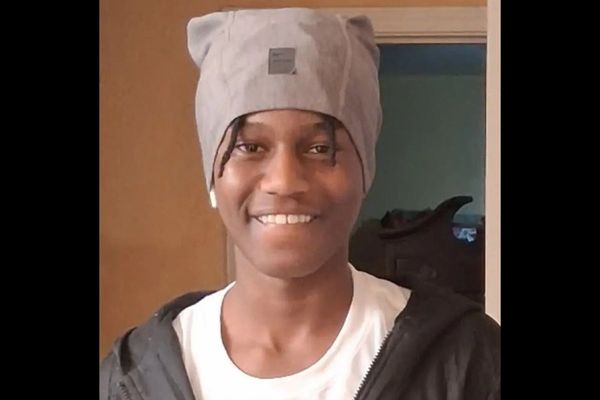
Last week, we covered the death of Yves Sakila, a Congolese man who died in Ireland after being pinned down by security guards for almost five minutes. We asked readers who are Black and Irish about their experiences of race in Ireland. Here’s what they said:

I often encounter the idea that Ireland is uniquely welcoming and somehow exempt from the racial issues seen elsewhere. But racism does exist here. What were once microaggressions have, in many cases, become outright aggression. When speaking about politics online, I’ve faced serious racial harassment and threats that I’ve had to report to the Gardaí. I also find myself constantly having to defend my Irishness. Irish exceptionalism can prevent honest conversations about race, fuel backlash against people speaking out, and in my case has contributed to feeling unheard and dismissed when I talk about what I’ve experienced. – Miriam Boosh, Carlow

As a Black Irish person, I’ve been thinking about Yves Sakila a lot these past few days. He could’ve been any one of us. A friend. A brother. Someone from our community. There’s a sadness hanging over a lot of Black Irish people right now. Not just because of what happened to Yves, but because it’s brought up a lot of feelings that are hard to put into words. My heart goes out to his family and everyone who loved him. Rest in peace, Yves.David Bakare, Roscommon

Sign up to read this article
Read news from 100's of titles, curated specifically for you.
Already a member? Sign in here
Related Stories
Top stories on inkl right now
One subscription that gives you access to news from hundreds of sites
Already a member? Sign in here
Our Picks
Fourteen days free
Download the app
One app. One membership.
100+ trusted global sources.