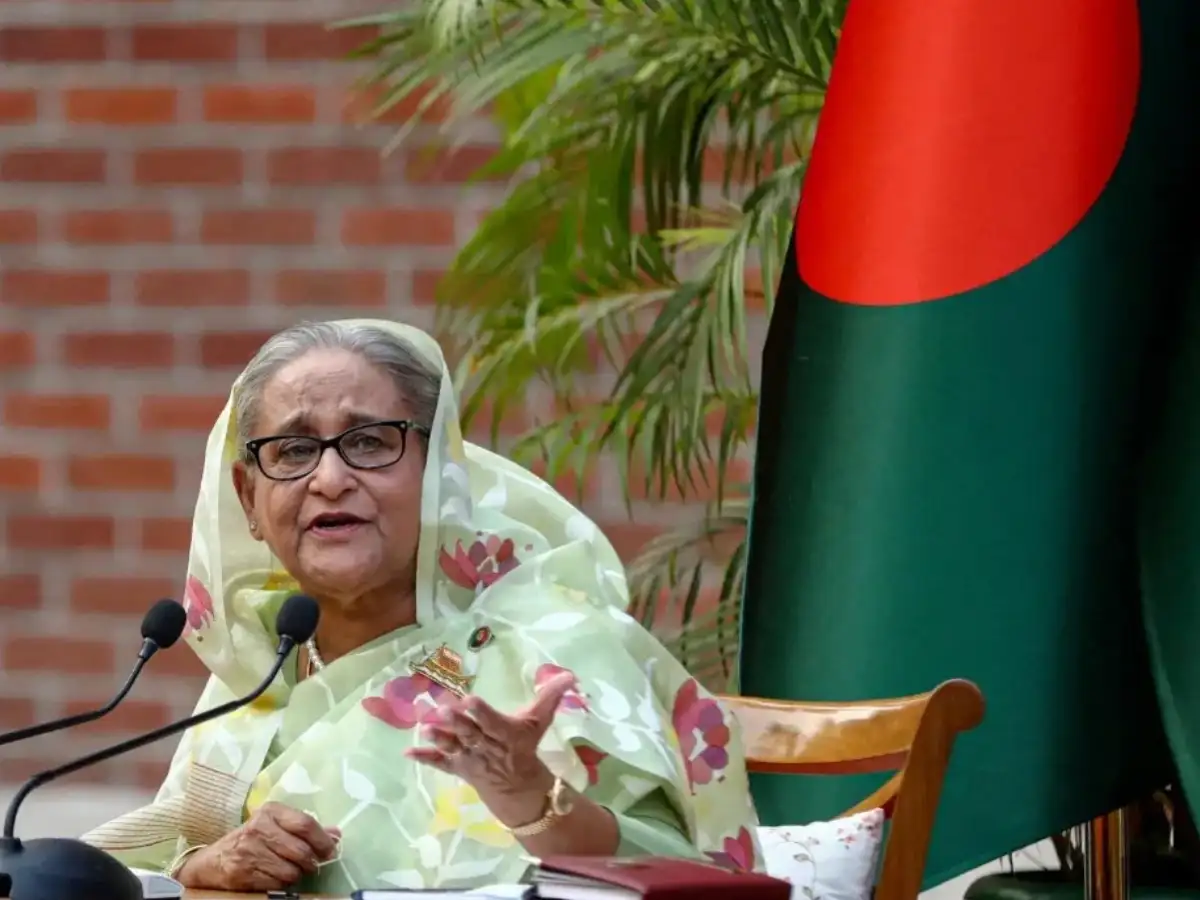
For nearly two years, Sheikh Hasina's political future has all been about exile, trials and diplomatic wrangling. Now she is trying to change that. In an audio address to the Foreign Correspondents’ Club of South Asia in New Delhi on Wednesday, the former Bangladeshi prime minister declared that she would return to Bangladesh in December regardless of the consequences, even if it meant imprisonment or worse.
This was her clearest and most defiant statement since being driven from power in August 2024 in a violent coup amidst which she took refuge in India. Whether she actually boards a plane to Dhaka in December remains uncertain but what is already clear is that her declaration has injected a new variable into Bangladesh's politics and created fresh questions for India, which continues to host one of South Asia's most consequential and controversial political figures.
ALSO READ | Sheikh Hasina intends to return to Dhaka by year-end despite risks
Hasina's possible return is already reshaping politics
The immediate significance of Hasina's announcement may lie less in what happens in December than in what it does to political calculations now. Since her ouster, Bangladesh's political landscape has been defined by the assumption that the Awami League era is over. The party was banned, excluded from elections and pushed out of formal politics while many of its senior leaders left the country. After the February election produced a sweeping victory for Tarique Rahman's BNP, the new political establishment sought to present post-Hasina Bangladesh as a settled reality.
ALSO READ | Bangladesh accuses Sheikh Hasina of ‘venomous vitriol’ after New Delhi media address
Hasina's declaration of return complicates BNP's math. For Awami League supporters, the announcement serves as a signal that the party's supreme leader has not accepted political extinction. It offers a focal point around which a fragmented organisation can begin regrouping. Recent reporting and commentary in Bangladeshi media outlet Prothom Alo have pointed to growing efforts by Awami League networks to reorganise at the grassroots level despite legal restrictions and political pressure. In that sense, December functions not only as a date but also as a political horizon around which supporters can mobilise.
For her opponents, the announcement is equally significant. Opposition to Hasina remains one of the few issues capable of uniting groups that otherwise have divergent agendas. Student leaders associated with the 2024 uprising, BNP activists, Jamaat supporters and other Islamists and newer political formations continue to draw legitimacy from their role in removing her from power. The prospect of her return risks reactivating those alliances at a time when cracks are beginning to appear within the post-uprising coalition.
The result is that Bangladesh may spend the next four months in political ferment and a possible renewed cycle of violence against Awami League cadre.
Hasina presents a dilemma to the BNP government
Hasina's return presents an awkward challenge for Prime Minister Tarique Rahman of the BNP and his government. Officially, the position is straightforward. Dhaka has repeatedly stated that Hasina will be arrested if she returns as she faces a death sentence issued in absentia by a crimes tribunal along with numerous other cases. Government supporters argue that her return is a legal matter rather than a political one.
But in practice, it is unlikely to be that simple. If Hasina lands in Dhaka and is immediately arrested, the government risks transforming her from an exiled former ruler fading away in a foreign country into a political martyr. Her supporters would inevitably portray detention as proof that Bangladesh's political system is unwilling to tolerate opposition. International attention may also intensify as every court appearance would become a political event.
Yet allowing her freedom of movement carries risks of its own. Even limited political activity could provide the Awami League with visibility it has lacked since 2024. A public rally, a court appearance or even images of Hasina interacting with supporters could energise a party that many opponents hoped had been permanently sidelined.
This dilemma explains why some BNP figures have challenged her to return immediately rather than in December. Rahman's adviser Syed Moazzem Hossain Alal, questioned Hasina's decision to delay her return by several months if she was confident of facing Bangladesh's legal and political system. "Why by December? If she is determined, she should come now. Now is only August. September, October, November... why delay for three months more? She should come now. Then, the Bangladeshi people and Bangladeshi system will face her. Bangladeshi system and Bangladeshi judiciary, Bangladesh administration, and Bangladeshi people's opinion will decide whether she will be welcomed or whether she will go to jail," Alal said.
As long as Hasina remains in India promising to return, she occupies political space without forcing the government to confront the consequences of her arrival.
Is this really about saving Awami League?
The most important debate in Bangladesh won't be whether Hasina will be arrested if she returns but whether her return can save the Awami League. Several recent commentaries in Prothom Alo have questioned a common assumption that the fate of the party and the fate of its leader are identical. The Awami League remains one of Bangladesh's most deeply rooted political organisations. But it is also a party whose identity has become inseparable from Hasina herself which creates a paradox.
Many argue that the party requires renewal, new leadership and some degree of introspection after the events of 2024. But any serious effort to move beyond Hasina risks fracturing the party. At the same time, a return centred entirely on her may make it harder for the Awami League to broaden its appeal beyond its core supporters. Hasina appears to have chosen the latter path. Her remarks in New Delhi were not those of a retired leader preparing a transition. They were the remarks of a politician who still sees herself as the central protagonist in Bangladesh's political story.
While that may reassure her cadre and loyalists, it does not necessarily resolve the longer-term question of what an Awami League comeback would look like.
The possibility of unrest
The most immediate concern surrounding a return is the risk of instability. Bangladesh remains deeply polarised as competing narratives of the 2024 uprising continue to shape political discourse. For Hasina and her supporters, the movement was manipulated by hidden actors and radical Islamists and exploited to remove an elected government. For her opponents, it was a legitimate popular revolt against authoritarian rule. These narratives are not merely competing interpretations of a past event but also define political identities in the present.
The reaction to this week's press conference offered a glimpse of what could lie ahead. BNP figures mocked Hasina's planned timetable. The government condemned the event in harsh language. Awami League leaders accused rivals of intimidation and violence. The bomb attack on the ancestral home of former cricketer and Awami League parliamentarian Shakib Al Hasan after his participation in the event was indication of an already tense atmosphere.
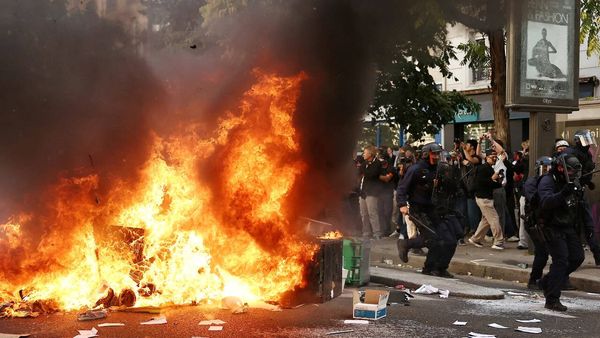
A Hasina return would likely trigger demonstrations, counter-demonstrations and heightened security measures which can descend into open violence as witnessed right after Hasina's ouster. Even if large-scale unrest does not materialise, the possibility alone could dominate the political environment for months.
India's uncomfortable position
For India, Hasina's announcement is a reminder that a problem New Delhi hoped would gradually fade away remains very much alive. India has consistently maintained that it is not politically managing Hasina's activities. India denied having played any role in her press conference. But from Dhaka's perspective, the optics are difficult to ignore. A former prime minister convicted by Bangladeshi courts continues to reside in India and has now used Indian territory to address foreign journalists and announce plans for her political future.
The sharp response from Bangladesh's foreign ministry underlined how sensitive the issue has become. India finds itself balancing competing interests. While it wants stable relations with the BNP government, it also remains wary of developments inside Bangladesh that could empower Islamist groups which are hostile to Indian interests. Hasina's son, Sajeeb Wazed, sought to tap directly into those concerns during the press conference. “Foreign intelligence services, especially ISI, have an open hand. Militants, hundreds and hundreds of convicted terrorists, terrorists that our government had arrested and convicted and put behind bars, have been released from prison. Hizb ut-Tahrir marches openly. Al-Qaeda operatives speak at public rallies. This is what is happening in Bangladesh. And this does not portend well for India and the world at large,” he said, while adding, “In the future, the next set of terrorists globally are going to be coming from Bangladesh. Unless this is stopped now.”
Whether Indian policymakers fully accept that assessment is another matter. But concerns about political radicalisation, border security and regional stability are genuine issues in India's calculations. Hasina's presence therefore remains both an asset and a liability. She represents continuity with a government that maintained close ties with India. At the same time, she complicates India's effort to build a comfortable relationship with Bangladesh's new rulers.
Is the Begum back in the battle?
By announcing a future return rather than immediately attempting one, Hasina has bought time. She has reassured supporters, placed pressure on opponents and ensured that her name remains at the centre of political debate. She has also forced the BNP government into a reactive posture. If December arrives and she returns, Bangladesh will face a dramatic political and legal confrontation. If she delays again, critics will question her resolve. But even in that scenario, the announcement itself may already have achieved part of its purpose.
For nearly a year, Bangladesh's political conversation revolved around a post-Hasina future. This week, Sheikh Hasina inserted herself back into that conversation. Whether she returns or not, the country is once again debating her role, her legacy and her future. The Begum is back in the battle. That alone suggests the battle she lost in 2024 may not be the last one she intends to fight.