
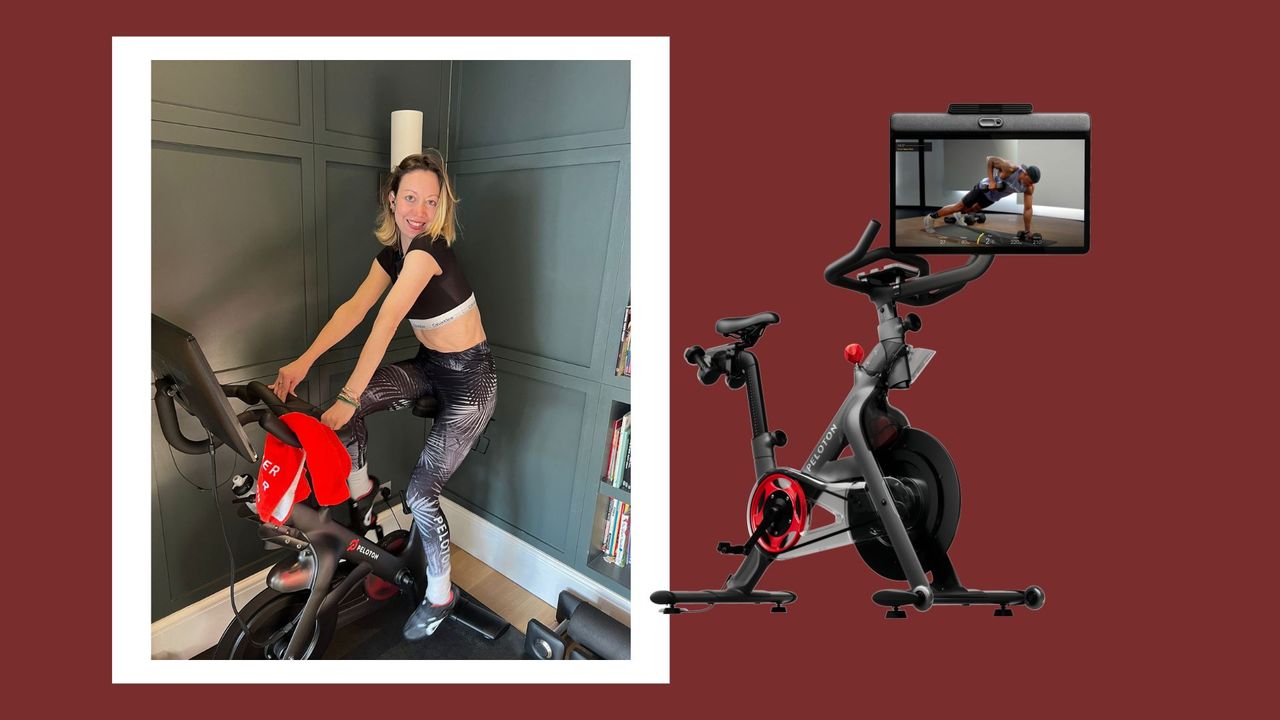
Is Peloton worth it in 2026? The at-home fitness brand has revamped its equipment and tech to make working out from home more appealing – and comprehensive – than ever. But is it worth spending £1,599+ on a premium bike and the associated cycling workouts? As someone who’s been using the Peloton bike and app for the past six years, I’ve got you covered…
Peloton is a brand that needs little introduction in 2026. With recent reports citing almost six million total Peloton members this year, the American connected fitness brand has become as synonymous with home workouts as pop culture moments (remember that infamous And Just Like That scene with Mr Big?) Chances are, we all know someone who has a Peloton bike or uses the Peloton app with generic dumbbells.

The pandemic made Peloton a household name. It became possible to cycle anytime of day, listening to any music you desired, while feeling connected with – or competitive against – hundreds of others on the leaderboard. Post-pandemic, the brand has faced various challenges, from product recalls to user decline as people sought to reconnect IRL (see: run clubs). The explosion of interest in Pilates and strength training has meant that even those considering splurging on home fitness equipment are researching home Reformer alternatives rather than spin bikes.
In October 2025, Peloton revamped its hardware portfolio with the launch of the Peloton Cross Training Series Bike, Bike+ and Tread in the UK, facilitating cardio, strength and yoga workouts via one piece of connected equipment. Peloton also introduced AI-powered coaching, insights and personalisation with Peloton IQ. Beyond tech, Peloton has continued to expand its offerings and instructor base.
In 2025 (with a new CEO at its helm), the brand hired three new yoga teachers, hosted celebs like Cynthia Erivo in the studio and announced various partnerships with brands like Hyrox, wellness app Breathwrk and menopause-focused workouts with Halle Berry’s Respin Health platform, to name a few. The brand also expanded its strength offerings to include classes and programmes like sculpt yoga flow, kettlebell training and weighted vest walks. In addition to thousands of on-demand classes to accommodate every schedule, new live rides and artist collaborations, members can see their fave instructors up close and personal by booking an in-studio session at Peloton’s London or New York studios.
Contemplating purchasing a Peloton for 2026? As someone who’s had my bike for six years and racked up close to 3,000 workouts across the bike and app, it’s not an exaggeration to say the Peloton has changed my life. It transformed me from someone who struggled to fit exercise into my schedule in my 30s to a 43-year-old fitness devotee. Here’s what you need to know about Peloton in 2026.
Shop Peloton bikes
The latest Peloton model, released only late last year, combines cardio, strength, and mobility workouts for a longevity focus. You'll find a new saddle and swivel screen on the bike, improved speakers, and software to make sure you're nailing your form on every lift.
If you're sold on the new bike but the £2k+ price point is a little too much to stomach, you can buy the bike refurbished as well. This takes a few hundred pounds off the price, and all are tested, cleaned, and inspected by experts before sale. You can also rent your Peloton bike from £125 per month.
Is Peloton worth it?
When Peloton first came on my radar in the spring of 2020, it seemed like just what the doctor ordered. Quite literally, in my case, I’d had knee surgery on my meniscus in January 2020, my face-to-face rehab was delayed due to lockdowns, and my left leg was buckling beneath me because I had gotten so weak. My surgeon suggested a stationary bike as a way to build up strength safely.
“Is Peloton worth it?” I asked my (few, at the time) friends who already owned the bike. They were evangelical in their praise. In fact, people were almost cult-like in their obsession with Peloton – and I was intrigued. As a parent to four kids, aged two to nine at the time, a Peloton bike seemed like a pricey, but ultimately worthwhile, investment for two time-poor adults who needed childcare every time they went to the gym (which explained why we didn’t go, ever). We put the bike in the centre of our living room, the only place it would fit. “Let’s pretend it’s an art piece,” I joked to my (unimpressed) husband.
Peloton came into my life when I needed to exercise for my physical fitness, but also my mental health. My anxiety during the pandemic was very high, made worse when my beloved bulldog of over 10 years died, and I struggled to function while consumed by grief. My Peloton bike became the place I could go to laugh, cry, scream and sing my way through all my emotions. It was a sanctuary in my home. My escape. My comfort.
As a New Yorker-turned-Londoner, Peloton’s US-meets-UK sensibility and instructor roster appealed to me right away. I also loved how low-pressure it felt: there were no mirrors, no judgment, and even 15 minutes on the bike felt like a victory. In the early days, I could also video chat with my friends via the bike screen, though the brand has since retired that feature.
Six years on, Peloton has slowly worked its way through my whole family. My husband, initially a sceptic, loves it even more than I do. At 41, he’s in the best shape of his life thanks to that bike, and has steadily lost over 20kg since he first started cycling in summer 2020. Six years on, he still uses the Peloton daily, but now cycles once or twice a week, prioritising strength classes, which he does on our TV, via the Peloton app.
Even my kids, now aged 15, 13, 10 and eight, regularly use the bike, which we’ve recently moved from the living room to the kitchen. They favour non-instructor-led rides like Lanebreak (super-fun gamified workouts with different music options; you collect points as you ride) and Scenic rides, which cover dozens of locations across the globe. The mere presence of the Peloton in our living space has made working out accessible to all of us.
It's not a perfect system, of course. When you’ve paid a fortune for a piece of workout equipment, you feel guilty when you don’t use it, and I had months of zero bike action after fracturing my sacrum (the bone above your coccyx) a few years ago. When I finally got back in the saddle, I found the bike uncomfortable because of pelvic-floor-related symptoms (not sexy or fun).
Six years on, I’m using the bike once a week on average. I’d likely be on it more regularly if I had one of the newer Cross Training Bikes or Bike+ versions with a swivel screen, which makes it easy to do mat workouts. The screen on my original series model doesn’t swivel.
More than the bike, I’ve found the Peloton app transformative. In October, Peloton All-Access Membership increased from £39 to £45 a month (app membership for strength, yoga, running, walking, etc. starts from £12.99 a month for those who don’t have a bike), but I use it for everything: daily meditations, outdoor walks, Pilates and barre classes, yoga, rowing in hotel gyms, learning to run. And unexpectedly realising, after 40 years of thinking I’d hate it, that I love running. Shortly after turning 40, I started strength training with Peloton in my bedroom, and I discovered how much I enjoy the endorphin rush and feeling of strength and expansiveness that comes from regular low-impact weight training.
I’d like to think the bike has paid for itself, given how many workouts we’ve done on it as a family. Because of the high initial cost of the Peloton, it was the only type of fitness class I could afford, or justify, for years. But six years on, Peloton has made me realise exercise is a way of life, and made me hungry for more: I’m completing my 300-hour yoga teacher training this spring, and I’ve recently joined a Third Space gym too. (Yes, it is fair to say all of my money is being spent on fitness these days.)
Is Peloton still worth it in 2026? Or could I have gotten by with a workout app and a home fitness routine all along? These are the benefits and disadvantages that I – and other Peloton fans – have found in the past six years.

Benefits of Peloton
Peloton is ideal for 'exercise snacking'
For me personally, Peloton has reframed my idea of what fitness has to look like. Working around four kids means I don't always have a spare hour in the day, let alone time to go running every day or do a full spinning programme, but I do have pockets of time here and there.
I like to squeeze in small workouts where I can, aka 'exercise snacking', with my Peloton bike and app. That's a 15-minute bike ride in the morning, a walk at lunch and then a short yoga and meditation session before bed. Unlike many other fitness routines I've tried, it doesn't suggest you need to take hours from your day to make progress. I’ve also found that this way I can maintain a high level of exercise (e.g. six to seven days a week), without getting injured or overworked.
The Peloton bike has space for light weights at the back, so it’s also easy to tack on a 10-minute upper body workout after a ride, which has helped me establish consistency and routine with my strength workouts.
Community and friendships
When considering whether Peloton is worth it in 2026, it’s key to remember that exercise is only one aspect of what you’re getting with this product. The millions-strong Peloton community across the globe is another. My sister, who lives in Switzerland, has the same virtual yoga and running instructors as I do, and we have conversations about them. It makes us feel more connected to each other’s day-to-day lives when we’re in different countries.
While the virtual community aspect is less of a draw in 2026 than it was in 2020, I’ve noticed the Peloton has helped my IRL friendships blossom: there’s a mum at the school gates I’ve befriended solely based on conversations around Ben Alldis (and his Peloton strength and spin classes, of course!)
Commitment fits around your lifestyle
Peloton’s real power lies in its flexibility - whether you have a newborn or a head cold, you can still manage to squeeze in a workout at any time of day (or night) that works for you (should you want to). There's no anxiety around getting to a fitness class on time, or self-consciousness about what you’re wearing or how you look on the bike.
It’s not just busy mums who have embraced Peloton as a way to get their workouts in without needing to call in a babysitter. There are myriad reasons why getting into a fitness routine outside of the home can feel prohibitive, whether someone is undergoing treatment for chronic illness, caring for ailing parents or tackling menopausal symptoms. The Peloton bike offers an effective and fun way of breaking down those barriers and creating a routine.
I’m consistently impressed with the Peloton instructors and musical offerings; you can now also read your Kindle or watch TV on the bike if you prefer. And the new Peloton IQ tech acts like a built-in PT: earlier this week, a message encouraging me to swap my outdoor walk for a full-body strength “to balance cardio and strength” flashed up on-screen. The Bike+ (£2,299) comes with advanced Peloton IQ features, including movement tracking, real-time form feedback and custom workouts. Think: an update of the Peloton Guide, the now-defunct AI-powered strength-training tool you could connect to your TV, but built-into your bike.
There's something for everyone
Peloton has made me more adventurous with my fitness. Since getting the bike, I’ve tried skateboarding and roller skating, in addition to running and lifting weights. I’ve followed arm workouts and core programmes. I tend to walk more purposefully now that I know I can listen to a Peloton instructor while heading off on an errand outdoors.
I’m so confident in the tech, quality of teaching, musical variety, enjoyment factor and style of instruction that I am always excited to try Peloton’s latest offerings. It’s never boring.
The technology is better than ever
In response to consumer demand for workouts that combine strength, cardio and something meditative, Peloton’s newest cross trainer Bike (£1,599) offers an update on the original bike, with an improved seat, front-facing speakers and a manual resistance knob. It has a 21.5” immersive HD screen which swivels around, so you can follow your cycle ride with a strength training class or yoga.
The new Bike+ (£2,299) is kitted out with top-of-the-line features, including an immersive swivel screen measuring 23.8”, Sonos-tuned speakers, fan, phone tray, updated ergonomic saddle, hands-free controls (to adjust volume or pause a class) and a resistance knob that adjusts automatically. Peloton IQ movement tracking offers real-time feedback on your form and tracks reps. Plus, the bike measures smaller than an “average yoga mat,” so it won’t take up all of your precious floor space.
The combination of AI-assisted coaching guidance with the top-of-the-line tech, comfort features and a seemingly limitless library of fitness classes across all areas makes this bike feel like a friendly PT and an immersive cross trainer in one. The updated bikes offer a smoother, quieter ride, but I’m still impressed at how well my older version is holding up. Though the website recommends replacing pedals annually, I haven’t done any servicing on my bike in six years other than software updates, and it’s still functioning without any issues.
Disadvantages of Peloton
Existing fitness required
Unfortunately for some, Peloton's leaderboard – which allows riders to track their performance and compete with each other during the workout – may not always feel the most encouraging for those who aren't at the top of it. Jade, a 41-year-old assistant principal in London, explains that the bike “can feel quite intimidating, as you have to be quite ‘bike-fit’ to be able to complete a lot of the rides. 65+ resistance is just unachievable for me so my stats always seem poor.”
This competitive element may work for some people but when it comes to workout motivation, the uphill struggle can be difficult to overcome. So while she still counts herself as a Peloton fan, she prefers the yoga, Pilates, strength and outdoor running classes, all of which are available on the app. She describes the experience as "you and a PT feeling the rush of a successful workout, without the nagging feeling you weren't as good as the others in your age/sex category."
While you will benefit from having some fitness confidence to get the most out of your bike, you don’t necessarily want to have too much. Peloton is often viewed as “not hardcore enough” for cycling aficionados looking for specific indoor/winter training programmes. However, cyclists looking for more performance-style training can take a functional threshold power (FTP) test and Power Zone classes to maximise efficiency and work with personalised metrics.
The app may be enough
One of the big downsides when it comes to the question of whether Peloton is worth it or not is the cost. With bikes starting at £1,599 for a Bike, £2,299 for a Bike+ (which gives you real-time rep tracking, form corrections and weight suggestions) and Treads from £3,499, plus the monthly fees, it's a significant commitment upfront, although you can spread the cost with financing options. You can also buy a refurbished Bike+ from £1,399, or rent a Peloton bike for £125 a month.
It may be entirely possible to use Peloton's best offerings using the app alone, as Jade's experience attests. It's one of the best cycling apps around, and you can try it out for free with a 30-day trial. For unlimited app access and three cycling, rowing or tread classes a month, memberships cost £12.99 a month (including a 30-day free trial), while unlimited access to the entire Pelo-verse is now £28.99 a month with the free trial for those without equipment. Peloton bike owners will need to opt for an All-Access Membership, which starts at £45 a month.

You need space
Though the new Peloton bikes measure 120cm x 60cm, a footprint that’s “smaller than your average yoga mat,” not everyone is as comfortable as I am having their workout bike be a featured interior decor piece.
While the bike doesn’t feel unwieldy or cumbersome to me, I’ve had to slide it up against a wall to make it work in my space, which means I can’t extend my left arm out and need to turn diagonally to do weights workouts. If you’re planning to stick the Peloton in a bedroom, look up first: many cycling classes involve lifting out of the saddle, so low ceilings are a no-go.
How much is Peloton in 2026?
For many, the question 'is Peloton worth it in 2026?' ultimately comes down to the cost. The newly revamped Bike is £1,599; the Bike+ with a larger screen, more AI coaching, added convenience features, and an automatic resistance knob is £2,299.
Peloton bikes are available via:
- Peloton: Shop direct and pay in full or monthly
- John Lewis: Find your bike and accessories online, with monthly payments available
- Amazon: Shop via Amazon and get a deal in the seasonal sales periods
Peloton offers various accessories, too: light weights from £25, dumbbells from £45, cycling shoes from £120, mats from £60, yoga accessories from £10 and a heart rate monitor for £30. There’s also a Peloton apparel range of stylish and comfortable gear, including workout leggings in Peloton x Lululemon ranges.
Back in 2020, my app subscription cost £39 a month, which has now gone up to £45. On the plus side, multiple people are allowed on it, so all six of my family members (as well as some extended family members) can use the bike and app simultaneously under one membership fee.
The bottom line
So, is Peloton worth it? I think so, because I’ve seen how Peloton can change not only my lifestyle, but that of my family members and friends. I would never have had the confidence to join a gym after having my children, even if I could have found the time and childcare. Peloton was absolutely worth the investment for me (and I’m using a version of the bike that’s inferior to the latest model). That being said, the app is where I tell everyone to start before making the big splurge on a spenny piece of tech.
While not everyone will be able to afford the pricey set-up costs and subscription, or the space to install such equipment in their home, if the budget stretches and you're looking to invest in game-changing fitness tech, I'd say that Peloton bikes are still worth it in 2026.
My bike taught me that I can be fitter and stronger than I imagined in my 40s, and gave me a newfound sense of identity at a time when my mental health was struggling. Even though I’m on the bike less these days, the Peloton app and instructors continue to be part of my daily life across strength, yoga, runs and walks, and I love that I can always do a 10-minute barre or mat Pilates class before bed or rev myself up first thing with a meditation.