Get all your news in one place.
100's of premium titles.
One app.
Start reading
The Canberra Times
The Canberra Times

Is it time for a radical rethink of the way the Assembly represents us?

Canberra is closing in on four decades of self-government.

In that time the Legislative Assembly has served this city well. Nobody can argue we are not a more liveable, mature and confident city than we were in 1989.


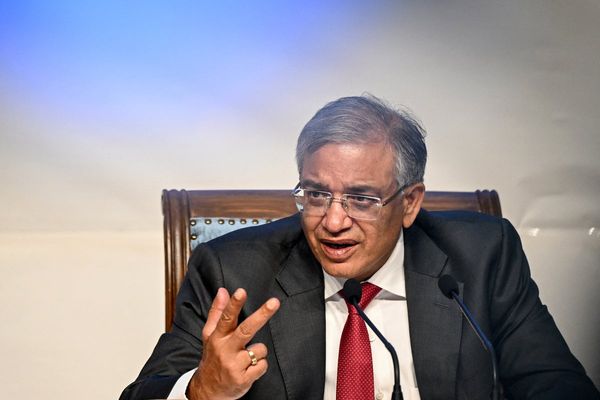
Bean David Smith calls for a review of the ACT Assembly model. Pictures by Karleen Minney, Keegan Carroll

But being well served by an institution must never stop us asking whether it could serve us better.

As the federal member for Bean, I hear every week from constituents who are frustrated.

Not with any particular government or party, but with the system itself, which makes it hard to know who is responsible for what.

When a local road needs fixing, when a bus route changes, when a community service moves or shrinks, who do you call?

For plenty of Canberrans the honest answer is that they don't know, and the system sends them in circles.

This is not simply a communications problem, and it should not be dismissed as ordinary political grumbling.

It reflects a deeper issue in the way Canberra is represented and governed.

When people cannot readily identify who is responsible for decisions affecting their daily lives, confidence in government suffers, and that goes to the health of our democracy.

The ACT is unique in Australia. Our Assembly performs the functions of both a State Parliament and a local council.

Everywhere else, a resident unhappy with a council decision can take it up with their local councillor, and a resident unhappy with a state decision can knock on the door of their state member.

In Canberra, those responsibilities are concentrated in just 25 Assembly members elected five at a time from five large electorates.

No Canberran has a single local representative in the Assembly whose job depends on standing up for their patch. This weakens the connection between voters and decision-makers.

By contrast Tasmania, which elects its parliament under the same multi-member Hare-Clark system, keeps a traditional sphere of responsibility.

As in every other state, the municipal function is delegated to local governments. Tasmania also provides all its elected members an allowance to have, or share, an electorate office. This is basic access to democracy that Canberrans are denied.

Accountability is how governments improve. When voters can identify who is responsible for local outcomes, representatives have stronger incentives to advocate, governments face stronger scrutiny and communities are more likely to get results. When those lines are blurred, frustration grows and trust declines.

Critics of self-government have pointed to this arrangement for decades. Their concern is not simply ideological. It is that combining state and local government responsibilities in a single institution can blur accountability and distance decision-makers from communities.

Whether one accepts that criticism entirely or not, it is difficult to deny that Canberra asks one parliament to perform functions divided between two levels of government everywhere else in Australia.

That alone makes it reasonable to ask whether our democratic structures remain fit for purpose, or whether the split between federal, territory and municipal responsibilities needs to be looked at afresh.

This is no reflection on the people who serve in the Assembly. Members across all parties work hard for Canberra. This issue is one of design.

When responsibility for an area is shared five ways, it can end up owned by nobody.

When everyone has a role, no one is clearly accountable. Vacancies are filled by countback rather than byelections, so the community gets no chance to pass judgement on a government.

These features may have made sense for a smaller city, but Canberra is no longer a small city.

Another consequence is that federal members are increasingly asked to deal with matters that properly belong within the ACT government's responsibilities.

That pattern should concern anyone who values strong local democracy. It suggests many residents see their federal representative as more accessible and identifiable than those responsible for territory decisions. In no healthy system should a federal MP become the most obvious point of contact for local government concerns.

Canberrans themselves have begun sending a message. At the 2024 election, voters elected the first crossbenchers from outside the established parties in more than two decades.

Both campaigned squarely on stronger local representation. This result has to be taken seriously and reflects a growing desire for a closer connection between communities and those elected to serve them.

The ACT has never been afraid of electoral reform. We adopted Hare-Clark after a referendum in 1992 and expanded the Assembly from 17 to 25 members in 2016 as the city grew. Each reform recognised that Canberra had outgrown the institutions of an earlier era.

Today Canberra is home to almost half a million people, and the territory's own projections have the population passing 800,000 by 2065. The question is no longer whether our city has changed. The question is whether our representation model has kept pace.

If Canberra's current arrangements are no longer delivering the level of local accountability and responsiveness that a city of this size deserves, then the question is not whether reform should be discussed, rather what form that reform should take.

There should be no predetermined answer. Everything must be on the table, including single-member electorates.

The Northern Territory, with a much smaller population than the ACT, elects 25 members from single-member seats. Smaller electorates would bring representatives closer to the communities they serve and make accountability clearer.

A modestly larger Assembly could also better reflect Canberra's growth and strengthen parliamentary capacity.

Mixed electoral systems deserve consideration as well. New Zealand's model combines local representatives with proportional representation, seeking to balance accountability and fairness.

Casual vacancies could be filled through byelections rather than countbacks.

Hare-Clark has served the ACT well, but preserving any electoral system should never come at the expense of a more fundamental question: how do we ensure every Canberran has a local representative they can identify, contact and hold accountable?

Representation is not the only part of the self-government settlement due for examination.

Saul Eslake's review of the territory's finances has sharpened debate about the ACT budget.

Whatever view one takes of its findings, much of the commentary has skipped past a structural fact that predates every budget decision: the ACT must compete for its share of federal funding in a jurisdiction the Commonwealth itself created, and which exists in large part for the Commonwealth's benefit.

Those funding arrangements were settled at self-government too, and they deserve the same scrutiny.

Ultimately, any decision belongs to the people of the ACT.

Our electoral system is entrenched and can only be altered through a referendum.

Funding arrangements, by contrast, sit with the federal government alone.

That is why the sensible starting point is a review by the Federal Parliament's joint standing committee on the national capital and external territories into the operation and effectiveness of the ACT Self-Government Act 1988.

A review of the act can examine representation and funding together, because they are parts of the same settlement.

Its role must be to put credible options before the community. The final choices should rest with Canberrans themselves. The 40th anniversary of self-government in 2029 is a natural milestone to work towards.

Self-government has served Canberra well. But support for self-government should not require support for every aspect of a system designed nearly 40 years ago.

Mature democracies do not treat their institutions as untouchable. They examine them, test them and reform them when circumstances change.

Canberra has led the nation before. We elected Australia's first woman to head a state or territory government.

We have been early movers on rights and reform time and again. We are larger, more complex and more diverse than in 1989.

Asking whether our democratic structures have kept pace is not an attack on self-government.

It is an affirmation of it. If our current arrangements are no longer providing the clear local voice and accountability that citizens deserve, we must have the confidence to acknowledge it and the courage to fix it.

Stronger local representation, clearer accountability and closer connections between communities and their representatives are how we secure its future.

Sign up to read this article
Read news from 100's of titles, curated specifically for you.
Already a member? Sign in here
Related Stories
Top stories on inkl right now
One subscription that gives you access to news from hundreds of sites
Already a member? Sign in here
Our Picks
Fourteen days free
Download the app
One app. One membership.
100+ trusted global sources.