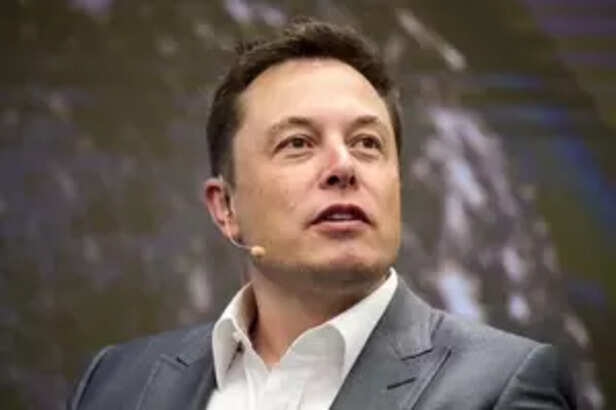
When Elon Musk commented “The balance of power is changing” on a chart comparing global economic growth, it triggered a sharp global reaction. The question many began asking was simple yet provocative: Is India now economically stronger than the United States?
The short answer is nuanced. India has not overtaken the U.S. in absolute economic size, but by several key growth and influence metrics, India is now shaping the future of the global economy more aggressively than America. And that shift is exactly what Musk was pointing to.
1. What Elon Musk Actually Said and Why It Matters
Musk’s statement was made in response to a graphic based on projections from the International Monetary Fund, showing how much different countries will contribute to global GDP growth over the coming years.
His words weren’t about national pride or politics. They were about momentum.
Economic power today is increasingly measured not just by size, but by:
- Growth contribution
- Demographics
- Manufacturing expansion
- Future market potential
On all these fronts, India is accelerating faster than the United States.
2. India vs America: Growth Contribution Tells the Real Story
According to IMF projections for the mid-2020s:
- India is expected to contribute around 16–18% of global GDP growth
- The United States contributes under 10%
- China and India together account for over 40% of global growth
This means that nearly one out of every five dollars of new global economic output is expected to come from India alone.
The U.S. economy remains larger in absolute terms, but India is driving future growth, while America is largely maintaining an already mature system.
3. Why India Is Growing Faster Than the United States
India’s rise is not accidental. It is powered by long-term structural factors:
Demographic Advantage
India has the world’s largest working-age population. While the U.S. faces an aging workforce, India is entering a demographic peak where productivity, consumption, and innovation scale simultaneously.
Domestic Consumption Engine
India’s growth is fueled internally. A rapidly expanding middle class is driving demand in housing, technology, healthcare, mobility, and finance. This insulates India from global shocks more effectively than export-dependent economies.
Manufacturing and Supply Chain Shift
As companies diversify away from China, India is becoming a preferred manufacturing and assembly hub. This structural shift is still in early stages, which means growth runway remains long.
4. America’s Strength vs India’s Momentum
It’s important to be precise. The United States still dominates in:
- Total GDP size
- Per-capita income
- Innovation capital
- Global financial influence
However, the U.S. economy is:
- Mature
- Slower-growing
- Demographically constrained
India, by contrast, is:
- Younger
- Faster-growing
- Under-penetrated across sectors
This is why Musk’s comment resonated. Power is not disappearing from America, but it is being shared, and increasingly generated elsewhere.
5. Why “Stronger” Today Means Different Things
Economic strength in the 21st century is no longer just about:
- Who is richest today
It is about:
- Who will add the most value tomorrow
- Who shapes supply chains
- Who defines emerging markets
- Who attracts future capital
By these measures, India is no longer “catching up.”
It is setting the pace.
6. What This Shift Means for the World
India’s rise changes global equations:
- Investors redirect capital toward high-growth markets
- Corporations design products first for India
- Global policy decisions increasingly factor India’s economic weight
Musk’s four words captured a reality economists have tracked for years: the future engine of global growth is no longer centered in the West alone.