A little over 100 days into office, Nepal's youngest prime minister is already facing the kind of anger that swept his predecessor from power.
Get breaking news anytime, anywhere. Download the TOI app now!

When Balendra "Balen" Shah took office in March, he carried the hopes of a generation that had grown tired of corruption, political dynasties and empty promises.
The rapper-turned-engineer-turned-politician was not just another elected leader; he was the face of a political reset born from the Gen Z uprising that shook Nepal in 2025.
But revolutions have a habit of creating impossible expectations. Barely three months later, protesters are back on Kathmandu's streets.
Last week, youth in Nepal gathered outside the deparment of passports in Tripureshwar. They were not there for paperwork. They were mourning a 25-year-old ride-share driver named Ganesh Nepali, who had set himself on fire days earlier after a dispute with traffic police over a fine he could not afford.
That government is led by Balendra "Balen" Shah, a rapper-turned-engineer-turned-politician who became Nepal's youngest ever prime minister in March 2026.
Barely a hundred days into office, his administration is now facing the same kind of street pressure that toppled his predecessor. Protesters took to roads over forced evictions of riverside squatters, over police conduct, and now over Ganesh Nepali's death. Some are demanding Shah's resignation outright.
Shah rose to national power on the back of the 2025 Gen Z uprising, a youth-led revolt that burned down Nepal's parliament and forced a four-time prime minister out of office.
Many of the same young people who cheered his landslide election victory in March are now among his loudest critics.
How Balen Shah came to power
Balen Shah's political story began long before he entered government. He trained as a structural engineer, but it was his career as an underground rapper that made him a household name among young Nepalis. His lyrics attacked corruption, broken infrastructure and social inequality, themes that resonated with a generation frustrated by the same old political families running the country.
In 2022, Shah turned that popularity into votes and won the Kathmandu mayoral race as an independent candidate, the first person to do so. As mayor, he pushed through reforms in waste management and traffic control, and he took an aggressive approach to clearing pavements, street markets and informal squatter settlements. Those evictions drew criticism even then, but his energetic style made him a popular figure well beyond the capital.
The turning point came in September 2025. A government ban on Facebook, WhatsApp and Instagram, combined with long-simmering anger over corruption and nepotism among the political elite, sent thousands of young Nepalis onto the streets. Security forces responded with force, and over two days of unrest, dozens of protesters were killed and parliament was set ablaze. Prime Minister KP Sharma Oli resigned, and Nepal was placed under an interim government led by Sushila Karki.
Shah, still Kathmandu's mayor at the time, was swept up in the mood of the moment. In a since-deleted midnight social media post, he lashed out at almost every established political party and foreign power in the same breath. Months later, he resigned as mayor and joined the Rastriya Swatantra Party, a young anti-establishment party led by former broadcaster Rabi Lamichhane.
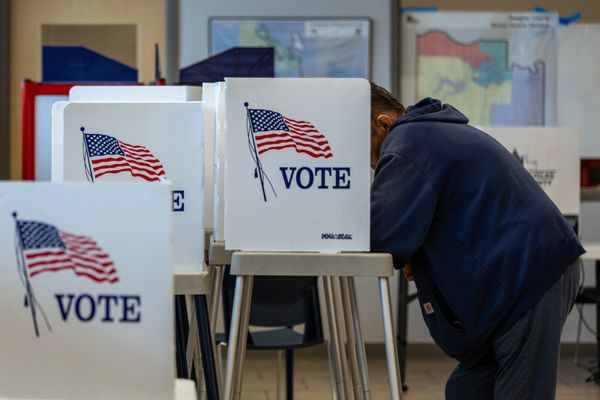
When Nepal went to the polls in March 2026, the RSP won an extraordinary 182 of 275 seats, the largest single-party mandate since Nepali democracy was restored in 1991. Shah, then 35, was sworn in as prime minister on March 27. Within hours, his government had ordered the arrest of Oli and his former home minister over their role in the September deaths.
A bumpy first hundred days
The early weeks of Shah's government were meant to showcase a clean break from Nepal's old politics. Instead, they exposed how fragile that break could be. His first cabinet reshuffle came within a fortnight, when the labour minister was sacked for breaching party discipline. Then, less than a month into the job, Home Minister Sudan Gurung resigned amid a growing scandal over his personal finances.
Gurung had founded the volunteer organisation Hami Nepal and had been one of the central organisers of the 2025 protests that brought Shah to power.
His resignation followed reports linking him to a businessman under investigation for money laundering, and to shareholdings he had not declared. Days later, in an unusual move, President Ram Chandra Paudel suspended both houses of parliament altogether, a decision opposition leaders called unprecedented. Shah himself took charge of the Home Ministry, adding yet another portfolio to an already heavy workload.
For a party that had promised transparency and good governance, the reshuffles were an awkward start.
Bulldozers by the Bagmati, and a match that lit a fire
If the cabinet turmoil unsettled Shah's government, it was a much older policy obsession that brought protesters back onto the streets in force.
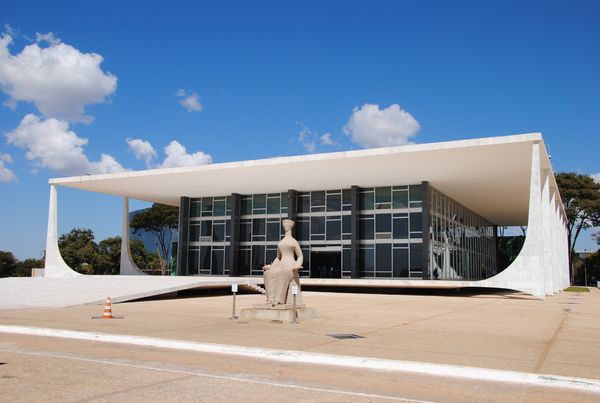
As mayor, Shah had long pushed to clear informal squatter settlements along Kathmandu's rivers. As prime minister, he revived that campaign on a national scale. From April 2026, authorities began dismantling settlements across the Kathmandu Valley and beyond, eventually affecting more than 2,600 families and around 15,000 people, as per Nepal News. The government promised a resettlement plan offering land within a thousand days, but critics, including lawyers and Gen Z activists, argued that families were being removed before their status as genuine landless squatters had even been verified. Some took the matter to the Supreme Court.
Families moved to temporary holding centres were told to leave by July 6, but dozens refused, saying they had nowhere else to go. Days later, monsoon floods struck a holding centre in Kirtipur, forcing the emergency evacuation of around 150 displaced people. When young activists went to check on conditions there, police baton-charged and arrested several of them, a response that drew sharp criticism from opposition figures, including Nepali Congress president Gagan Thapa.
It was against this backdrop that Ganesh Nepali took his own life. He had been driving for a ride-hailing app when municipal police locked his motorcycle's wheel over a parking violation. Unable to pay the fine, he set himself alight outside a government office.
His death combined two separate grievances, over housing and over heavy-handed policing, into a single wave of anger. Protesters under banners such as the Joint National Squatters Front and the All Nepal National Free Students' Union took to Kathmandu's streets, demanding Shah's resignation, an end to forced evictions, the release of detained activists, and permanent housing for displaced families.
Even tomato farmers joined the chorus of discontent, protesting separately over collapsing prices and what they see as a government more interested in imports than in supporting local growers.
The silence behind the sunglasses
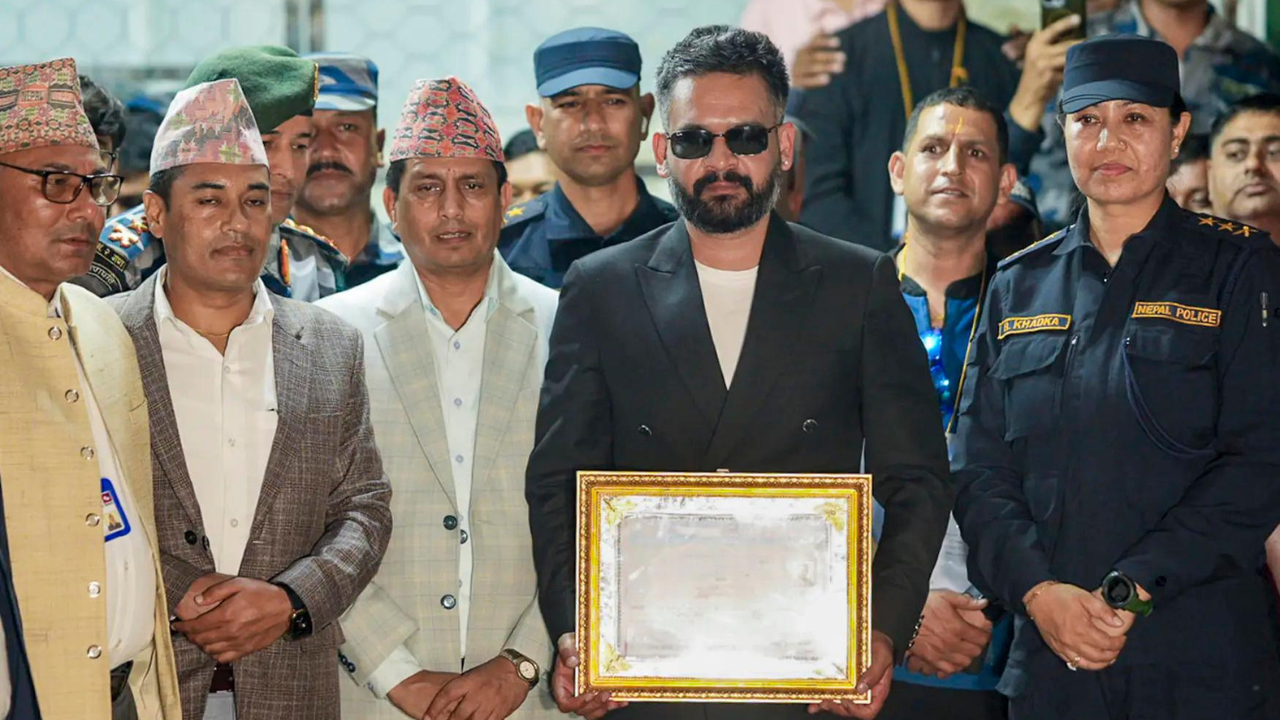
What has struck many observers most is not the protests themselves, but Shah's response to them: near total silence. As mayor, he rarely engaged with the press. As prime minister, he has given no interviews and holds no press briefings, preferring occasional, cryptic social media posts.
That silence extends to parliament itself. Shah walked out midway through the president's opening address to the new legislature and has been largely absent from sittings since, a habit that has drawn criticism even from some who voted for him.
Rabi Lamichhane, the RSP's chairman, chose not to contest the prime ministership himself, partly because of pending corruption cases, and instead welcomed Shah into the party as its public face, the Nepali Times reported. But a recent change to the party's constitution now gives Lamichhane the power to remove the parliamentary leader, meaning Shah, in effect, does not fully control his own party. It is a highly unusual arrangement for a sitting prime minister, and one that has fuelled speculation of a future power struggle between the two men.
A govt still finding its footing
None of this means Shah's popularity has collapsed. Millions of young Nepalis still see him as a break from a discredited political class, and his government has moved quickly on some fronts, including pursuing corruption cases against former leaders. But the events of the past few months show how difficult it is to translate protest energy into steady governance.
Yet the protests unfolding today carry a deeper warning. They suggest that the generation which transformed Nepal's politics has not lowered its expectations simply because its preferred candidate is now in power.
The chants that carried Balen Shah to power are now echoing outside his own government.The protesters who once demanded a new Nepal have not abandoned that dream. They have simply turned the same expectations on the man they believed could deliver it. For Balen Shah, the revolution is over. The accountability has just begun.