Get all your news in one place.
100's of premium titles.
One app.
Start reading
Tom’s Guide
Tom’s Guide
Technology
Dave Parrack

Is AI making streaming worse? Why 'cold objectivity' will ruin great TV

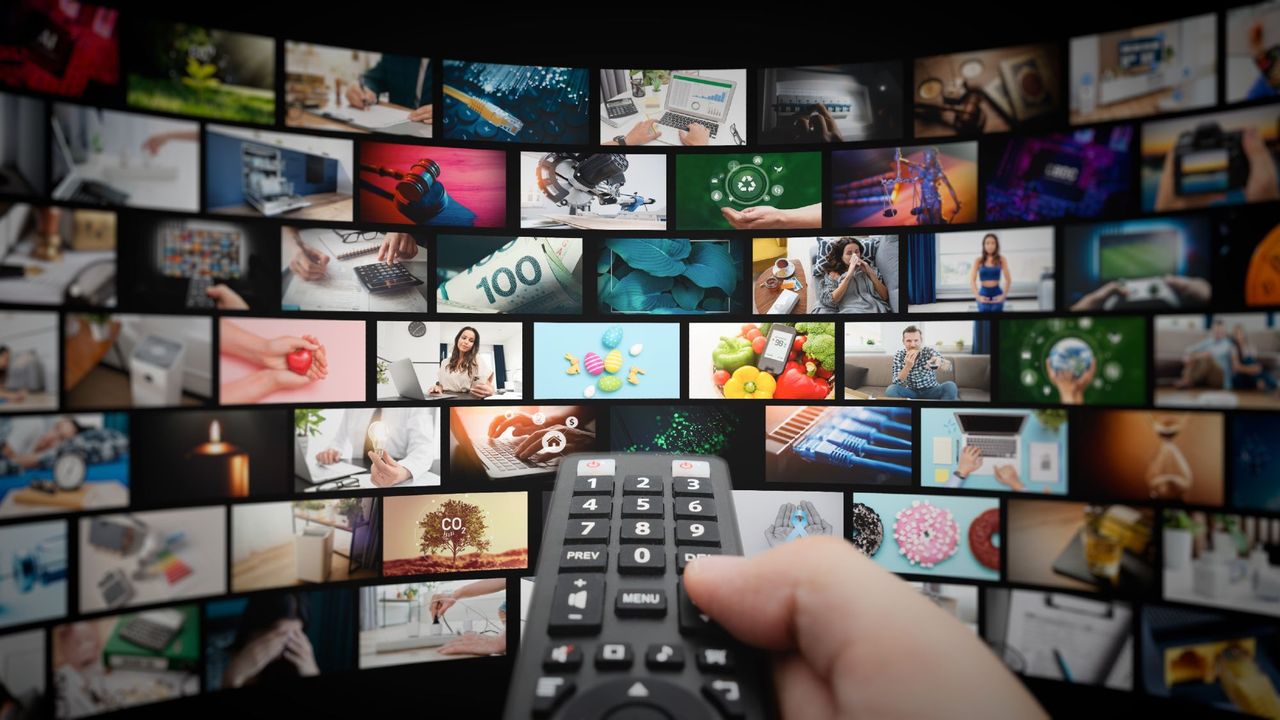
Wall of streaming screens.

With AI creeping into every corner of the tech landscape, it was only a matter of time before it started reshaping the streaming world. We are now officially entering the era where AI is "infecting" the services we subscribe to daily. While this shift isn’t inherently a disaster in every case, it’s increasingly unlikely that it will be for the better.

AI has already been embedded in streaming platforms for years, primarily through the recommendation engines that dictate the Top 10 lists and "Because You Watched" rows. By analyzing viewing habits, watch time and search queries in seconds, machine learning models curate content far faster than any human could.

While a personalized feed sounds like a win, it often feels slightly manipulative — especially when a service swaps out thumbnails to trick different demographics into clicking. More importantly, it narrows our horizons. By delivering more of exactly what the AI knows you already like, it effectively strangles your exposure to anything new or challenging.

Data-driven content decisions, or why Netflix has so much true crime

Beyond simple recommendations, AI is now being used to make high-level decisions on what types of movies and shows to buy or produce. These choices are made based purely on data. While that cold objectivity might be a win for the streamers' bottom lines, it isn't necessarily a win for the viewers at home.

Simply put, data doesn’t tell the full story. It focuses too heavily on proven genres, formulaic formats, and content designed to maximize engagement metrics. This is exactly why we see a literal wall of true crime shows on Netflix: The data points add up, so they churn out more. Unfortunately, this comes at the expense of original or emerging genres that haven’t had their "moment to shine" because they don't yet have the data to prove they'll work.

AI is already taking on visual effects and digital actors

AI is also making its mark within the production process itself, appearing in everything from editing and VFX to dubbing and subtitling. While this slashes production costs and time, the results are a mixed bag. Take the Argentine sci-fi series "The Eternaut" on Netflix: an entire scene featuring a collapsing building was generated via AI. While it made the sequence financially viable, audiences immediately noticed it, sharing the scene on social media to express their disappointment.

The technology is even being used to recreate actors themselves. In "As Deep as the Grave," generative AI reconstructed the voice and likeness of Val Kilmer to the point that he didn’t film a single scene. His presence was constructed entirely from archive footage. Even with his family's blessing, it raises uncomfortable questions about when it is actually appropriate to utilize digital puppetry.

Looking ahead, the creative elements — story ideas and scriptwriting — are potentially up for grabs. As models become more capable, the "upside" for studios is obvious: By pushing human creators to the sidelines, they can cut development time and costs to the bone. Yet, we will inevitably lose the one thing AI can never replicate: the raw, messy originality that can only be conceived through the human experience.


More from Tom's Guide

Sign up to read this article
Read news from 100's of titles, curated specifically for you.
Already a member? Sign in here
Related Stories
Top stories on inkl right now
One subscription that gives you access to news from hundreds of sites
Already a member? Sign in here
Our Picks
Fourteen days free
Download the app
One app. One membership.
100+ trusted global sources.