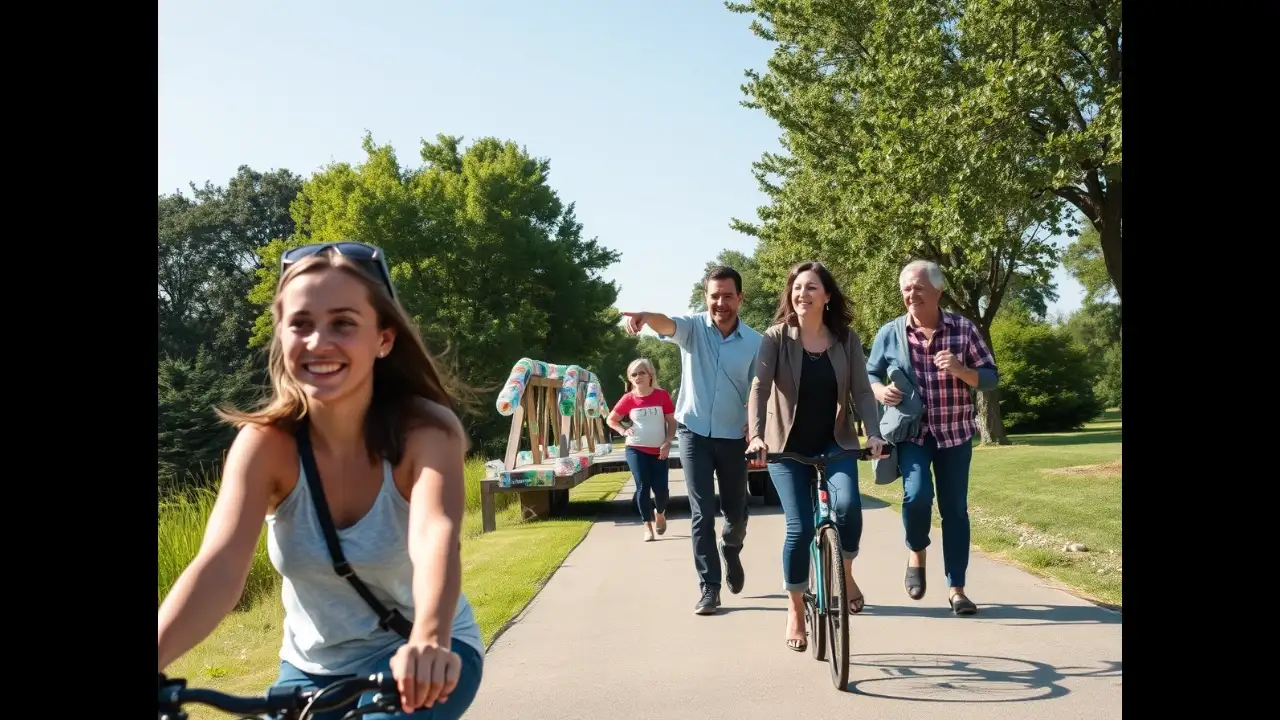
Ireland has produced a striking example of how circular-economy thinking can transform materials considered to be waste into useful infrastructure. In County Cork, engineers created a greenway bridge approximately 6 metres long and 4.5 metres wide using decommissioned wind-turbine blades as the main structural elements. Even more remarkably, the project did not begin with a completely new foundation system. Instead, the engineers reused bridge abutments dating from the 19th century, giving old railway infrastructure a new role alongside modern renewable-energy materials. The Blade Bridge, located about 3 kilometres east of Midleton train station, was completed in the fourth quarter of 2022 as part of the Midleton-to-Youghal Greenway. Transport Infrastructure Ireland (TII) identifies it as a practical demonstration of circular-economy principles in infrastructure design.
The idea addresses an unusual problem created by the rapid expansion of wind power. Wind turbines generate clean electricity, but their enormous composite blades can become difficult materials to manage when they reach the end of their service lives. Unlike conventional materials that can be easily melted down or recycled, turbine blades are made from complex combinations of materials such as fiberglass, resin and other composites. Their size, strength and geometry make conventional recycling challenging.