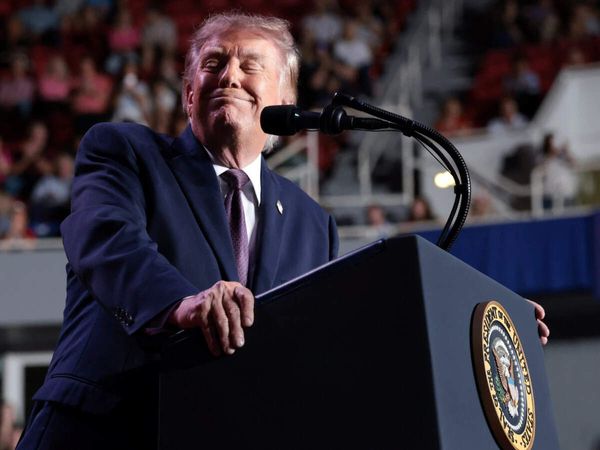
The US and Iran have agreed to a two-week ceasefire, barely an hour before Donald Trump’s Wednesday deadline to obliterate the country and its infrastructure.
Iran’s Supreme National Security Council said it had conditionally accepted the two-week ceasefire if attacks against Iran were halted.
Iran’s foreign minister said passage through the strait of Hormuz would be allowed for the next two weeks under Iranian military management.
Iranian state media said negotiations with the US would be held in Islamabad to finalise details of an agreement. Talks will begin on Friday 10 April and may be extended, state media reported. It also reported that talks with the US did not amount to the end of the war.
Pakistan’s prime minister, Shehbaz Sharif, announced that Iran, the US and their allies had agreed to an immediate ceasefire everywhere, including Lebanon, but Israel disputed this, saying fighting Hezbollah in Lebanon was not part of the ceasefire. Sharif has been a key figure in attempting to reach a diplomatic solution between the warring parties.
Trump said Iran had proposed a “workable” 10-point peace plan. According to Iranian state media, the proposal includes a number of conditions that the US has in the past rejected, among them controlled transit through the strait of Hormuz coordinated with Iranian armed forces and the withdrawal of all US forces from regional bases. The plan would also require the lifting of all primary and secondary sanctions, payment of full compensation to Iran and release of all frozen Iranian assets.
Even as the ceasefire was proposed, missile alerts continued in the United Arab Emirates, Qatar, Bahrain and Israel.
Countries around the world have welcomed the tentative ceasefire. Australia’s prime minister, Anthony Albanese, welcomed the “very positive” developments but issued a rare rebuke of Trump’s “extraordinary” language beforehand. South Korea, Japan and New Zealand were among the other nations to welcome the news.
The UK prime minister, Keir Starmer, joined a chorus of world leaders welcoming the announcement of a ceasefire between Iran and the US. Starmer is travelling to the Middle East on Wednesday to meet Gulf leaders to “discuss diplomatic efforts to support and uphold the ceasefire”, No 10 said.