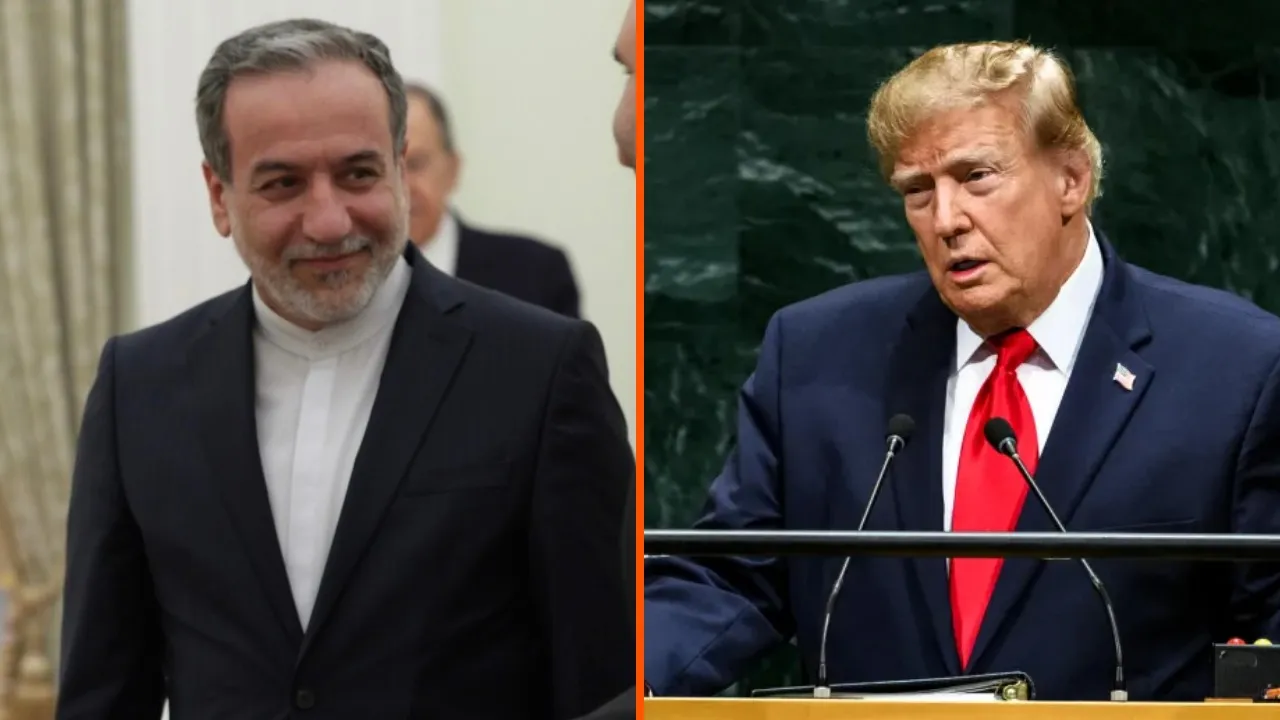
Iranian Foreign Minister Abbas Araghchi stated on Sunday that his country is fully prepared for a renewed conflict with the United States if President Donald Trump authorizes new strikes following the November midterm elections.
Araghchi addressed the current state of affairs during an interview on NBC News. He emphasized that Iran has experienced both the aggression and the diplomatic efforts of the United States. While he noted that President Trump rejected a recent seven-day proposal to reopen the Strait of Hormuz and initiate a ceasefire, the foreign minister maintained that the offer remains on the table. He explained that Iranian negotiators are still waiting for an official response through mediators.
The foreign minister was clear about the potential consequences of further military action. He told the interviewer, “We are fully prepared for the war to be resumed.” He added, “And I repeat, we stand firm in the face of any new aggression, even if it comes to a doomsday war. But at the same time, we stand ready for diplomacy. It is up to President Trump to choose.”
Tehran insists it remains ready for both potential military escalation and a diplomatic path forward
Regarding how a new outbreak of fighting might look, Araghchi suggested that any conflict would not be fundamentally different from previous strike exchanges. However, he noted that Iran has updated its military strategy. He stated that the country’s military has “changed our tactics, and we are fully prepared to do that.”
Iran 'fully prepared' for war to resume if Trump authorizes strikes after midterms #TheHill https://t.co/K4mlLDaA6h
— #TuckFrump (@realTuckFrumper) September 27, 2026
The conversation also turned to Iran’s nuclear enrichment program. Araghchi defended the program, claiming it is not illegal and is intended for specific applications, such as medical purposes. When pressed on the fact that Iran’s 60 percent enrichment level exceeds what is necessary for electricity production, he questioned the justification for past military strikes.
He remarked, “We have removed any concern in our past negotiations. If there is still such a question, then why did they bomb us? Are they allowed to bomb anything that they think is illegal, or there is no justification for that? War is not a solution. That was a subject for negotiation, and we did it in the past.”
The status of Supreme Leader Mojtaba Khamenei also remains a significant point of interest. He has not been seen in public or photographed since he succeeded his father, Ayatollah Ali Khamenei, who was killed during U.S.-Israeli airstrikes on February 28. Araghchi explained that the younger Khamenei remains in hiding for security reasons due to indications that the United States poses a threat.
He emphasized that the government continues to function, stating, “We receive his comments, and orders, and opinions. And there is a national consensus on decision-making. It is false if somebody thinks that there are different sources of power inside Iran. We move based on national consensus.”
Iranian President Masoud Pezeshkian confirmed this assessment during a separate interview with Fox News on Thursday. He noted that he spoke with the younger Khamenei in person about a month and a half ago. When asked if the Supreme Leader is capable of governing, Pezeshkian responded, “Very much so, completely.”
Before the United Nations General Assembly, the President also expressed that Tehran is willing to reach a deal before the November midterms, leaving the next move in the hands of the United States.