Get all your news in one place.
100’s of premium titles.
One app.
Start reading
The Independent UK
The Independent UK
Alisha Rahaman Sarkar

Iran says it won’t negotiate with US as conflict escalates in Middle East

Ali Larijani, Iran’s powerful security chief, has said Tehran will not negotiate with the US following the assassination of supreme leader Ali Khamenei by US-Israeli forces.

Mr Larijani, who also served as an adviser to the late supreme leader, dismissed reports claiming that Iranian officials were seeking to revive negotiations with Washington in an effort to end the ongoing war.
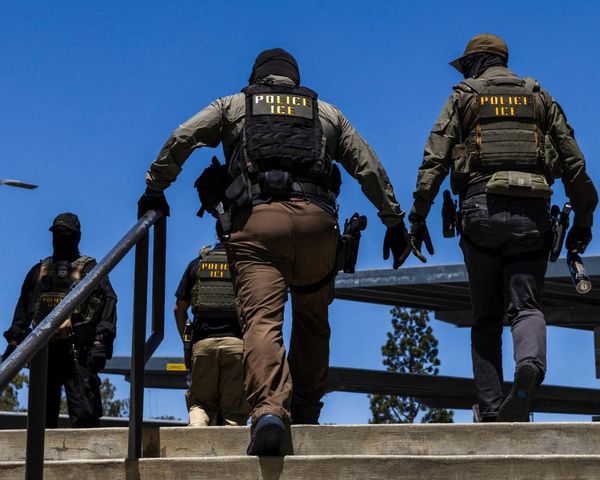
Iran sought to open talks with the Donald Trump administration after a wave of US-Israeli strikes over the weekend sparked a regional conflict, days after Tehran and Washington had held nuclear negotiations in Oman, the Wall Street Journal reported.

Mr Larijani categorically denied this. "We will not negotiate with the United States," he said on X.

In a previous post, he said Mr Trump “plunged the region into chaos with his ‘delusional fantasies’ and now feared more American troop casualties”.

"Today, the Iranian nation is defending itself,” he added. “The armed forces of Iran did not initiate the aggression."

The latest US-Israeli attack on Iran, the second in eight months, caused a larger conflict in the Middle East as Tehran retaliated by launching missiles and drones at Israel and at US installations in Bahrain, Iraq, Jordan, Kuwait, Qatar, Saudi Arabia, and the UAE.

Israel and the US bombed Iranian missile sites and targeted the navy, reportedly destroying multiple warships.

Khamenei is one of several top Iranian political and military leaders to perish in the US-Israeli attack. In all, nearly 200 people have been killed thus far, including over 100 schoolgirls who died after their school in southern Iran was hit by a missile on Saturday.

Iran’s foreign minister said the elementary school was "bombed in broad daylight, when packed with young pupils".

"Dozens of innocent children have been murdered at this site alone,” Abbas Araghchi said. “These crimes against the Iranian people will not go unanswered."

Hezbollah supporters gather to mourn the death of Iranian supreme leader Ayatollah Ali Khamenei in the southern suburb of Beirut, Lebanon, on 1 March 2026 (AP)

On Monday, the conflict escalated as Iran and militias aligned with it fired missiles at Israel and Arab states.

Ayman Moawad, an Egyptian worker living near the US embassy in Kuwait City, told the Associated Press he saw smoke rising over the neighbourhood. He however didn't know if it was specifically the embassy hit in an ongoing Iranian attack targeting the small Mideast nation.

American authorities had earlier issued a warning to Americans there to take cover and remain indoors. “Do not come to the embassy," it said, without elaborating after pro-Iranian protestors sought to storm US embassies and consulates in Pakistan and Iraq.

In Iraq, a pro-Iranian militia claimed responsibility for a drone attack targeting US troops at the Baghdad airport, a day after it said it had fired at a US military base in the northern city of Irbil.

Cyprus, meanwhile, said a drone attack targeted a British base on the Mediterranean island nation.

The Lebanese group Hezbollah said it launched missiles into Israel early on Monday in response to the killing of Khamenei and "repeated Israeli aggressions".

It was the first attack claimed by the militant group in more than a year. There were no reports of injuries or damage, and Israel said that it had intercepted one projectile while several fell in open areas.

Israel retaliated by conducting airstrikes on Lebanon, killing at least 31 people and wounding 149, according to the Lebanese health ministry. Nearly two-thirds of the dead were in the south, along the Israeli border.

Hezbollah agreed a ceasefire with Israel in late 2024, only to see Israeli forces violate it routinely since.

A plume of smoke rises from the Jebel Ali port following a reported Iranian strike in Dubai on 1 March 2026 (AFP via Getty)

Gulf Arab states warned of retaliation against Iran after strikes struck key sites and killed at least five civilians and Mr Trump promised Washington would "avenge" the deaths of three US soldiers who were killed in Kuwait.

"Sadly, there will likely be more before it ends," Mr Trump said. "That's the way it is."

Mr Trump had urged Iranians to "take over" their government and, while he also signalled he would be open to dialogue with new leadership following the death of Khamenei, there was no end in sight to the military operations.

"Combat operations continue at this time in full-force and they will continue until all of our objectives are achieved," he said in a video message.

"We have very strong objectives," the American president added, without elaborating.

Sign up to read this article
Read news from 100’s of titles, curated specifically for you.
Already a member? Sign in here
Related Stories
Top stories on inkl right now
One subscription that gives you access to news from hundreds of sites
Already a member? Sign in here
Our Picks
Fourteen days free
Download the app
One app. One membership.
100+ trusted global sources.