At a moment when all eyes were on a possible US strike against Iran, nothing major ultimately happened. Still, several explosions were reported in different Iranian cities.
The most significant occurred in the southern port city of Bandar Abbas, where reports suggested that an Islamic Revolutionary Guard Corps (IRGC) or army-related facility may have been targeted.
Iranian officials quickly denied this, but it is worth recalling that just weeks before the 12‑day conflict last June, a major blast in Bandar Abbas was also officially classified as an “accident.”
Now, with a large US naval armada present in the Persian Gulf and expectations of a Trump-ordered strike higher than ever, renewed diplomatic efforts by neighbouring countries appear to have once again delayed a final decision by the U.S. president.
Qatar’s foreign minister was in Iran yesterday, meeting Ali Larijani, secretary of Iran’s Supreme National Security Council, who signalled positive developments in negotiations with Washington.
At the same time, a widespread rumour suggests that Tehran has agreed to transfer its enriched uranium to Turkey as part of mediation efforts led by President Recep Tayyip Erdoğan.
On the other side, Israel has denied any involvement in the Bandar Abbas explosion. The Israeli army chief has stated that Israel assesses a potential U.S. attack on Iran could take place within a timeframe of two weeks to two months.
The key question now is what US President Donald Trump is ultimately seeking—and whether Ayatollah Ali Khamenei still holds the final word in Iran’s decision-making.
Several assessments suggest that Iran’s leadership is divided: Khamenei reportedly rejects compromises with the United States, while other senior officials favour a more flexible negotiating approach.
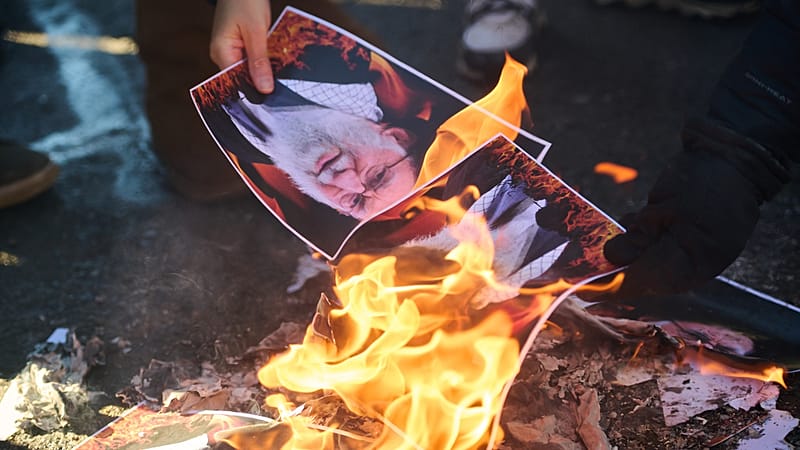
At the same time, it remains unclear how seriously the threats issued by the IRGC and Iranian leaders should be taken. Just this morning, Iranian MPs in parliament, all wearing IRGC uniforms, were seen chanting “Death to the US.”
Meanwhile, the speaker warned that the armies of EU member states could be treated as terrorist organisations.
Khamenei himself also warned Washington, saying that if the Americans start a war, it will escalate into a regional conflict. While insisting Iran does not seek confrontation, he added that any attacker would face a “powerful blow” from the Iranian people.
In this context, the role of Iran’s neighbouring countries is crucial. They appear divided over how to respond to a possible strike. According to US media reports, Saudi Arabia and Qatar are not aligned, while Turkey’s Erdoğan continues to position himself as an experienced mediator between Tehran and Washington.
What unfolds in the coming days and weeks will answer many open questions. One thing, however, is already clear: the US Navy has not deployed to the region without purpose.
Given the enormous cost of a full-scale military intervention, particularly its impact on global oil prices, some analysts believe that Trump may, at least for now, focus more on implementing this maximum pressure scenario, while other options—such as a comprehensive strike or targeting Iran’s leadership—remain on the table.
With a powerful naval presence in the region, Washington could effectively control the Strait of Hormuz, seize tankers and ships travelling to and from Iran transporting oil or other cargo, and push the country toward internal collapse.
From this perspective, surrounding Iran may be seen as a low-cost strategy for Trump—one that could also intersect with renewed domestic protests inside the country, potentially sooner than many expect.