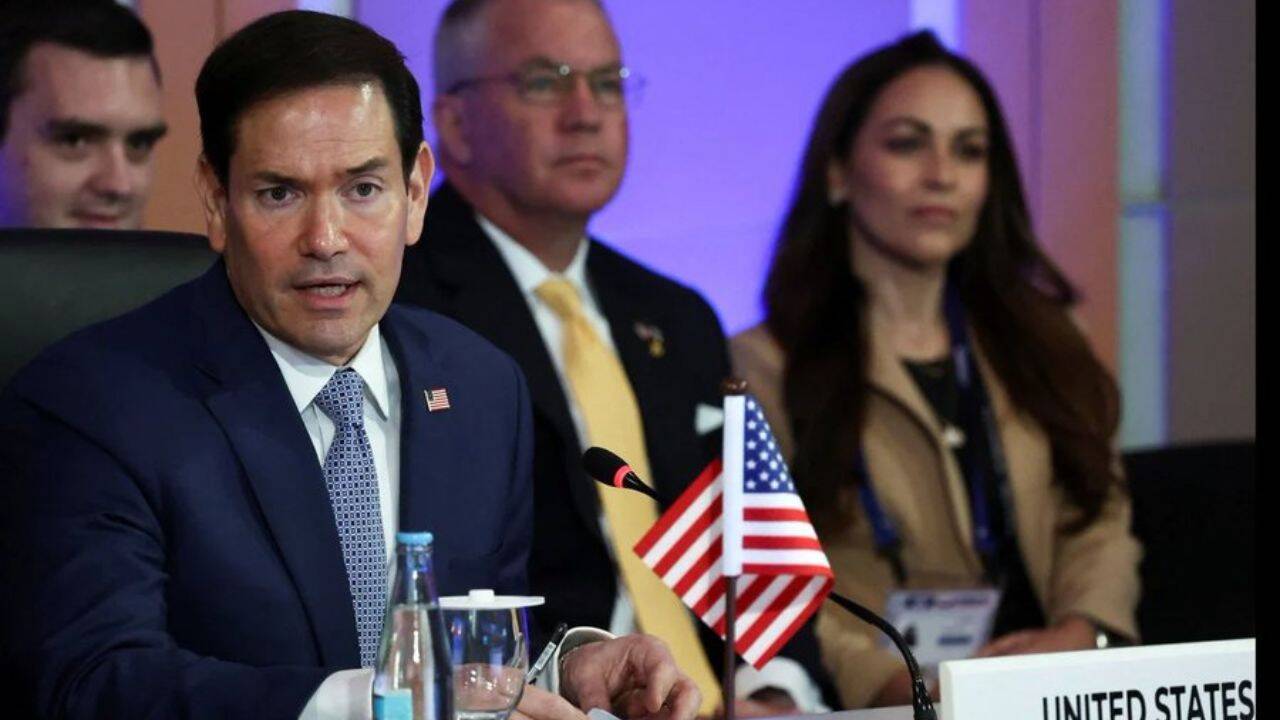
US secretary of state Marco Rubio on Wednesday said Washington remains open to negotiations with Iran despite the ongoing conflict, but accused Tehran of not taking diplomacy seriously.
Get breaking news anytime, anywhere. Download the TOI app now!

Speaking at the ASEAN foreign ministers' meeting in Manila, Rubio said Washington has been ready for talks but Iran has "not taken negotiations seriously." He reiterated that the US still prefers a diplomatic solution even as military operations continue.
"The problem we're having right now is that they're not serious about talks. If they're serious, we're serious. If they're not, then we will do what's necessary to protect our interests, and also the interests of our allies," Rubio said in Manila.
He stressed that Iran could not be allowed to control the Strait of Hormuz, arguing it would create a dangerous precedent for the world including Southeast Asian countries, many of which have territorial disputes in the South China Sea with China.
Rubio's remarks came after Reuters reported that the United States and its allies had proposed a 10-day ceasefire to Iran through regional mediators, aiming to create space for renewed negotiations.
According to the report, the proposal is intended to halt hostilities temporarily and bring both sides back to the negotiating table, however there has been no indication that Tehran has accepted the offer.
The United States carried out its 11th consecutive night of strikes on Iranian targets, while Iran continued retaliatory attacks against US military assets and interests in the Middle East.
The crisis has also drawn in Iran-backed Houthi rebels in Yemen, who have threatened to blockade Saudi oil shipments through the Red Sea and warned that vessels loading Saudi crude could become targets. The threats prompted at least three oil tankers carrying Saudi crude to Asia to reverse course, raising concerns over the security of one of the world's busiest energy shipping routes.
US President Donald Trump said the Houthis had not yet blocked the Bab el-Mandeb Strait, the strategic waterway linking the Red Sea to the Gulf of Aden, but warned Washington would respond if they attempted to do so.
"So far it hasn't happened. If something like that happens, we take care of it," Trump said.
The threats have already disrupted shipping. Three oil tankers carrying Saudi crude to China and India turned back in the Red Sea on Tuesday, opting to head towards the Suez Canal instead of sailing near Yemen.
Trump confirmed that 18 US service members had been killed so far in the war, including four in Iranian attacks on US military bases in Jordan and Iraq over the last few days. On the other hand fifty civilians have been killed and 500 wounded in the recent US strikes on Iran, a health ministry official said.