Get all your news in one place.
100's of premium titles.
One app.
Start reading
International Business Times UK
World
Terence Repelente

Iran Goes 'Fully Offensive', Gives US 'Few Weeks' to Honour Peace Deal or Face Hormuz Escalation

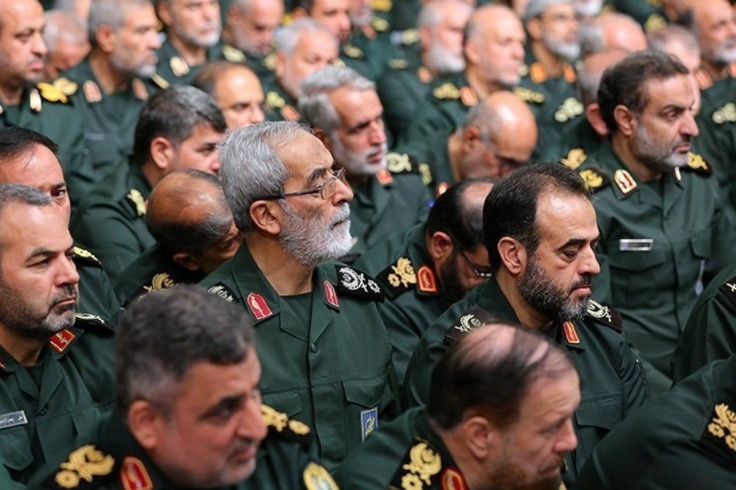
Iran has reportedly decided to shift its policy from defensive to a 'fully offensive' one (Credit: Khamenei.ir | Wikimedia Commons CC BY-SA 4.0)

Iran has warned that it is moving from a defensive posture to a 'fully offensive' policy, giving the United States only 'a few weeks' to implement a stalled peace framework or face escalation in the Strait of Hormuz.

A senior Iranian official told Reuters that Tehran will no longer wait indefinitely for Washington to implement the terms of the June agreement, including provisions concerning the US naval blockade and shipping through the strategic waterway.

The official said all Iranian entities had been told to prepare for possible escalation in the Strait of Hormuz and across the wider region if diplomacy fails.

'Iranian entities must be prepared to escalate tensions,' the official said, adding that Tehran could take 'timely and precise' military action to break the US blockade.

Monday marked the expiry of a 60-day negotiation window under a memorandum of understanding agreed by Iran and the US in June.

The framework was meant to end military operations and provide a 60-day period for negotiations on a final agreement, including wider disputes over Iran's nuclear programme.

Hormuz Dispute Strains Peace Framework

The June agreement quickly began to unravel amid disagreements over control of the Strait of Hormuz, one of the world's most important oil shipping routes. Tehran argues that the agreement gives Iran a role in managing traffic through the strait.

Washington rejects Tehran's broader interpretation of those provisions and insists commercial vessels should be allowed free passage without tolls.

The MOU itself called for Iran and Oman to discuss the future administration and maritime services of the strait with other Gulf states, in accordance with international law and the sovereign rights of coastal states.

It also required Iran to facilitate commercial passage without charge during the 60-day interim period. Hostilities resumed after Iran began firing on vessels it said were using unauthorised routes through the waterway.

The US later reinstated its blockade of Iranian ports, coastlines and shipping in July, while both sides accused the other of violating the agreement. According to the Iranian official, mediators will now pass Tehran's new deadline to Washington and regional governments.

'Within the short period of a few weeks set by Iran, all the agreement's provisions must be implemented by the US,' the official said.

Oman Talks Continue

Iran says it is still working with Oman on a plan to allow shipping through Hormuz. Foreign Ministry spokesperson Esmail Baghaei said an understanding had been reached over the transit route map, though he did not provide full details.

'We had planned, and still plan, to finalise the understanding in the form of a package: the map plus a joint statement,' Baghaei said. Previous proposals indicated that ships could enter near Iran and exit near Oman during an interim period, without paying fees or tolls.

The US, however, has been waiting for a deal it considers acceptable before ending its blockade. The original June MOU similarly provided for commercial vessels to receive safe passage without charge for 60 days.

Trump Escalates Rhetoric

Trump has dismissed the 60-day deadline as effectively irrelevant and said he is 'not in a hurry' to end the conflict. He has also repeated that Iran must never obtain a nuclear weapon, while Washington continues to reject key Iranian demands, including an American military withdrawal and Tehran's preferred arrangement for Hormuz.

At a rally on Friday, Trump warned Americans to expect continued high fuel prices because of the war. He also said that after defeating Iran, the US would declare the Strait of Hormuz 'a territory of the United States'.

'We have the blockade,' Trump said. 'No ships get through unless we want them to.'

The standoff has already disrupted oil flows through Hormuz and raised fears of further escalation across the region. The conflict has also placed pressure on shipping elsewhere in the Middle East, including the Red Sea, where Iran-backed Houthi forces have targeted commercial vessels.

The latest warning raises the prospect that the diplomatic impasse could again turn into direct military confrontation if Washington and Tehran fail to bridge their differences over Hormuz in the coming weeks.

Sign up to read this article
Read news from 100's of titles, curated specifically for you.
Already a member? Sign in here
Related Stories
Top stories on inkl right now
One subscription that gives you access to news from hundreds of sites
Already a member? Sign in here
Our Picks
Fourteen days free
Download the app
One app. One membership.
100+ trusted global sources.