Get all your news in one place.
100's of premium titles.
One app.
Start reading
The Times of India
The Times of India
World
Aadrita Halder

Iran claims control, ships choose Omani route: What’s changing in Strait of Hormuz

The battle for control of the Strait of Hormuz has emerged as a key focus of the Iran war, with both Iran and the United States claiming the upper hand in recent months. The competing claims have created uncertainty over the extent of control exercised by either side over the critical waterway.

Get breaking news anytime, anywhere. Download the TOI app now!

However, shipping data indicates that the United States is gaining ground as its navy patrols the strait, while Iran appears to be losing control over parts of the waterway.

More than 80% of vessel that have transited through the Strait of Hormuz over the past two weeks have used the Omani route, a UN-authorised shipping channel opposed by Iran, according to Kpler, which tracks vessels using transponders and satellite data cited by CNN.

Shipping traffic slows amid uncertainty

Shipping traffic through the Strait of Hormuz slowed on Tuesday, with preliminary data showing most shipowners continued to avoid the key waterway amid a lack of clear signals on its reopening, Reuters reported.

Iran, which has declared the Strait of Hormuz under its control, has attacked dozens of ships attempting to transit the waterway along Oman’s northern coast.

Despite the risks, most vessels have recently continued to cross the strait, disregarding Iran’s demands and relying on protection from US naval forces.

The expiration of the US-Iran Memorandum of Understanding this week has, in theory, allowed Iran to resume charging tolls on vessels using the Strait of Hormuz. However, Kpler data suggests that Iran has not been able to do so.

The current traffic pattern marks a sharp contrast with a month ago, when Kpler recorded virtually no shipping activity along the Omani route. The steep decline in traffic along Iran’s preferred route has also prevented Tehran from collecting tolls on vessels passing through the strait, as it did in the spring.

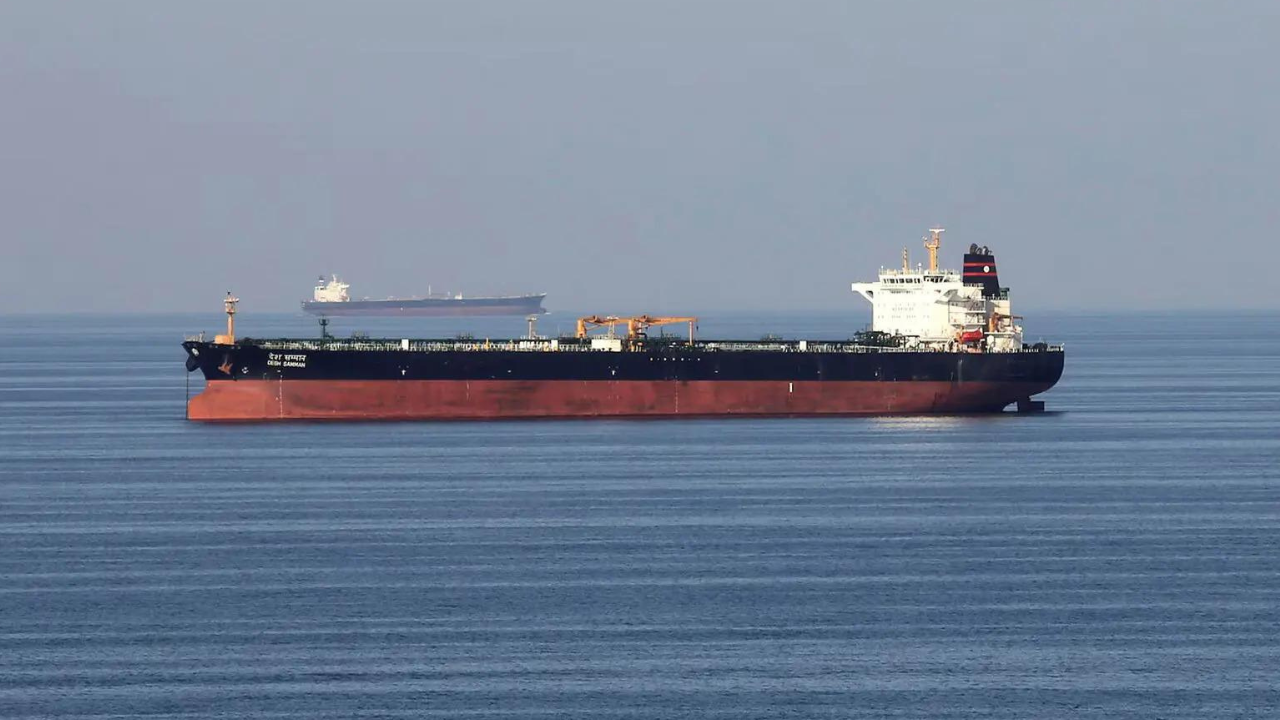
Kuwait, Saudi Arabia and the United Arab Emirates have chartered Very Large Crude Carriers (VLCCs), the largest oil tankers, to transport crude out of the Persian Gulf through the Strait of Hormuz. The oil is then transferred to customers’ tankers outside the danger zone in the Gulf of Oman, according to Andy Lipow, president of Lipow Oil Associates.

To avoid Iranian attacks, the tankers have switched off their transponders, sometimes for weeks at a time. Such “dark traffic” can evade some tracking services, including Kpler, although some vessels can still be detected through satellite data.

The United States, however, has deployed significant military forces in the waterway and has reported substantially higher oil-shipping volumes than earlier estimates from traditional tracking services.

US claims control as Oman-Iran talks continue

US President Donald Trump said Monday that the United States had “total control over the strait”, a claim he has repeatedly made during the conflict. However, continued Iranian attacks and oil flows remaining well below pre-war levels suggest that the US does not have full control of the Strait of Hormuz.

At the same time, if tankers are moving as much oil through the strait as the United States claims, Iran’s ability to deter shipping and maintain control of the waterway has weakened compared with a month or two ago.

Sign up to read this article
Read news from 100's of titles, curated specifically for you.
Already a member? Sign in here
Related Stories
Top stories on inkl right now
One subscription that gives you access to news from hundreds of sites
Already a member? Sign in here
Our Picks
Fourteen days free
Download the app
One app. One membership.
100+ trusted global sources.