Get all your news in one place.
100's of premium titles.
One app.
Start reading
The Guardian - UK
The Guardian - UK
Politics
Andrew Sparrow

Starmer says talks with Gulf leaders have reinforced sense Iran war ceasefire is ‘fragile’ – as it happened

Keir Starmer after a meeting with the president of United Arab Emirates, Sheikh Mohamed bin Zayed Al Nahyan.
Keir Starmer after a meeting with the president of United Arab Emirates, Sheikh Mohamed bin Zayed Al Nahyan. Photograph: Omar Al Askar/UAE Presidential Court/Reuters

At the Green party’s campaign launch this morning Zack Polanski, the party leader, focused on housing. In a report for the New Statesman, Megan Kenyon says this is because the party has concluded this is a key issue driving voters away from Labour. She says:

According to an internal memo shared by party officials with on-the-ground campaigners and seen by the New Statesman, one of the main issues identified as driving voters away from Labour is affordable housing. This, according to internal feedback gathered through canvassing and outreach, is compounded by a perception among some voters that Labour councils are more interested in striking “deals with developers” than delivering for residents.

The Green party plans to adjust its attack lines on the capital’s doorsteps accordingly. The memo urges canvassers to prioritise one “focused message” on their rounds: that “failing Labour councils” are in “hock to developers”. The Greens also point to reporting in the i newspaper that Steve Reed attended a dinner with housing developers who had paid to attend, as part of this critique.
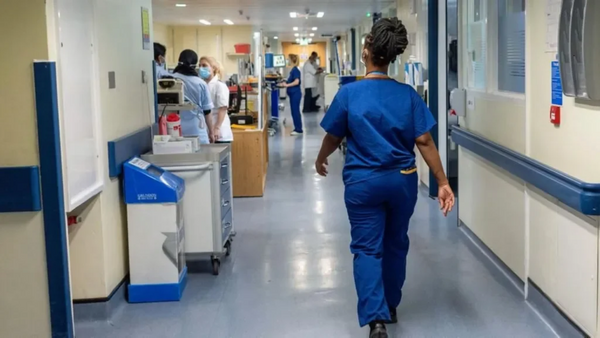
The latest episode of the Guardian’s Politics Weekly UK podcast is out. It features Peter Walker and Alexandra Topping talking about the Iran war, and what it means for British politics.

Starmer says talks with Gulf leaders have reinforced sense Iran war ceasefire is 'fragile'

Keir Starmer has said he discussed the “fragile” nature of the US-Iran ceasefire with Gulf allies and that “it takes more than just words” to make it permanent, the Press Association reports.

After talks with Saudi Crown Prince Mohammed Bin Salman and UAE President Sheikh Mohammed bin Zayed Al Nahyan, Starmer told broadcasters:

I think the mood is very much one of the shock that they were attacked in the first place, because of course they weren’t attacking Iran, and the intensity of some of the attacks.

Relief that there’s now a ceasefire. I think a general sense that it’s fragile, that there’s work to do in relation to it.

And then a lot of reflection and discussion, me with them, about the work we did over the last six to seven weeks together, the collective self-defence, the capabilities.

And an opportunity frankly for me to say thank you to our personnel who are out here, who’ve been, many of the pilots have been working from about two hours after the conflict started.

But I’m very clear that one, it’s very important we stand with our longstanding allies and be here showing our support and reflecting on the work we’re doing together. And for them, a sense that we’re a friend that’s come at this time to have these really important discussions with them and to make sure the ceasefire is a permanent ceasefire and that the strait of Hormuz is open.

And that takes more than just words. It takes a lot of action.

Keir Starmer with Sheikh Mohamed bin Zayed Al Nahyan, president of the United Arab Emirates.
Keir Starmer with Sheikh Mohamed bin Zayed Al Nahyan, president of the United Arab Emirates. Photograph: Omar Al Askar/UAE Presidential Court/Reuters

Updated

What IFS is saying about Senedd election promises being made by 5 main parties in contest

With the publication of Plaid Cymru’s manifesto, the Institute for Fiscal Studies has now published short assessments of the manifesto plans published by the five main parties standing in the Senedd election (or at least the five parties likely to win seats).

For the record, here are links to the reports – and brief extracts.

Alert readers will note that there is a common theme to all these analyses.

On Plaid Cymru

The overall ‘giveaways’ in Plaid Cymru’s manifesto are not huge, but in the context of a Welsh budget already likely to be under strain post-election – particularly in 2027-28 –, delivering these plans would deepen the cuts faced by unprotected services and/or require increases in devolved taxes.’

On Reform UK

While Reform UK’s Welsh manifesto is more restrained on its tax-cutting pledges than its plans in Scotland, it has not fully faced up to the fiscal realities facing the next Welsh government. Lower taxes are possible in Wales. Any government should focus on maximising the efficiency with which the public sector spends its money. But with significant efficiencies likely required to maintain services even with existing funding, tax cuts would likely necessitate cuts in at least some services used by households. These are implied – but left unspoken – in Reform UK’s plans.

On Welsh Labour

Taken together, it is clear that fully delivering on Welsh Labour’s various ambitions for the spending side of the budget would require substantial additional expenditure. In the context of its pledge to freeze the WRITs [Welsh rates of income tax], a slowdown in increases in funding from the UK government, and rising demand and costs of health and social care, delivering these pledges would almost certainly require cuts to spending on some other services. And it is difficult to avoid the conclusion that despite being in government for 27 years, Welsh Labour, like the other Welsh parties, is not fully facing up to the difficult fiscal reality facing the next Welsh government.

On the Welsh Greens

The Green party’s Welsh manifesto offers a vision of a bigger state doing more for its citizens. But it lacks any plan for how to pay for that bigger state. In reality, the new entitlements pledged by the Green party would require substantial increases in taxes or cuts to other services. The party has left this part of its vision unspoken. This manifesto may work as an opening gambit for potential negotiations with other parties. But it is clearly not a complete, costed plan for government.

On the Welsh Conservatives

The Welsh Conservatives’ flagship proposals are reductions to three of Wales’s devolved taxes: the Welsh rates of income tax, land transaction tax and business rates. But at a time when spending pressures in many areas are rising, a government that wants to cut taxes must also commit to spending less – and the manifesto lacks a credible plan for where these savings will come from.

OpenAI shelves landmark £31bn UK investment package

OpenAI has put on hold plans for a landmark project to strengthen the UK’s AI capabilities, citing high energy costs and regulation, Aisha Down reports.

Commenting on this story for the Conservatives, Ben Spencer, a shadow science minister, said:

When global firms cite high energy costs and regulatory uncertainty as reasons to walk away, it tells you everything about the direction of travel.

For too long, Labour have prioritised courting big tech headlines while neglecting our domestic start-ups, but also the fundamentals that actually attract investment at home.

John Crace has written his sketch today about Donald Trump. And Keir Starmer a bit, but it’s mostly Trump. “Merely to engage with Trump – be it to defend him or to take him on – puts your sanity at risk,” John says. Here goes, if that’s a risk you are willing to take.

Plaid Cymru accused of planning 'independence by stealth' after manifesto revives row about its nationalist ambitions

Welsh Labour has claimed that the publication of Plaid Cymru’s manifesto shows that the party is not being fully open about its commitment to Welsh independence.

Plaid is a nationalist party but Rhun ap Iorwerth, its leader, has consistently downplayed this as a goal, treating this as more of a long-term aspiration, and he has said it is not something that the party would take forward in its first term in office.

During the campaign ap Iorwerth has explicity said “this isn’t an election about independence.”

But the manifesto says “our nation is on a journey to independence”, and it says a Plaid government would launch a national conversation on the topic, as well as “laying the foundations for a future white paper on Welsh independence”.

Responding to the manifesto, a Welsh Labour spokesperson said:

Plaid Cymru should be honest with voters.

They claim not to be focusing on independence in this election and yet their manifesto explicitly sets out a route map towards independence.

They now need to explain this deception to the people of Wales in the coming weeks.

And Dan Thomas, the Reform UK leader in Wales, said:

Plaid will use precious resources to bring forward a white paper on independence.

We think that money would be better spent by you or in our public services.

Plaid will implement independence by stealth.

Here is the full passage in the manifesto on independence.

Plaid Cymru's plans to expand free children would probably require cuts elsewhere, or tax rises, IFS says

Plaid Cymru would substantially expand free childcare in Wales, but have not properly explained how they would fund this, the Institute for Fiscal Studies says.

In an initial response to the Plaid Cymru manifesto published today, the IFS says that the Plaid ‘giveaways’ are not huge – but that they would probably need to be funded by cuts in other government services or tax increases not acknowledged by the party.

In his analysis, David Phillips, the IFS’s head of devolved and local government finance, says that Plaid is proposing to increase Welsh government spending by more than Welsh Labour but by less than the Green party.

Phillips says (bold type from IFS):

As it stands, the outlook for Welsh government funding implies that cuts to at least some services will be needed in maintain let alone improve health and social care services as costs and demands grow.

Spending £400m a year more on childcare, with more to boot on a Welsh child payment, expanded free school meals and better primary healthcare would require either deeper cuts to unprotected services, a substantial slowdown in core health and social care spending, or as-yet unmentioned tax rises.

Plaid Cymru therefore does not appear to have faced up to the fiscal reality facing the next Welsh government. And if the party knows how it would afford its pledges, it has omitted to explain how in its manifesto.

This is disappointing, especially given Plaid Cymru’s recent complaints about unfunded promises by other parties.

Explaining the Plaid offer on childcare, Phillips says:

Turning to the spending side of the budget, the big ticket item is a substantial expansion of funded childcare provision. The Welsh system currently offers 10 hours of funded early education per week for all 3- and 4-year-olds, an additional 20 hours of funded childcare per week for 3- and 4-year-olds in most working families, for 48 weeks per year. Some 2-year-olds in poorer areas are eligible for 12.5 hours per week under the Flying Start program during term time, with an ongoing expansion to cover all 2-year-olds.

After completing the existing rollout of 12.5 hours for all 2-year-olds, Plaid Cymru would gradually expand coverage to 20 hours of funded childcare per week for 48 weeks per year, for all children aged 9 months to 4 years. Plaid would also retain the more generous offer of 30 hours per week for 3- and 4-year-olds in working families. Compared to the Green party’s proposals, Plaid’s offer would prevent 3- and 4-year-olds in working families from losing out, but would not incorporate additional subsidised hours above these entitlements (nor an ambition to move from 20 to 30 hours a week).

Plaid Cymru’s proposals would represent a big increase in government spending on the early years. The cost of offering funded hours to children under 2 might even be larger than the party expects – England’s recent expanded offer proved far more popular than forecast. Plaid Cymru justifies this extra spending on the grounds of children’s development, parents’ ability to work, and families’ cost of living. Expanding funded childcare provision would help reduce costs for families already paying for childcare. But both improving child development and boosting labour supply at the same time through childcare subsidies is tricky and expensive, and much will rest on the design of the programme.

Here are some more pictures from Keir Starmer’s Gulf trip.

Polanski calls for UK to withdraw trade agreement with Israel after strikes on Lebanon

And here is Alexandra Topping’s story about Zack Polanski at the Green party campaign launch this morning calling on the government to tear up the UK-Israel trade agreement after the Israeli strikes on Lebanon.

Starmer arrives in Bahrain as Gulf tour for talks on finding resolution to Iran war continues

Keir Starmer has arrived in Bahrain as part of a trip to the Gulf to speak with allies about the Iran war, the Press Association reports. He has already visited Saudi Arabia and the United Arab Emirates.

Polanski rejects Labour's claim about Greens being 'hypocrites' on building new homes as 'absolute nonsense'

Labour sent out a briefing ahead of the Green party’s local elections launch today claiming that Greens have “attempted to block at least 42,000 homes from being built across the country, including at least 13,000 affordable homes, since 2018”.

The figures were based on figures for developments opposed by local Green party members in 25 council areas. Labour said they were probably thousands more cases across the country and that their research showed that Zack Polanski and his party were “blockers” and “hypocrites”.

Anna Turley, the Labour chair, said:

Polanski and his party have shown time and again that with Green councillors, you’d be lucky to see a single brick laid, no matter how desperately residents need somewhere to live.

At his launch this morning, where he highlight the Greens’ commitment to more social and afforable housing, Polanski was asked about the Labour claims. He insisted that Green councillors were no more likely to object to local planning applications than any other councillors, and he argued that some developments deserve to be blocked. (See 11.09am.)

In an interview on Radio 4’s the World at One, he went even further. Asked again about the Labour research, and the claim 42,000 homes had been blocked, Polanski replied:

“According to Labour” is doing a lot of heavy lifting there because that number is absolute nonsense. We are talking about luxury, unaffordable building. The right homes need to be built at the right price, at the right place.

Summing up the Greens’ housing policy, Polanski said:

The first thing is to make sure that the people making the decisions and making them based on the needs of residents and the community, and not on developers.

Second, I think it’s about making sure that we’re building the right types of homes. We need to see lots more council homes and affordable homes.

And finally, I think we need to recognise that we have an affordability crisis. And so to build the case, to continue to champion the need for rent controls.

When it was put to him that, even if they took control of councils, the Greens would not be able to impose rent controls which they support (see 11.17am), Polanski said that, if councils were able to build more homes themselves, they would be able to control those rents.

Ipsos has released polling today suggesting that over the past month public support for the way Keir Starmer has responded to the Iran war has gone up. Overall, his rating on this measure is still negative (40% think he has done a bad job, while 30% think he has done a good job). But this is a 9-point impovement on his rating on the same measure at the start of March (and it is higher than his approval rating on many other issues).

The poll also shows that 65% of Britons disapprove of the US attacks against Iran, up from 56% when the war started.

Healey says Trump was wrong to dismiss UK's aircraft carriers as 'toys'

John Healey also said at his news conference this morning that Donald Trump was wrong to describe the UK’s two aircraft carriers at “toys”.

Asked about the president’s comment two weeks ago, Healey said:

I like to let our actions, rather than our words, speak for themselves.

And I would just say about our carriers, I reject the descriptions that have been levelled against them.

Our carrier completed an eight-month tour last year in the Indo-Pacific, in which it led ships of 14 other nations during the period of its operation, including the US.

It meant that it is now, because of that operation, fully certified as Nato’s flagship and that is the role that it will now play as we deploy it to the High North.

Sending more British military assets to Gulf during Iran war wouldn't have been in national interest, Healey says

The government has faced a lot of criticism during the Iran war over not being able to deploy more ships, or other military assets, to the Gulf. Asked about this at his news conference this morning, John Healey, the defence secretary, argued that this would not necessarily have been in the national interest. He explained:

When a crisis erupts noisily and dangerously, as it has done in the Middle East, I understand people questioning why all UK military assets and personnel have not been deployed to deal with it, but that is not in Britain’s national interest.

The greatest threats are often unseen and silent, and as demands on defence rise, we must deploy our resources to best effect.

The Kremlin has said that its frigate, the Admiral Grigorovich, has been escorting two sanctioned oil tankers through the Channel to protect them from “piracy”.

Asked about the Telegraph report (see 12.42pm), the Kremlin spokesperson Dmitry Peskov, told reporters:

Over the past few months, we have witnessed repeated incidents of piracy in international waters. These incidents of piracy have, among other things, harmed the economic interests of the Russian Federation.

The Russian Federation considers itself entitled to, and will certainly take, measures to protect its interests.

Wales will give up 'bending to Westminster's will' with Plaid Cymru in power, its leader says at campaign launch

Bethan McKernan is the Guardian’s Wales correspondent.

Plaid Cymru leader Rhun ap Iorwerth has launched what he described as an “ambitious and credible” plan for Wales at the party’s Senedd manifesto launch in Wrexham.

Polls suggest the pro-independence Welsh nationalist party is on the brink of taking office for the first time in next month’s elections.

Ap Iorwerth said:

Ours is a land brimming with potential … Our pledge is to govern with hope. To govern with humility. To govern with the kind of urgency and impatience which gets things done. No more bending to Westminster’s will, no more defending the status quo.

Many of Plaid Cymru’s key pledges had been heavily trailed or previously announced, but key pledges include cutting NHS waiting lists, a flagship 20 hours a week of universal childcare, Cynnal, a child payment scheme similar to Scotland’s aimed at eradicating Wales’ high levels of child poverty, and the creation of a new business-led National Development Agency for Wales.

The programme had been costed by Swansea University economist Gerry Holtham, ap Iorwerth said.

Voters in Wales go to the polls on 7 May to elect 96 members to the new Senedd, up from 60 members, under a new more proportional voting system.

After 27 years in government, Welsh Labour appear destined for opposition; several surveys suggest the vote is a two-horse race between Plaid Cymru and Reform UK, with Labour in a distant third.

Introducing ap Iorwerth, Carrie Harper, a PC candidate for the new constituency of Fflint Wrecsam, said a Plaid Cymru led administration would be the “first Welsh parliament answerable solely to the people of Wales in 600 years”.

Updated

Healey says, if Putin needs to send warship to escort shadow fleet oil tankers in Channel, UK policy 'having an impact'

In his Q&A with journalists today, John Healey, the defence secretary, was asked about Russia sending a warship through the Channel escorting Russian ships subject to sanctions.

In its report on this story, the Telegraph describes this as Vladimir Putin mocking Keir Starmer.

The Telegraph says that, even though Starmer announced that the military have authorisation to board Russian shadow fleet oil tankers in UK waters, this has not happened – and does not seem to be happening in this case.

But Healey implied that the fact that Russia feels the need to send a warship to escort its shadow fleet vessels has shown the new UK policy is “having an impact” because it is making it much more difficult for Putin to sell oil using these tankers.

Healey said:

On the question of the shadow ships, we’ve got a strong history as a country for sanctioning ships, individuals – and with allies.

We’ve seen two things in the last year; we’ve seen over 200 of the Russian sanctioned shadow fleet put out of action and forced to anchor, putting more pressure on Putin’s ability to fund his illegal war with Ukraine; and we’ve seen the oil revenues that Russia takes from the illegal trade drop by a quarter. But there’s more we can do.

As the prime minister has announced, we are ready. We have the military options, and we’re ready to take action, not just in support of, but action with allies to interdict shadow fleet vessels.

I’ll just suggest you, if the action we’ve already taken, the action that the prime minister has indicated we’re ready to take in addition, is making Russia re-route its shadow ships as it has, or escort its shadow ships with its own warships, then the stance, the military posture, the determined work that we’ve done, particularly with allied nations, is having an impact and making it harder for Putin to pursue his illegal oil revenues coordinate around his shadow fleet and fund his illegal war in Ukraine.

Healey also said there would be further action on this in the coming weeks and months.

(In theory, the presence of a Russian warship nearby would not affect authorisation for a British raid on a vessel breaking sanctions. But it is not surprising that the risk of military confrontation with the Russians would make this an unattractive proposition for the Ministry of Defence.)

Updated

Details from MoD of how Royal Navy exposes Russian operation aimed at undersea cables

Here is a longer quote from John Healey, the defence secretary, about the Russian submarine operation foiled by the Royal Navy.

On the operation I’m setting out today, this was over a month where we and allies tracked every mile of the Russian subs.

We recognised the Akula attack submarine as a likely decoy to distract us from the Gugi submarines. We watched the Gugi submarines as they spent time over critical infrastructure relevant to us and our allies in the North Atlantic.

We watched them. We were able to track them.

And because we were watching them, we wanted to ensure that we could warn them that their covert operation had been exposed and reduce the risk that they may attempt any action that could damage our pipelines or our cables.

And I’m confident, we have no evidence that there has been any damage, but with allies, were sure that this is now verifiable.

And here is an extract from the Ministry of Defence briefing about the operation, which does not seem to be available online. The MoD says the Russian vessels were engaged in “nefarious activity near critical underwater infrastructure”. It says:

Subsea fibre optic cables are essential for all digital communications, with over 99% of international data traffic, including voice calls and internet data, travelling through subsea cables. This underpins global banking, trade, and communications.

Conducted under the cover of events in the Middle East, the Russian attack submarine and multiple vessels from the Main Directorate of Deep Sea Research (known as GUGI) entered international waters in the High North.

The Royal Navy deployed a Type 23 frigate HMS St Albans, RFA Tidespring and Merlin helicopters to track the attack submarine as it operated near British territorial waters.

Working alongside RAF P8 aircraft, the submarine was tracked 24/7 in an operation carried out with allies.

As part of the operation, which saw British ships cover thousands of miles, the RAF and Navy deployed sonobuoys to track the Russian vessels.

While the Russian attack submarine has now headed back towards Russia, the UK has kept both naval vessels and aircraft ready to respond should Russian vessels return.

GUGI is Russia’s long-running military programme to develop capabilities to be deployed from specialist surface vessels and submarines, that are intended to survey underwater infrastructure during peacetime, but then damage or destroy infrastructure during a conflict.

British defences were previously tested by GUGI when the Russian spy ship Yantar sailed near UK waters last year. The ship was tracked by a Royal Navy frigate and RAF P8s, with lasers being directed at British pilots.

The Yantar is one the key vessels used by Russia to threaten the UK and our allies. Over the last two years, the UK has seen a 30% increase in Russian vessels threatening UK waters.

The MoD has also released these images of the GUGI base.

Updated

UK navy foiled Russian submarines surveying undersea cables, John Healey says

While Zack Polanski was speaking at the Green party’s launch, John Healey, the defence secretary, was holding a press conference. He announced that a British warship and aircraft tracked and monitored Russian submarines attempting to survey vital undersea infrastructure in the North Atlantic, ensuring they abandoned their mission.

Peter Walker has the story here.

Polanski accepts vetting candidates has been 'real challenge' because party has grown so quickly

Q: Are you finding it difficult vetting candidates because you have grown so quickly?

Polanski says this is a “real challenge” because the party has expanded so much.

He says he would not be surprised if “the odd candidate'” gets through who does not align with the party’s values, “where we have to distance ourselves from them”.

But the party is doing “due diligence”, he says.

Q: Would you include arms in your call for tougher sanctions on Israel?

Polanski says all options should be on the table. Israel is behaving “in a completely uncontrolled way”, he says. It is acting like “a rogue state”.

Q: Will you keep the triple lock?

Polanski says the party will say more about this in its manifesto.

He does accept that the younger generation is being “screwed over”. But he does not agree with the idea that younger people need to be pitted against older people.

Q: [From the Daily Mail] Will you drop your plan to cut motorway speed limits to 55mph in the light of polling showing 60% of your supporters are not in favour?

Polanski says the Mail and the Telegraph are always going through past Green party policy documents, and ignoring qualifing comments saying the policy is under development.

He says, in a fuel crisis, reducing speed limits can make sense. But he says he wants more focus on public transport.

Polanski says government should be building more social housing, not spending £70bn on welfare going straight to private landlords

Q: How can you push for rent controls when that is not something councils cannot deliver?

Polanski says people talk about rent controls as a “wild” idea. But in the UK the experiment has been not having rent controls, he says.

He goes on:

I think what’s wild is that we’ve spent over £70bn in the last five years on welfare, which has been money going straight from the government into the pockets of private landlords, as opposed to building social homes or council homes that could be rent capped or rent controlled straight away, whether controlled under local authorities.

Q: Do you accept that tougher sanctions on Israel might harm the UK economically?

Polanski says he does not want to be adding to the cost of living for people in the UK.

But he also says you cannot put a price on protecting human life.

He goes on:

I think we need to look at what does economic sovereignty look like and where we’re relying on countries that have bad human rights records, or countries that are committing human rights abuses or terror acts – as we’re seeing this rogue state, Israel, doing at the moment – it’s clearly important that we disentangle from that.

That means tougher sanctions, he says.

But that also means having an industrial revolution in this country, he says.

Q: The Labour party is accusing the Greens of hypocrisy, because in some areas the Greens have blocked housebuilding.

Polanski says he does not accept that the Green party is blocking any more homes than any other party.

And he says, if a development is just going to build homes too expensive for more people, it should be blocked.

Polanski says he has been 'vindicated' because Trump's recent comments show he was right to say US not reliable ally

Polanski is now taking questions.

Q: Do you want the Greens to review their policy on Nato, and for the UK to leave the alliance?

Polanski says Donald Trump is increasingly unreliable.

The UK should be working more with its European allies, he says.

Brexit was a catastrophic decision, he says.

He says Labour used to attack him for what he said about Nato and Donald Trump. But now he feels “vindicated” because Labour ministers are now agreeing with his assessment of Trump.

It didn’t take a rocket scientist to look at this man and say, this is not someone we can rely on for the security of this country.

Ultimately, I also think we need to be looking at a proper strategic defence review to look at other threats to this nation, both in terms of pandemic resilience, cyber security and food resilience.

Polanski says the Greens have made a difference in local government. He cites Lewes as an example.

Lewes Greens have built hundreds of council homes over the last four years, and there are still hundreds more in the pipeline. And the key here is it’s not just about quantity, the quality of the homes. They have set up a future home standard to make sure that every home that is built is affordable, accessible.

And in Bristol Greens have build more affordable homes too, he says.

Polanski claims Labour government has just offered 'toxic combination of chaos and cowardice'

Polanski says the national Labour government has let people down.

What we have seen is a toxic combination of chaos and cowardice. A government that has no plans, no vision and no real change. A government that is not just been complicit in genocid; a government that has watered down its promises on workers rights, and a government that brought Peter Mandelson into the very heart of its administration.

And the reason why I talk about all of this now is because the hypocrisy, the cynicism we see in government – that’s filtered down to Labour-run councils.

Polanski cites housing as an example.

Let’s start with the fact that we had a government that promised to ban section 21 evictions – no fault evictions.

But while they dithered and delayed for ages about doing it, Labour councils were still using loopholes to evict their own tenants around section 21, including in Lambeth, next door, where they were still proclaiming themselves to be the party of renters – yet they were investigated for maladministration, essential repairs weren’t being carried out, there were people living with no heating, no hot water, while [Labour] were still claiming to be the party of renters.

Polanski claims the situation is similar in Hackney.

Updated

Polanski calls for 'much more robust' sanctions against Israel

Polanski moves on to the Iran war, and the ongoing Israeli attacks against Lebanon. He says:

It is outrageous that Israel are still enjoying diplomatic and trade privileges from the international community. As a Green party, we are calling on this government to make much more robust sanctions, to withdraw the UK-Israel trade agreement and to end the genocide.

And we know it’s not just Lebanon. We also see this going on in Iran. And the prime minister is not being entirely truthful with us all, with the country. He keeps saying that we are not involved with this war, but we still have UK soil and UK bases where US bombers are flying over to Iran. And what we need to do is disentangle the UK military and the US military, ban the US from using our air spaces, and do exactly what other European allies like Pedro Sánchez in Spain have done and say, this war is not in our name and we want nothing to do with it.

Polanski says Greens heading for record results in this year's English local elections

Zack Polanski, the Green party leader, is speaking now.

He says people ask him what a good result for the Greens would be.

In 2023, we had record breaking results as a Green party. We got over 241 new councillors.

Now, 2023 was an election where double the number of seats were in play than there are at this election.

Nevertheless, I am confident but not complacent in this election.

We are going to beat 241 councillors and we are heading for a new record breaking result for the Green party.

Updated

Zoë Garbett, the Green candidate for Hackney mayor, spoke next.

She said the Greens were getting “thousands and thousands of new members going out, knocking on doors across the city and campaigning in so many wards”.

Zack Polanski speaks at launch of Green party's campaign for local elections

Zack Polanski will soon be speaking at the Green party’s local elections campaign launch.

But the first speaker is Lewisham Green councillor Liam Shrivastava, a Lewisham councillor. He starts by complaining about Labour having a stranglehold on London politics. At the last election every single councillor elected in Lewisham was Labour – “including me”, he adds, to laughter.

In interviews this morning Yvette Cooper, the foreign secretary, declined to confirm reports that a Russian warship has been escorting two sanctioned Russian ships through the English channel.

Sanctioned Russian ships carry oil being sold to fund the war in Ukraine, and the UK government recently announced that the armed forces have been authorised to board these ships in British waters to stop them.

Asked about the story on LBC, Cooper said:

What I can tell you is that we have given permission now for action to be taken against the Russian shadow fleet. Operational decisions then have to be taken in the right way by the military.

There are indications of the way in which not just the Russian shadow fleet is operating, but also the way in which we are seeing increased Russian threats, not just to the UK, but across Europe as well.

We will be saying more about this shortly.

Four people die in Channel small-boat sinking

Two men and two women have died after a small boat sank in the Channel between France and Britain, French local authorities have said. Diane Taylor has the story.

Commenting on the deaths, a UK government spokesperson said:

We are deeply saddened to hear about the deaths in French waters today.

Every death in the Channel is a tragedy and a stark reminder of the dangers posed by criminal gangs exploiting vulnerable people for profit.

We will continue working relentlessly with the French and our partners overseas to prevent these perilous journeys.

The French authorities are leading the response to this incident and we are supporting their investigation.

Starmer holds talks in UAE with Gulf defence chiefs to discuss options for reopening strait of Hormuz

Keir Starmer has held a meeting in the UAE this morning with defence officials from so-called Dragon Group partners in the Middle East, No 10 has said.

He thanked them for what they had done to protect British nationals in the region during the Iran war and discussed plans for the future, stressing the need to make the ceasefire permanent and not allowing Iran to hold the strait of Hormuz “to ransom”.

The meeting in Abu Dhabi was chaired by Sir Richard Knighton, the UK’s chief of defence staff, and it included defence representatives from: the UAE, Saudi Arabia, Bahrain, Jordan, Qatar, Kuwait, Oman, Iraq and Egypt.

Starmer told them that the UK had been pushing for de-escalation all along and therefore welcomed the ceasefire.

Some of those attending had participated in the virtual military planning meeting chaired by Yvette Cooper on Tuesday for around 40 nations to discuss how the strait of Hormuz could be kept open after fighting is over.

Starmer told them that work was not starting on detailed plans to restore freedom of navigation.

Cooper says global trade relies 'more than ever' on freedom of navigation, as she insists on full reopening of strait of Hormuz

Yvette Cooper, the foreign secretary, will say more about the importance of keeping the strait of Hormuz open in her Mansion House speech in the City of London this evening.

According to an extract released in advance, she will say:

Fertiliser for Africa, liquid natural gas for Asia, jet fuel for the world; the trading route for Qatar, UAE, Bahrain, Kuwait, Iraq, Saudi Arabia and Oman, all hijacked by Iran so they can hold the global economy hostage.

No country can close these routes – it goes against the fundamental principles of the law of the sea. In Britain, the importance of this runs deep through our history, our interests and our values. We are an island nation. A maritime economy. 95% of our trade is carried by sea. Around 40% of our food is imported.

It was Victorian Britain that pioneered the freedom of the seas, maritime law, and made piracy a crime of universal jurisdiction. And today, we know more than ever that freedom of navigation is the underpinning of global trade. It matters for every sea, ocean and strait. Every country has a stake in this. Every industry is affected by it.

We should start immediately to get international shipping moving again by supporting the International Maritime Organisation’s proposals to move the ships trapped in the strait, and the 20,000 stranded seafarers – a humanitarian as well as an economic first step. And then the full and unconditional reopening of the strait must be a central part not just of the current ceasefire but of the long-term future for the region.

Trump's threat to wipe out Iranian civilisation earlier this week 'completely wrong', Cooper says

Yvette Cooper has described Donald Trump’s threat to wipe out Iranian civilisation earlier this week as “completely wrong”.

Trump’s language about Iran became increasingly aggressive and barbaric ahead of the ceasefire, culminating with a Truth Social post on Tuesday saying “a whole civilisation will die tonight” if Iran did not comply with US demands.

While some opposition politicians, and backbench Labour MPs, denounced the president language very strongly, No 10 did not respond.

But, speaking to Sky News this morning, Cooper did condemn Trump’s comments. She said:

We take a different view from the US on issues, and it is possible for us to be strong, close partners on a whole range of issues, but also to take different decisions on issues.

I think that the rhetoric that we’ve seen used, I think, has been completely wrong. I think that sort of escalatory rhetoric can have escalatory consequences.

Cooper also said that it was important to distinguish between the oppressive Iranian regime and the Iranian people as a whole.

More significantly, we should always distinguish between this malign Iranian regime that we have seen threaten its neighbours over a long time, and the people of Iran, many of whom have been brutally repressed by this Iranian regime.

How Starmer described Saudi Arabia as 'steadfast ally' in talks with Mohammed bin Salman

Keir Starmer met Crown Prince Mohammed bin Salman, the de facto ruler of Saudi Arabia, yesterday. Unlike, say, Donald Trump, MBS (as he is sometimes called) is not a man for press conferences. But No 10 did release a readout of the talks afterwards. It says Starmer declared Saudi Arabia to be a “steadfast ally”.

For the record, here is the full readout. A No 10 spokesperson said:

The prime minister began by welcoming the ceasefire and set out how efforts must now be focused on upholding it and turning it into a lasting peace.

He was clear that it was vital now to continue work to reopen the strait of Hormuz, and discussed the UK’s ongoing efforts to convene partners to agree and plan the practical steps required to give shipping the confidence to transit the strait.

Reflecting on the defensive operations which have taken place in the region since the conflict began, the prime minister thanked His Royal Highness for Saudi Arabia’s efforts to protect British nationals in the country.

The prime minister committed to continue to support Saudi Arabia as a steadfast ally including through the recent deployment of the Sky Sabre air defence system, having met UK personnel deployed to operate it earlier today.

The leaders then discussed how the UK and Saudi Arabia could further deepen their defence industrial cooperation to boost capability and mutual security for the long term, as well as continuing to grow their thriving trade and investment relationship.

The prime minister said he was pleased that the UK and Saudi Arabia would soon be marking 100 years of friendship under the Treaty of Jeddah and they looked forward to speaking again soon.

Updated

Cooper says she's 'deeply troubled' by Israel's escalating attacks in Lebanon

Yvette Cooper, the foreign secretary, told Sky News this morning that she was “deeply troubled” by Israel’s ongoing air strikes in Lebanon. She said:

I’m deeply troubled about the escalating attacks that we saw from Israel in Lebanon yesterday. We’ve seen the humanitarian consequences, the huge mass displacement of people in Lebanon.

Updated

Iran cannot ‘hijack’ strait of Hormuz with shipping tolls, says Yvette Cooper

Good morning. Keir Starmer is still in the Gulf, and Yvette Cooper, the foreign secretary, has been doing a round of interviews this morning, ahead of delivering a speech on foreign policy this evening.

As Jamie Grierson reports, Cooper has been arguing forcefully that Lebanon must be included in the US-Iran ceasefire.

But Cooper is also trying to quash suggestions that, as part of a permanent settlement, Iran might be allowed to carry on charging a $2m-a-ship toll for oil tankers wanting to pass through the strait of Hormuz. Rather alarminingly, Donald Trump has even suggested that the US might be part of this, as a “joint venture” with Iran.

In an interview on the Today programme, Cooper made it clear that charging a toll for passage through the strait would be unaccepable to the UK.

She said:

The starting point here is this is an international transit route. It’s international shipping that uses this. This is part of the international law of the sea. This is a a route between the high seas; it is a trading route.

When it was put to her that Iran takes the view that these are territorial waters, not international waters, Cooper said:

As part of the international maritime law, this is a transit route between the high seas.

And whether you talk about Dover or Gibraltar or other straits around the world, there may be territorial waters there, but there’s also an international shipping route and an international transit route, which means that freedom of navigation principles apply and that countries cannot simply hijack those kinds of international transit routes and unilaterally apply tolls. They cannot do that as part of the laws of the sea and the United Nations conventions.

Cooper said that protecting freedom of navigation throught the strait was “crucial for the global economy”.

I will post more from her interviews soon.

Here is the agenda for the day.

Morning: Keir Starmer is in the United Arab Emirates where he is expected to hold talks with the president, Sheikh Mohamed bin Zayed Al Nahyan. Later in the day he has another bilateral planned, and he is recording an interview with ITV’s Robert Peston.

10.30am: Zack Polanski, the Green leader, launches his party’s local elections campaign at an event in London.

11am: Rhun ap Iorwerth, the Plaid Cymru leader, launches his party’s manifesto for the Senedd election at an event in Wrexham.

Morning: Ed Davey, the Lib Dem leader, is doing a campaign visit in Greater Manchester.

If you want to contact me, please post a message below the line when comments are open (between 10am and 3pm), or message me on social media. I can’t read all the messages BTL, but if you put “Andrew” in a message aimed at me, I am more likely to see it because I search for posts containing that word.

If you want to flag something up urgently, it is best to use social media. You can reach me on Bluesky at @andrewsparrowgdn.bsky.social. The Guardian has given up posting from its official accounts on X, but individual Guardian journalists are there, I still have my account, and if you message me there at @AndrewSparrow, I will see it and respond if necessary.

I find it very helpful when readers point out mistakes, even minor typos. No error is too small to correct. And I find your questions very interesting too. I can’t promise to reply to them all, but I will try to reply to as many as I can, either BTL or sometimes in the blog.

Updated

Sign up to read this article
Read news from 100's of titles, curated specifically for you.
Already a member? Sign in here
Related Stories
Top stories on inkl right now
One subscription that gives you access to news from hundreds of sites
Already a member? Sign in here
Our Picks
Fourteen days free
Download the app
One app. One membership.
100+ trusted global sources.