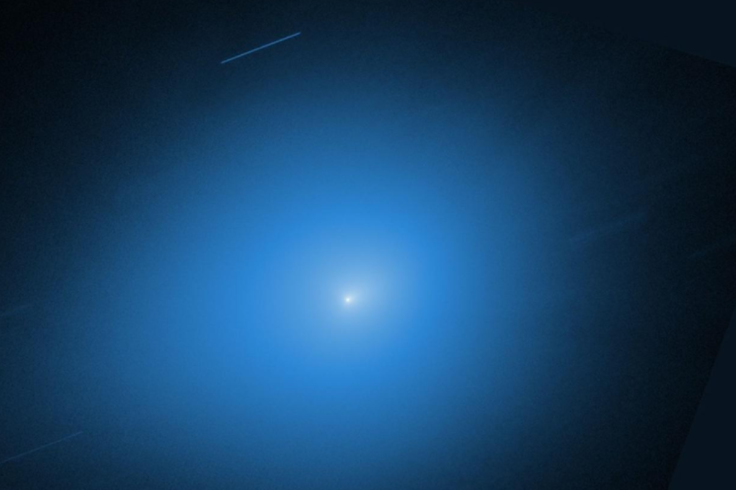
When the interstellar visitor 3I/ATLAS first flew into our cosmic neighborhood in July 2025, scientists all breathed a sigh of relief. It looked like we had found something we knew: an icy traveler that acted just like the comets we have been studying for hundreds of years. The Asteroid Terrestrial-impact Last Alert System (ATLAS) in Chile found the object on July 1, 2025. It was quickly identified as the third known interstellar visitor, following 1I/ʻOumuamua and 2I/Borisov.
Early NASA images showed a simple scene of hydrogen gas slowly drifting away from a frozen nucleus. This process, called sublimation, fits perfectly with what we already know from our textbooks.