
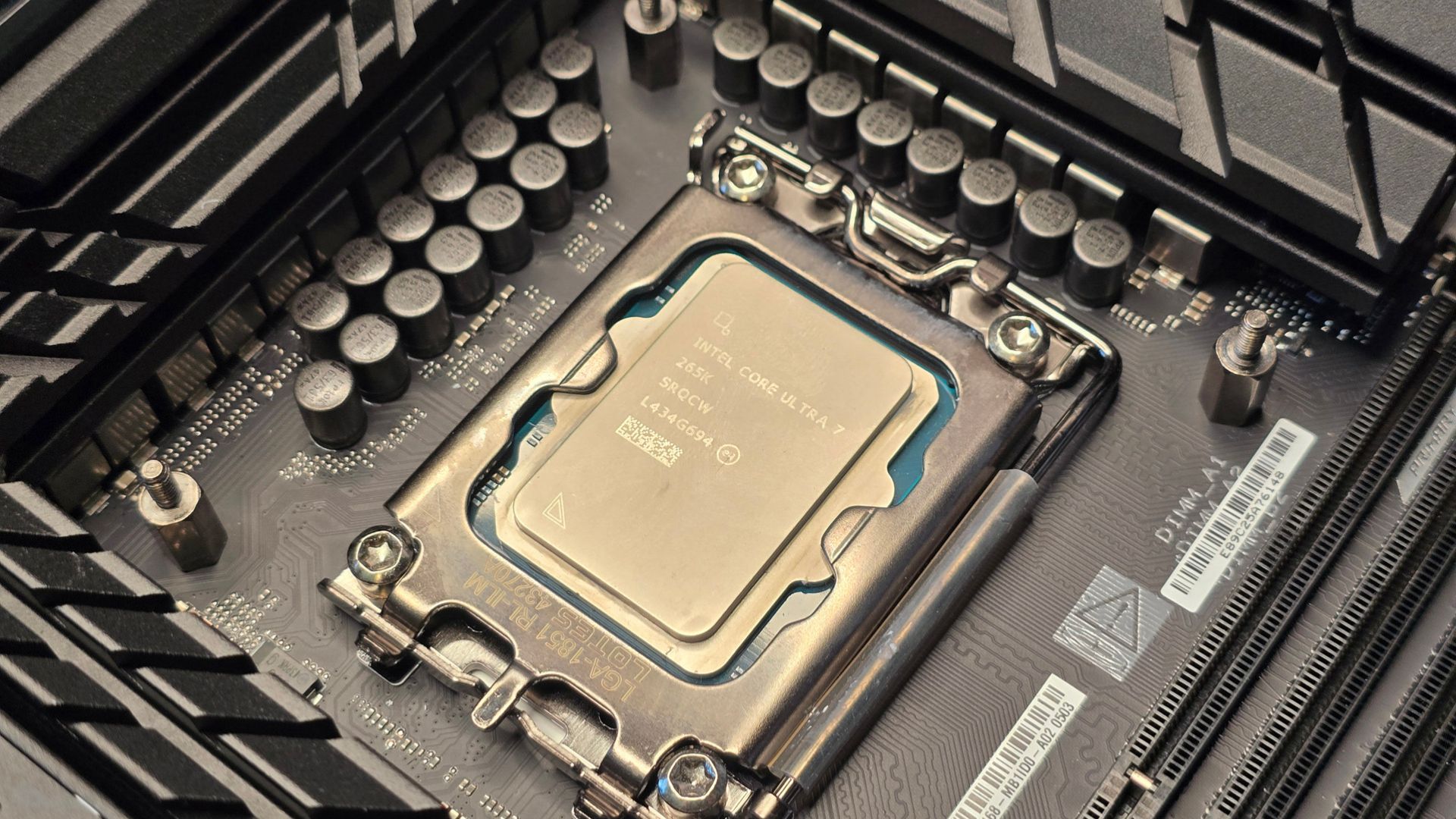
The Intel Core Ultra launch, for Intel, has been rough. When the series finally landed on desktops late last year, including the Core Ultra 7 265K, it was undercooked, unoptimized, and generally disappointing. Performance, whether that was multi-core or single-core, gaming or rendering, unabashedly sucked, no matter what chip you got. Thanks to a mix of poor firmware, a lack of Windows resource integration, and early BIOS, the Core Ultra series didn't hit the ground running particularly hard, struggling to compete even with the then-nerfed 14th generation of Intel CPUs that had launched well over a year prior.
The entire lineup was effectively a massive shake-up in how Intel designed and created its chips up until that point. Processor designs that had been touted as some of the best CPUs out there were wantonly abandoned and thrown aside in search of a new design that would give Team Blue an advantage over AMD's recent success with the subsequent 7000 series, particularly its X3D lineup. In essence, the first-generation Ultra series, the 100 line, was confined to laptops only as a hyper-efficient, low-power alternative to Arm and Qualcomm's Snapdragon line. It was a minor success and inevitably became the blueprint for the Core Ultra 200 range on desktop.