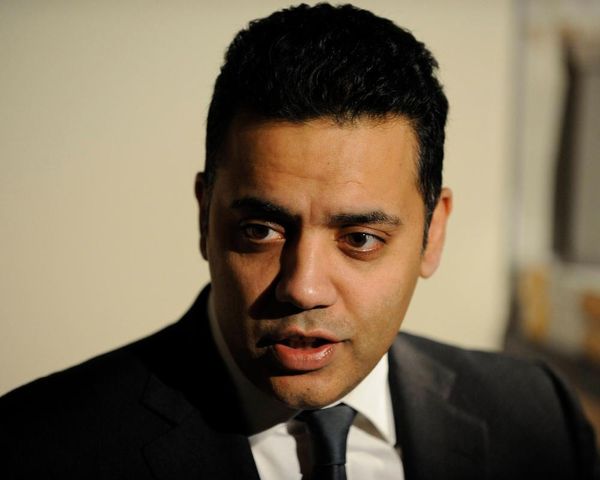
The first thing Christopher Krassnig noticed was not the 4.2 ROAS. It was the cash that never seemed to stay in the business.
On the surface, the seven‑figure e‑commerce brand he had just onboarded looked like a textbook success story. The outgoing agency's dashboard showed upward curves and efficient spend. But when Krassnig pulled the profit sheet apart, a different picture emerged: roughly four in ten orders were losing money once product costs, shipping, fees and returns were factored in. The reports were polished, the metrics were technically correct – and almost irrelevant to whether the brand was actually making a profit.

For Krassnig, it was a familiar pattern, and a turning point. If this counted as a "healthy" account something in the system was off.
From messy dropshipping experiments to a different kind of agency
Krassnig's route into advertising did not begin in a media agency boardroom. It began with his own card on file.
He cut his teeth in the unglamorous end of dropshipping: launching stores, testing products, scaling campaigns that worked and quietly shutting down those that didn't. Many of those early ventures have long since disappeared. What remained was a first‑hand understanding of how ad spend, margin and inventory pressure collide in an e‑commerce business.
That operator's education changed what success looked like for him. A high ROAS was only worth celebrating if, after costs and returns, there was still enough margin left to restock and move forward. A 3.5 ROAS on a healthy‑margin product could be a sensible trade; a 5.0 ROAS on a thin‑margin, high‑return product could be a slow, invisible drain on the business.
When he later crossed over to manage accounts for other brands, he carried that lens with him. The aim was not to become another "Google Ads specialist" with a template. It was to test whether an operator-first approach could work inside an agency.
Where the traditional model falls short
Looking inside agency‑run accounts, Krassnig found a disconnect between what founders believed they were buying and what they actually received.
On one side of the table were e‑commerce leaders juggling stock, cash flow and rising acquisition costs. On the other side were agencies presenting dashboards built around ROAS, impression share and other platform‑native metrics. In between, critical questions – Which products genuinely drive profit? Where is the margin silently leaking away? – often went unanswered.
In some accounts, junior staff handled substantial budgets, guided by inherited playbooks rather than commercial experience. In others, senior managers were spread across so many clients that deep thinking was replaced by routine tweaks. The story being told was one of optimisation and growth - the profit reality, frequently, was much less flattering.
Two things became clear. First, an agency that never sees or questions a client's P&L will almost inevitably optimise for the wrong thing. Second, many brands lack the internal reporting to challenge ROAS‑led narratives, which allows the pattern to repeat.
ZenoX Media emerged as an attempt to close that gap: an agency model built to behave more like an operator sitting inside the ad account than an external service provider.
Four structural problems inside most Google Ads relationships
After reviewing more than 200 e‑commerce Google Ads accounts, the ZenoX team saw the same issues recur.
1. The wrong numbers at the centre
The most fundamental problem is the metric at the heart of the conversation. ROAS, as presented in a platform dashboard, is not a proxy for profit. It omits unit economics, returns and the opportunity cost of attention on a particular product line.
Many agencies still anchor their reporting around ROAS, it's easy to visualise and simple to present. Founders see green arrows: months later they wonder why the bank balance tells a different story.
When ZenoX overlays profit‑per‑order data on the same accounts, what appears to be working often looks less impressive. Campaigns treated as "heroes" can be exposed as loss‑makers once all costs are included. Meanwhile, smaller, less celebrated campaigns are sometimes revealed as the true profit engines.
For an operator, this is not a marginal refinement. It is the difference between optimising for a slide deck and optimising for the survival and growth of the business.
2. Teams built for pitches, not for attention
The second issue lies in how many agencies structure their delivery teams.
A senior‑heavy line‑up sounds persuasive during a proposal. In practice, giving each experienced account manager 15 or 20 accounts forces them into shorthand. Playbooks, rules and past experience take over; there is little time left for detailed investigation of any single brand's reality.
ZenoX opted for a different balance. A significant portion of the team consists of trainees brought in through a structured development programme, with senior strategists responsible for both performance and mentorship. Those early‑stage practitioners have the space to live inside accounts: digging into search terms, scrutinising product performance and following up on anomalies.
This model requires robust systems and close oversight. It is slower to construct than a senior‑only roster. But it is designed to increase the amount of focused attention each account actually receives, rather than simply bumping up the seniority attached to it on a pitch deck.
3. Treating ads as a surface‑level tactic
The third flaw stems from a narrow view of what "running Google Ads" entails.
Traditional engagements confine the work to campaign set‑up, bidding, targeting and creative testing. These are important levers, but they sit downstream from the product catalogue. In many struggling accounts, the real issue lies not in bid strategies but in margins, pricing, stock mix or the way products are surfaced to the platform.
From ZenoX's perspective, Google Ads performance is, to a large extent, an output of catalogue decisions. If a brand's highest‑spend SKU carries fragile margins and high return rates, no amount of tactical optimisation will convert it into a healthy long‑term campaign. The product and positioning need to be addressed first.
Because catalogue strategy is often considered "out of scope", many agencies avoid these conversations. They continue to adjust campaigns around product lines that simply do not work economically, leaving founders with the impression that the problem lies solely inside the ad account.
4. Limited skin in the game
Finally, there is the question of incentives.
Retainer‑only models can, if handled poorly, dampen urgency. At the other extreme, pure performance‑fee arrangements can encourage aggressive scaling that flatters short‑term metrics and damages accounts over time. Both structures have pitfalls.
But beyond which model a brand chooses, Krassnig argues that the contract structure itself matters less than the behaviour it produces. True alignment shows up in whether an agency routinely anchors its reviews in profit, is prepared to call out weak products, and is willing to recommend pausing campaigns that the client is emotionally attached to when the economics fail to stack up.
Those are not always easy conversations. But they are the kinds of interactions founders remember, and the one that reveals whether a partner is actually on their side.
Inside ZenoX: an operator's agency
ZenoX's model is constructed as a response to these structural weaknesses rather than a minor variation on the standard agency playbook.
At its core sits profit‑sheet reporting. Every account is evaluated through the lens of profit per order and contribution to overall margin. Platform‑level indicators – ROAS, click‑through rate, impression share – are treated as useful context, not as end goals in themselves. When there is a conflict between the dashboard and the profit sheet, profit wins.
The team structure reflects the belief that attention and training matter more than titles alone. Senior strategists oversee smaller portfolios, investing time in both client strategy and the development of trainees working alongside them. That dual responsibility pushes the organisation towards clearly documented processes and shared standards, rather than relying on individual improvisation.
Meanwhile, the operations layer leans heavily on automation and AI in a practical, rather than promotional, sense. With more than 200 accounts under management, manually spotting every anomaly or subtle pattern is unrealistic. ZenoX uses AI to monitor product feeds, flag unusual shifts in performance and surface trends across its portfolio. Over time, that infrastructure has been distilled into Scaley AI, a software product that makes the agency's internal way of analysing accounts accessible to brands beyond its client base.
The final piece is the relationship itself. Regular reviews focus as much on catalogue, margins and operational constraints as they do on campaign‑level performance. When the data points to a product, pricing or stock issue, that is surfaced directly, even if it sits outside the traditional "ads" remit.
What the numbers suggest
Today, ZenoX manages more than 200 e‑commerce Google Ads accounts with a team of 14. Across this portfolio, its work has contributed to over $200 million in revenue generated through clients' ad accounts.
Behind those headline figures are quieter stories: double‑digit sales lifts unlocked by feed optimisation alone; category‑level click‑through rates that recover after structural changes; and accounts stabilised after prior over‑aggressive scaling. To Krassnig, these outcomes are less a collection of case studies and more a validation of an operator‑led approach to agency work.
From internal systems to Scaley AI
As ZenoX scaled, the internal systems built to manage accounts at depth began to take on a life of their own. The problem shifted from "How do we fix this individual account?" to "What does good look like across hundreds of different brands and structures?"
Scaley AI is the direct result of that thinking. It encapsulates the profit‑first, catalogue‑aware philosophy that underpins ZenoX and delivers it as software that e‑commerce brands can use even if they are not yet ready for a full‑service agency partnership. Rather than promising to replace human judgement, it is designed to give founders clearer visibility into where their accounts are genuinely working and where silent risks may be building.
A sharper question for e‑commerce founders
For founders, the takeaway from Krassnig's journey is simple. Instead of asking, "What is our ROAS?", the more revealing question is, "What is our profit per order by campaign, and who is helping us improve it?"
The agencies most likely to add long‑term value are not necessarily the ones with the most impressive dashboards. They are the partners willing to discuss margins, catalogue curation and operational constraints before proposing a new campaign structure. They are comfortable delivering uncomfortable truths when the data demands it.
ZenoX is one example of an agency built around that philosophy. But the wider point extends beyond any single provider. In an environment where acquisition costs continue to rise, an operator‑grade standard for agency relationships is no longer a luxury. It may be a prerequisite for staying in the game.