Get all your news in one place.
100's of premium titles.
One app.
Start reading
The Times of India
The Times of India
World
TOI World Desk

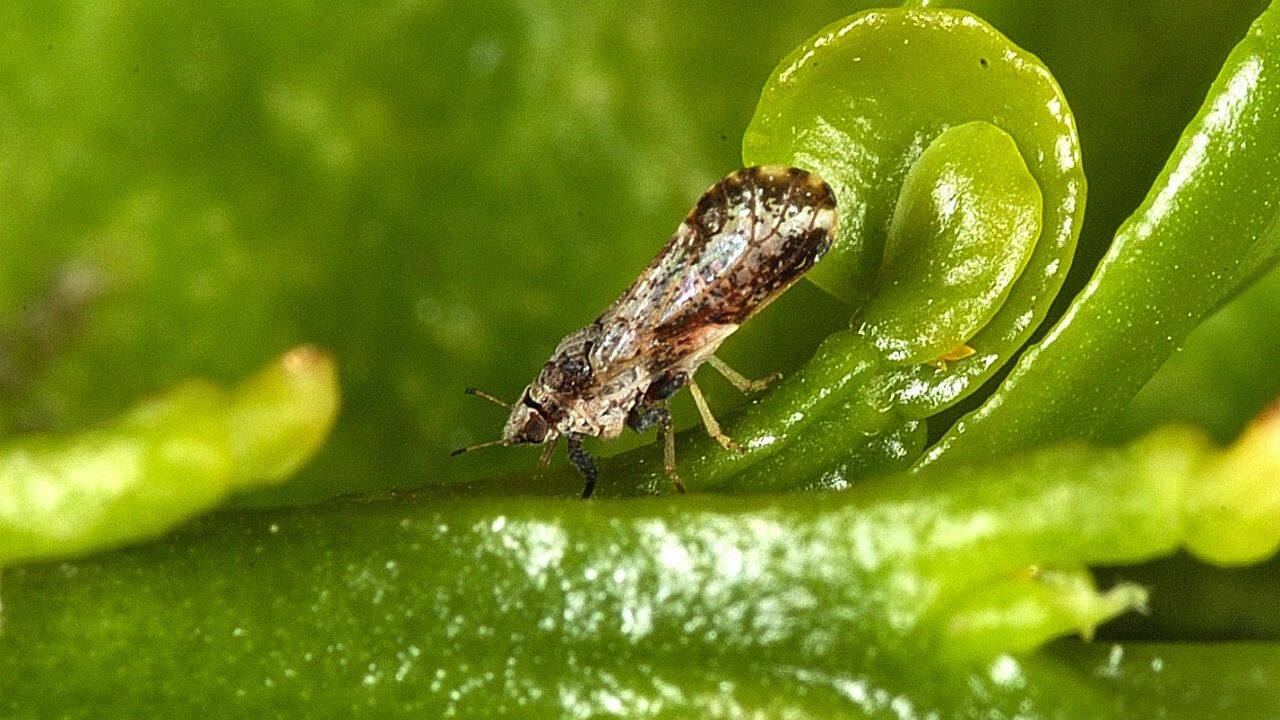
Insect smaller than a grain of rice is destroying Florida’s orange industry by spreading a deadly disease

Florida is the largest orange-producing state in the United States and the third largest in the world, only after Brazil and China. For a long time, this orange industry has been a vital aspect of the region's identity, because of all the oranges grown there, approximately 95% of them are used for juice production around the world.

Get breaking news anytime, anywhere. Download the TOI app now!

However, this position is under severe threat from a dangerous bacterial disease known as Huanglongbing(HLB), commonly known as ‘citrus greening.’ It was first identified in 2005 within Florida's borders, and the disease has since been spreading with rapid speed. This process is destroying the livelihoods of countless growers and also the stability of the global market. The infection attacks the internal vascular systems of the trees, which prevents them from absorbing the essential nutrients they need to survive. This biological emergency has completely shifted the landscape of citrus farming, forcing a total rethink of agricultural management.

How this tiny insect is destroying Florida’s orange trees

According to the report titled ‘ Impact of Citrus Greening on Citrus Operations in Florida ’ from the IFAS(University of Florida), the disease is caused by a bacterium that disturbs the process of a tree moving nutrients from its roots to its leaves. This leads to smaller fruit, lower juice quality, and eventually, death of the tree itself. The disease is spread by a tiny insect called the ‘Asian citrus psyllid,’ which acts as a carrier, moving the bacteria from one grove to another.

As noted in ‘ Management of Huanglongbing of Citrus: Lessons from São Paulo and Florida ,’ this partnership between the insect and the bacteria is highly destructive because no citrus varieties are currently available that are resistant to the infection.

Level of damage for the orange growers of Florida

The statistics provided in the IFAS document shows a bad picture of the last 20 years. Since the disease was first discovered in 2005, orange production in Florida has gone down from 242 million boxes to just 104.6 million boxes by 2014. This represents a massive 42% decrease in yield, with a 26% reduction in the total land area dedicated to orange groves.

A survey of industry professionals, which includes grove owners and production managers, revealed that the crisis has reached the level of an epidemic. On average, growers reported that 90% of their area and 80% of their individual trees were infected with the bacteria. This has resulted in an average loss of yield roughly 41% across the board, thereby increasing the cost of production for families who have farmed these lands for generations.

Different methods of fighting this insect across the world

The ‘Management of Huanglongbing of Citrus’ review highlights a heartbreaking comparison between Florida and São Paulo, Brazil. Both regions are global leaders in orange production and both faced the same disease at roughly the same time. Scientists recommended a ‘three-pronged’ strategy which suggests ‘planting only disease-free trees from nurseries, strictly controlling the psyllid insect, and immediately removing any tree showing symptoms.’

In Brazil, growers majorly chose these rigorous procedures, which allowed them to maintain production with little loss. On the other hand, the industry in Florida is witnessing an overall production reduction of approximately 80%. The failure in removing infected trees and coordinating insect control across different farms allowed the disease to grow out of control in the United States.

Can regional management make a difference in orange production

Not all parts of Florida have suffered equally. The IFAS report notes that operations in Central Florida have experienced a 12% increase in the loss of yield, as compared to those in the Southwest. This difference is because of the size and structure of the farms.

In the Southwest, groves are typically larger and majorly owned by corporations that can afford the high costs of tree care and insect management. These larger operations are better equipped to participate in Citrus Health Management Areas, where neighbouring growers coordinate their efforts to spray for the psyllid insect. When growers work together, the effects of the treatment last longer because it prevents the insects from hopping over to an untreated grove.

What are the present challenges to recover the orange industry

One of the most significant hurdles is the ‘lack of a cure.’ The IFAS report clearly states that there is currently no viable way to manage trees once they are infected. Furthermore, managing the insect carrier is becoming difficult day-by-day. As indicated in the study ‘Insecticide resistance in field populations of Asian citrus psyllid in Florida,’ the insects are becoming harder to kill with standard chemical treatments.

As the profits drop, many small growers have nothing else to do except reducing their spending on tree care, which unfortunately makes the problem worse. When a grower stops treating their trees, they create a ‘nursery’ for the psyllid, which then spreads the disease to healthy neighbouring groves.

Florida's orange industry is currently in a fight for its survival, but the lessons learned from industry in Brazil provide a roadmap for better management. The end goal is to find a way to maintain productivity in the presence of the disease, so that Florida's famous citrus can continue to deliver fresh juice for generations to come.

Sign up to read this article
Read news from 100's of titles, curated specifically for you.
Already a member? Sign in here
Related Stories
Top stories on inkl right now
One subscription that gives you access to news from hundreds of sites
Already a member? Sign in here
Our Picks
Fourteen days free
Download the app
One app. One membership.
100+ trusted global sources.