Get all your news in one place.
100's of premium titles.
One app.
Start reading
The Times of India
The Times of India
World
TOI World Desk

Indonesia’s crowded coastal island adapts to life at the edge of the sea as shared spaces come under pressure

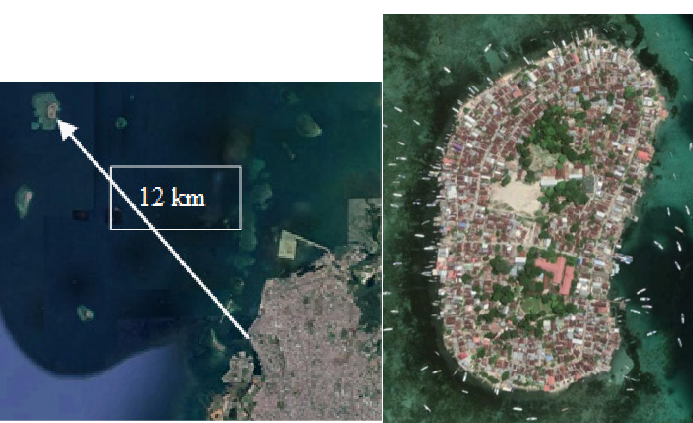
Barrang Lompo Island in Indonesia is a densely settled island where limited land availability and the close relationship between residents and the surrounding sea shape everyday life. As space has become increasingly constrained, people have adapted the way they use their homes and coastal surroundings to meet changing needs.

Get breaking news anytime, anywhere. Download the TOI app now!

These observations are explored in the research paper published in the journal Maritime Studies. The study examined how residents respond to limited space through informal adaptations, and how those survival strategies can create tension between immediate needs and shared coastal spaces.

The restricted amount of land available on Barrang Lompo Island has been an influence on how the population organises their houses and activities within a dense coastal settlement. It affects the location of residences and their movements and resource utilisation in their surroundings. Coastal areas are of importance for daily activities, occupations and social events on Barrang Lompo Island.

When land restrictions make people adopt new adaptations

The case of Barrang Lompo Island is one among many of those coastal communities that have to find ways of satisfying their demands when they have little opportunity to expand in size. The analysis of the research reveals the process of adaptation by the population in the form of informal adjustments to the use of space.

Rather than relying only on formal urban planning, people adapt through everyday decisions that gradually reshape the island. Homes, pathways and community spaces evolve as residents find ways to make the most of the available area.

In the study, the authors describe this tension as a "resilience paradox", where adaptations that help residents meet immediate needs can also create longer-term challenges for managing shared coastal spaces. The same adaptations that help people live in difficult conditions can also create new challenges for managing shared spaces. Individual solutions may help households meet immediate needs, while also changing how coastal areas are accessed and used by the wider community.

They also show how communities respond creatively to island life. Residents use local knowledge and experience to navigate limited space, changing conditions and everyday demands.

However, where there are many adaptations carried out simultaneously, this might affect how these shared spaces operate. Spaces which had been previously managed by everyone may now become inaccessible, and this begs the question of how the spaces will be organised in future.

The challenges of securing one's survival and organising shared spaces

For the inhabitants of Barrang Lompo Island, adaptation to limited space is something they face on a daily basis. This is influenced by housing, mobility and livelihood requirements.

The study shows that informal adaptation plays an important role in helping communities respond to spatial limitations. These practices help residents continue living in a place where land is scarce, and the sea is central to social and economic life.

At the same time, the research shows why it is important to consider how these adaptations affect shared spaces. Coastal areas are shared spaces, and changes in how they are used can affect relationships between different users.

The challenge is balancing residents’ immediate needs with preserving access to shared coastal spaces. That means using approaches that recognise both everyday realities and the need for long-term planning.

The study does not make the case that local adaptation must end. Rather, the study draws attention to the importance of viewing such adaptations in the context of an ongoing debate regarding the management of scarce space by coastal communities.

What Barrang Lompo shows about the future of coastal living

Barrang Lompo Island demonstrates a larger issue faced by coastal communities everywhere. As populations grow and space becomes scarcer, some coastal communities are adapting to changing land-water boundaries.

The research shows that resilience can be complicated. A solution that helps people cope with one challenge can also raise new questions about shared resources, access and future development.

Knowing about these truths would enable policymakers to come up with approaches that take the community into account instead of approaching it externally. What happens within the local community is an important way of knowing how they react to situations of change.

Sign up to read this article
Read news from 100's of titles, curated specifically for you.
Already a member? Sign in here
Related Stories
Top stories on inkl right now
One subscription that gives you access to news from hundreds of sites
Already a member? Sign in here
Our Picks
Fourteen days free
Download the app
One app. One membership.
100+ trusted global sources.