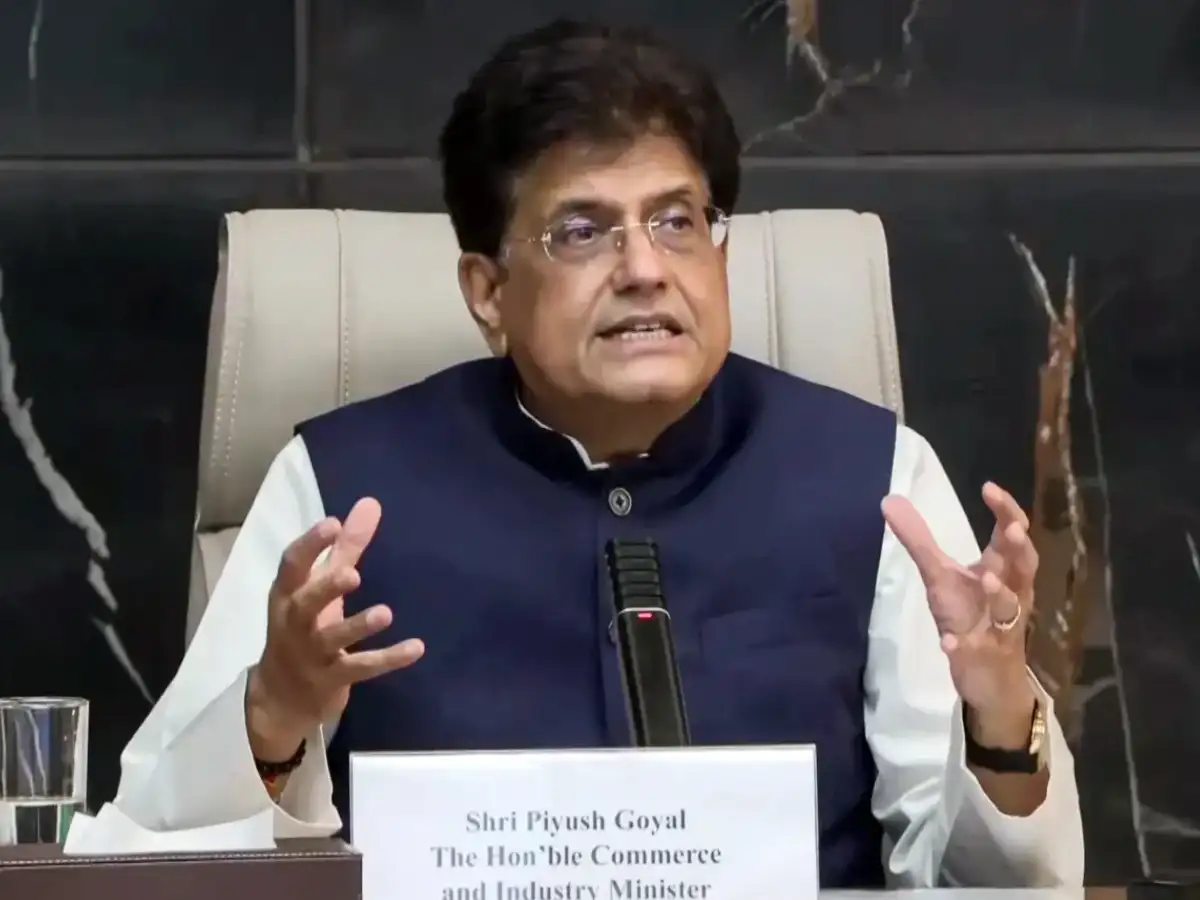
New Delhi: The trade pact between India and the US is "done and dusted" and will be executed once the United States gives India the right competitive advantage over its competitors in the American market, Commerce and Industry Minister Piyush Goyal said on Thursday.
India and the US in February announced finalisation of the framework for the first phase of the bilateral trade agreement (BTA). However, changes in the tariff landscape in the US have led to further negotiations on the pact.
He said that India has finalised nine free trade agreements, "and I include the US, which is almost done and dusted".
"We have to find the right comparable competitive advantage over our competitors, so that we can quickly execute the agreement," the minister added.
Also read | Karnataka to woo Singapore majors; Sats plans expansion
These remarks come ahead of Goyal's visit to the US for the G20 Trade Ministerial, to be held in Milwaukee, Wisconsin, from September 30 to October 1.
He will also hold a bilateral meeting with US Trade Representative Jamieson Greer and the progress of negotiations for the pact is expected to be taken up during the deliberations between the two leaders.
INDIA-EU FTA
Goyal also highlighted the negotiating gains secured under the India-EU trade agreement, particularly in response to new European climate and trade regulations like the Carbon Border Adjustment Mechanism (CBAM) and Deforestation Regulations.
He added that India has secured additional steel quotas for domestic exporters and a USD 500 million commitment on climate finance, with more such support expected in the future.
"Even now when they (EU) wanted to restrict steel exports, we have extracted our pound of flesh and safeguarded so many of our agriculture and other sectors and we got a huge extra steel quota. We got another USD 500 million commitment on climate finance. It is the beginning; there will be much more coming," Goyal said.
India has secured zero-duty market access for over 90 per cent of its steel exports to the European Union (EU) under the India-EU Free Trade Agreement (FTA), with opportunities to export up to 2.8 million tonnes (MT) of steel under various quota arrangements.
Also read | India-EU FTA to boost Indian exports, spur Danish investment in India: Denmark envoy Kristensen
Talking about the EU regulations, he said the number has increased to 73, but these would provide huge business opportunities to Indian industry.
"The more they regulate and overregulate and create hurdles for their businesses, the EU is going to get wedged out of the business. Their automobile will never be able to compete with ours with all those regulations. Their roads and infrastructure are going to be so expensive that tolls will rise, housing will become expensive due to restrictions on steel and cement, import quotas and import duties of 50 per cent.
"At the end of the day, the cost of living will become expensive (in Europe), salaries will have to go up, production will have to go up. This will give India a cost advantage. They will have no choice but to manufacture in their trusted geography where their technology is not stolen, their IPR and investments are safe and that is what India offers," he said.
OTHER FTAs
The minister informed that negotiations are progressing with several other trading partners for FTAs.
Canada is making fast progress, the minister said, adding he held a meeting with Canada's Minister of International Trade Maninder Sidhu last week in Mumbai and both sides resolved issues to bring greater political heft to the negotiations.
"When ministers get into the act, then we conclude agreements," he said.
On Mexico, he said the Terms of Reference (ToR) for negotiations had been finalised and the Commerce Secretary Rajesh Agrawal is expected to travel to Mexico next week to take forward the process and launch the negotiations.
The first round of negotiations with the Gulf Cooperation Council (GCC) is scheduled for October, he said. The Terms of Reference of the FTA were signed in February this year.
On trade agreements with Chile and Peru, Goyal said that the Comprehensive Economic Partnership Agreement (CEPA) with Chile may happen soon, but with Peru it may not happen due to a lot of competition and competitive interests.
These developments are important as India is seeking to expand its network of FTAs on account of increasing uncertainty at the tariff front and non-tariff barriers.
Goyal said India's FTAs would ultimately provide preferential access to markets accounting for about 75 per cent of global GDP, underscoring the government's strategy of using trade agreements to widen market access for Indian exporters.
CHINA
Criticising earlier governments for engaging in the RCEP negotiations, he said it was an FTA between India and China.
The RCEP (Regional Comprehensive Economic Partnership) agreement was negotiated among 10 ASEAN members (Brunei, Cambodia, Indonesia, Laos, Malaysia, Myanmar, the Philippines, Singapore, Thailand and Vietnam) and their six free-trade pact partners: Australia, China, India, Japan, South Korea and New Zealand.
India in 2019 decided not to join the mega free-trade agreement RCEP as the pact was not addressing its concerns and since then there has been no change in that position.
He said that India already had a trade pact with Asean, Japan, and South Korea and it was negotiating at that time with Australia and New Zealand.
"China was the only other country. So, effectively, RCEP negotiations that we entered into voluntarily would have given us an FTA between India and China," he said.
DIRECT SHIPPING ROUTE
He said it is a challenge which India has and it will only be resolved with two major factors.
"We are looking at massive changes in our maritime regulatory infrastructure and ecosystem by which more and more companies would want to flag their vessels in India. We will provide the best registry in the world for people who flag their vessels. We are working on that; it's a work in progress," he said.