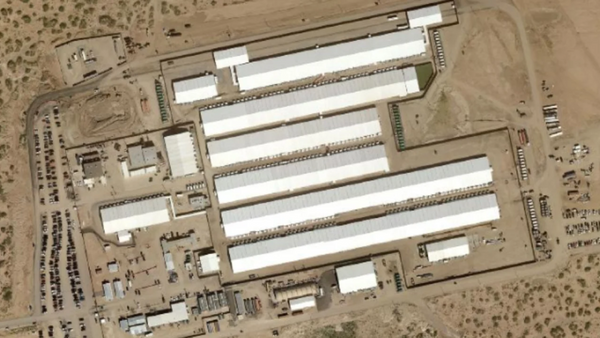
The energy agreement inked between India and the UAE last week may appear to be a straightforward strategic petroleum arrangement. But it's much more than that. Now, the UAE can store, finance and retain ownership of up to 30 mn barrels of crude oil in India's strategic reserves. Beyond the existing facility in Mangaluru, the two sides will explore new storage capacity in Visakhapatnam and Chandikol in Odisha.
In return, India secures priority access during emergencies, such as the current one. The agreement also explores potential crude oil storage in Fujairah, which bypasses the Strait of Hormuz, with potential LNG and LPG storage opportunities in India. In the process, the UAE has committed to being a reliable long-term LPG supplier to India.

Also read: Pvt sector deals are key to push India-United Arab Emirates ties ahead, says UAE Minister
On paper, this is a practical and mutually beneficial arrangement. In substance, however, it's an insurance policy against a world growing more fragmented and volatile, but remaining interconnected.
The agreement's subtext is the emergence of a new geopolitical logic, one shaped not by shared enemies but by shared vulnerabilities. Covid, regional conflicts and Trump tariffs have underscored a central reality: interdependence is now part of the world's DNA. While decoupling remains tempting, managing risk through deeper economic linkages - such as stitching together FTAs to blunt the impact of tariffs - is the more practical response.
The India-UAE deal, therefore, defines the grammar of the next phase of globalisation, one based on secure interdependence.
The timing is significant. Aftershocks of the US-Israel war on Iran continue to ripple across global markets, most visibly in the energy ecosystem. What began as a regional security crisis has morphed into a global economic risk event. It is this cascading nature of global vulnerability that's reshaping the strategic calculus of nations, manifesting in the India-UAE energy deal. In short, the world is pivoting from deterrence-based to resilience-based geopolitics.
In this instance, for decades, the geopolitical architecture of the Gulf was framed around countering the threat perception of Iran. Security partnerships, military alliances and diplomatic alignments were constructed around deterrence and containment.
Also read: India, UAE bolster defence, energy & infra partnership
The concern today is how disruptions targeting the economic depth of Gulf countries can destabilise everyone. These states now share a common vulnerability - even a geographically contained conflict can choke energy arteries, disrupt shipping lanes, trigger capital flight and erode investor confidence. The defining feature of this new era, therefore, is not shared hostility but shared exposure.
This shift has profound implications. Countries are aligning around risk management rather than ideological affinity. Energy, trade and transport corridors, semiconductor supply chains, undersea data cables, rare earth access, digital payment systems and logistics hubs are all becoming instruments of strategic resilience.
The old vocabulary of geopolitics - territory, military blocs and ideological camps - is being supplemented by a new lexicon defined by redundancy, resilience and continuity. Viewed through this lens, the India-UAE agreement is not about oil storage but distributed resilience.
For India, the arrangement solves a strategic challenge. Building and maintaining emergency reserves is expensive. By allowing the UAE to store oil in Indian facilities while securing preferential access during crises, India enhances its energy security without bearing the financial burden of filling and rotating the reserves. At a time when energy volatility can trigger a spiral of inflation, fiscal pressures and political consequences, such arrangements provide economic resilience and enormous strategic value.
Also read: PM Modi in UAE: India signs defence, gas supply and strategic oil reserves pacts with Abu Dhabi
For the UAE, the logic is equally compelling. The Gulf's traditional advantage - proximity to energy production - has become a vulnerability during periods of instability. By creating offshore storage and distribution nodes in a large consuming market like India, the UAE reduces concentration risk while deepening long-term strategic interdependence with one of the world's fastest-growing economies.
What we are witnessing is the gradual emergence of a new global risk architecture. Supply chains are being diversified, capital is searching for politically stable destinations, and countries are seeking trusted partners capable of absorbing shocks rather than merely projecting power.
The premium in the coming decade may not necessarily accrue to the most powerful nations, but to the most reliable nodes within global networks. This is where India's opportunity becomes interesting. In a world defined by systemic disruptions, India increasingly positions itself as a stabilising geography: a large market, democratic polity, trusted tech partner and emerging manufacturing hub.
This is, however, predicated on India's ability to overcome decades of inertia and pursue hard-nosed economic reforms. The defeat of two regional satraps in recent state elections has provided political space for GoI to manoeuvre on key reform initiatives. Carpe diem.
The writer is an independent journalist