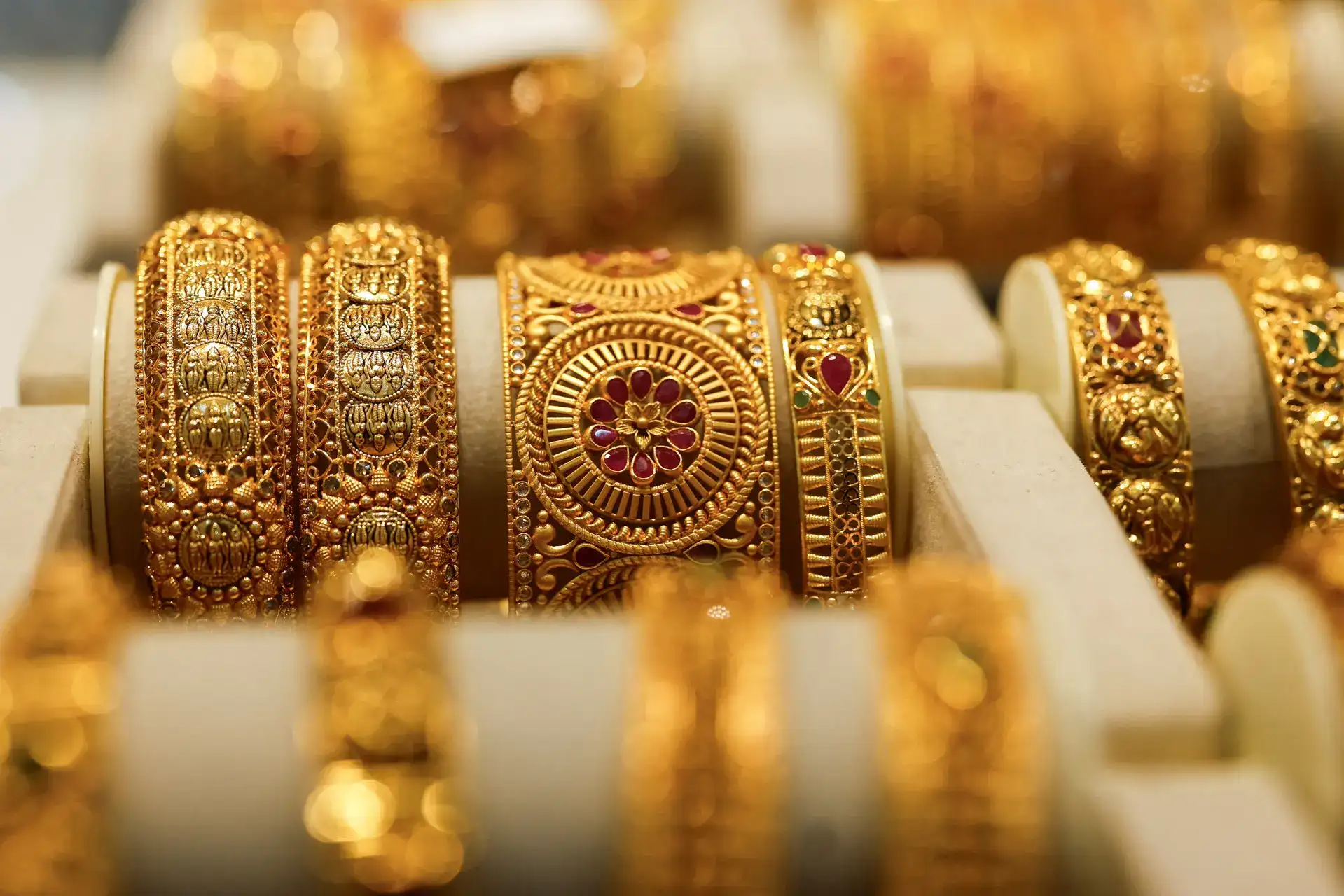
The Indian government has sharply increased customs duties on gold and silver to 15% from 6%, and platinum imports to 15.4% from 6.4%, as policymakers seek to contain pressure on the country’s foreign exchange reserves and external account during the ongoing West Asia conflict.
Consequential changes have also been made to related products including gold and silver dore, coins and findings.

The government has imposed a 10% basic customs duty along with a 5% Agriculture Infrastructure and Development Cess (AIDC) on gold and silver imports, taking the effective import tax to 15%.
Also Read: Here's why India has increased import duty on gold, silver and platinum
A source said the increase in customs duty on precious metals, including gold, gold dore, silver, silver dore and platinum, was introduced as a policy measure aimed at safeguarding macroeconomic stability, conserving foreign exchange and moderating non-essential imports during a period of heightened global uncertainty linked to the West Asia crisis.
“The increase in customs duty on precious metals is intended to moderate avoidable import demand and ease pressure on the external account. The measure is neither prohibitory nor anti-consumer in nature. It is a carefully calibrated and proportionate intervention designed to encourage moderation in non-essential imports at a time when external vulnerabilities remain elevated,” the source said.
The higher import duties could reduce demand in India, the world’s second-largest consumer of precious metals. The move may help narrow the trade deficit and support the rupee, which has been among Asia’s weakest-performing currencies.
At the same time, industry officials warned that sharply higher import taxes could revive gold smuggling, which had eased after India reduced tariffs in mid-2024.
Prime Minister Narendra Modi on Sunday urged Indians to avoid gold purchases for a year in order to help protect the country’s foreign exchange reserves. India imports almost all the gold it consumes.
Gold demand in India, especially for investment purposes, has climbed in recent months amid a rally in bullion prices and weak returns from equities over the past year.
"The duty would remain high till the Middle East crisis remains, crude oil prices remain high and the oil supply chain becomes stable. So, maybe, around one year it shall stay at these levels. The volumes might get impacted by 10-15 percent but value wise it will remain at higher level. Consumers will buy lighter weight jewellery," Suvankar Sen, MD & CEO, Senco Gold ltd, said.
Why India hiked gold, silver import duty to 15%
According to the source, the current geopolitical situation has created significant volatility in global crude oil markets and international shipping routes. India, one of the world’s largest crude importers, remains vulnerable to elevated energy prices and supply disruptions, which could increase the import bill, add to inflationary pressures and widen the current account deficit.
“In such circumstances, prudent management of the country’s external sector becomes essential,” the source said.
The source added that customs duty adjustments have historically been used as one of several policy tools to support macroeconomic stability and manage current account deficit pressures during periods of global volatility.
The source said customs duty rates on precious metals have historically been adjusted in line with changing macroeconomic and external conditions. During periods when external pressures eased, foreign exchange reserves strengthened and broader macroeconomic stability improved, the government had also lowered duties on precious metals and related products. As an example, the Union Budget for 2024-25 reduced customs duties on gold and silver to 6% from 15%, while duties on platinum were cut to 6.4% from 15.4%, reflecting what the source described as a more comfortable macroeconomic and external-sector position at the time.
India’s foreign exchange resources, the source said, need to be prioritised towards essential imports such as crude oil, fertilisers, industrial raw materials, defence requirements, critical technologies and capital goods because those imports directly support economic activity, infrastructure, manufacturing, exports, food security and national security.
The source said precious metals occupy a distinct position in India’s import basket because they are largely consumption and investment driven and involve substantial foreign exchange outflows.
“In contrast, precious metals, while culturally and financially significant, are predominantly consumption and investment driven in nature. Such imports involve substantial outflow of foreign exchange,” the source said.
The source added that precious metals are relatively less linked to productive industrial activity compared with sectors such as energy, manufacturing inputs, infrastructure or technology.
“In periods of heightened geopolitical and commodity-market volatility, policymakers often seek to prioritise external resources towards areas with higher strategic and economic multiplier effects. Therefore, during periods of external stress, measured moderation of discretionary imports may contribute significantly to overall macro-economic stability and prudent external-sector management,” the source said.
ETF inflows surge while imports slump to multi-decade low
Investor appetite for gold has remained strong despite earlier government attempts to curb imports.
Inflows into India’s gold exchange-traded funds surged 186% year-on-year during the March quarter to a record 20 metric tonnes, according to data released last month by the World Gold Council.
India had already moved to curb gold imports in recent weeks by levying a 3% integrated goods and services tax on gold and silver imports. The move prompted banks to halt imports for more than a month.
As a result, April gold imports fell to a near 30-year low.
Banks later resumed imports after paying the 3% IGST, but bullion dealers said imports are now likely to decline again following the latest increase in customs duties.
"The measure represents a balanced, proportionate, and nationally responsible response to extraordinary external conditions while maintaining due regard for macroeconomic stability and long-term economic resilience," the source said.
(with inputs from ET Bureau's Anuradha Shukla)