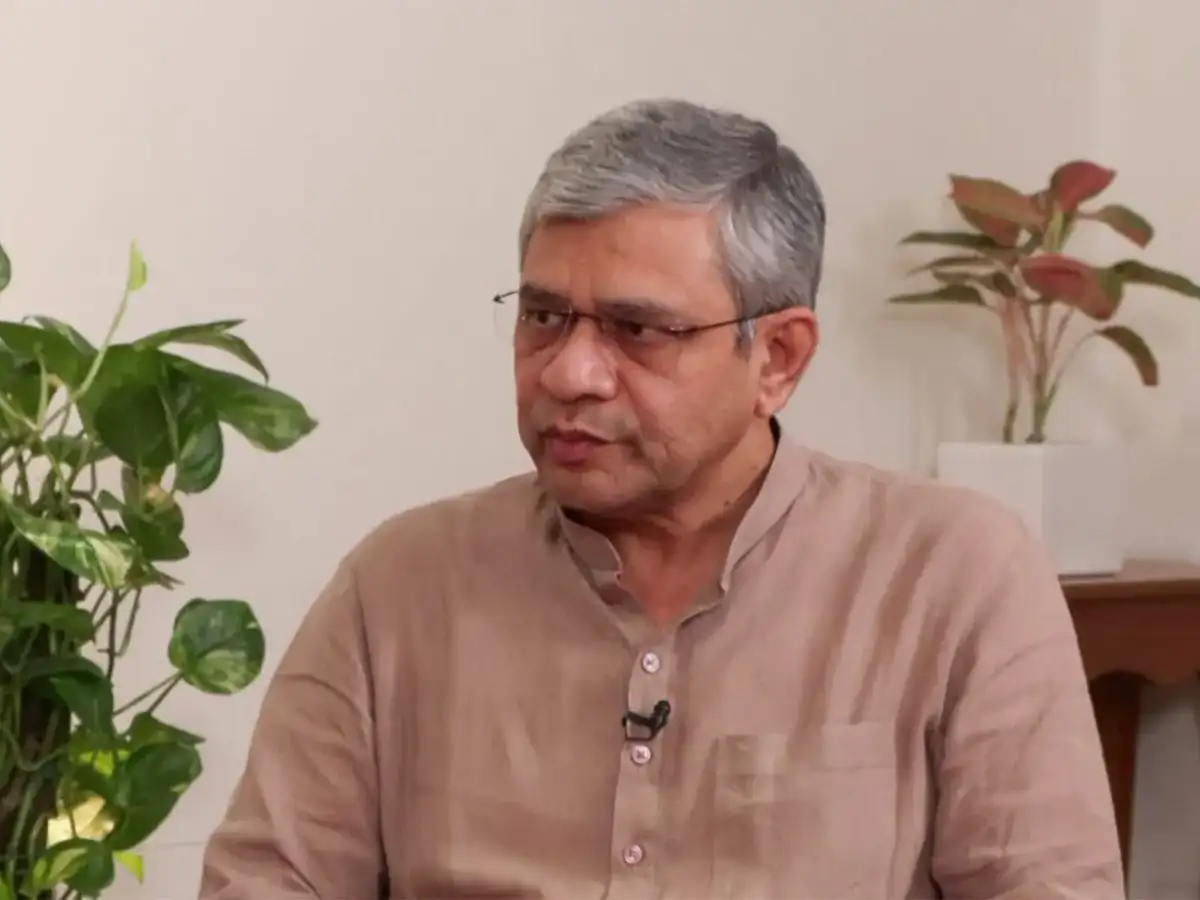
New Delhi: India has transformed into a trusted technology value chain partner under Prime Minister Narendra Modi's 12-year tenure, with the country now exporting electronics products to even the US and China, said Union Minister Ashwini Vaishnaw.
The minister told PTI that efforts were made in the past for semiconductor production in India from the time of the first Prime Minister Jawaharlal Nehru, and successors like Indira Gandhi to Rajiv Gandhi, but 'success' has been achieved by the Modi government.

"We are going to the next level, where we are starting the manufacturing of components. One of the good things that happened last year we exported about Rs 35,000 crore worth of components to China. Some very complex electronics products, like railway propulsion, we exported them to France, to Germany, to Italy and to the US," Vaishnaw said.
Also Read:AI world vastly different from IT Act era, believe new law is needed: Union minister Vaishnaw
From a net importer of smartphones in 2014, India now exports such devices.
Smartphones have become India's top export category with overseas shipments worth USD 30 billion in 2025.
Vaishnaw said that in calendar year 2025, electronics emerged as the third-largest export category for goods, and mobile phones have emerged as the single largest exported product.
"Conventionally, it used to be diesel, followed by gems and jewellery, followed by garments and engineer clothes. This means that the country is today accepted as a trusted value chain partner, a country which can manufacture high quality, it can design reliable products, and the security perspective also is fulfilled from products coming out of India," the minister said.
He said the Modi administration views the electronics and semiconductor industry with a "20-year perspective".
The minister said that the Modi government's initial strategy focused on securing foundational building blocks for the semiconductor sector.
"This is something that our country dreamt of having in the semiconductor industry way back in 1962. Efforts were made by successive Prime Ministers -- Prime Minister Jawaharlal Nehru, Indira Gandhi, Rajiv Gandhi, and Manmohan Singh. Finally, we got success during Prime Minister Modi's tenure because of his focused execution of this program," Vaishnaw said.
He said in the first phase of the India Semicon Mission (ISM), the government could get about 48 startups to work on the tech products.
"In ISM 2.0, that will be the top-most priority, design will be the top-most priority. The second-biggest priority will be machines that are used in the manufacturing of semiconductors. We will be seriously looking at getting the equipment manufacturers to come to India for designing the equipment as well as manufacturing the equipment," Vaishnaw said.
He said that the ISM 2.0 will also look at the indigenous production of complex chemicals and gases that are used for manufacturing chips.
"Of course, we will be adding many more fabs (chip manufacturing plants) and ATMP (chip packaging) units. We will be carrying forward the progress we made in talent development in the first version of the semiconductor mission," Vaishnaw said.
The minister said engineering colleges in India now have access to the most modern equipment and the most modern semiconductor design tools.
"The student-designed chips are manufactured in a laboratory at Mohali. The students can see the result of the design in the form of a physical chip. This capability does not exist in a large number of colleges. Only a handful of colleges in the world can claim this kind of capability," Vaishnaw said.
He said that the government has been able to train about 75,000 students in the short time frame of four years for the semiconductor ecosystem against the target of 80,000 in 10 years. "We will be achieving this 80,000 in 5 years itself," the minister said. PTI