Get all your news in one place.
100's of premium titles.
One app.
Start reading
Medical Daily
Medical Daily
Health
Joseph James

Independent Reviewers Cannot Yet Say Whether Older Adults Need a Second RSV Dose This Coming Season

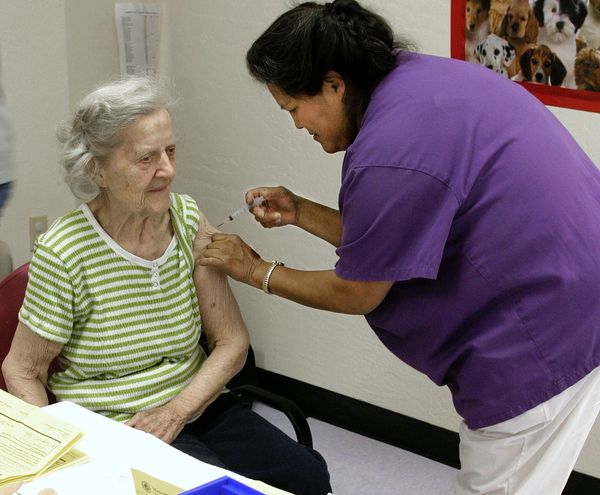
American adults who received an RSV vaccine in the past two or three years are now asking their doctors a simple question: do I need another one? An independent review of the evidence published this month says the science cannot yet answer it.

The finding came from the Vaccine Integrity Project at the University of Minnesota's Center for Infectious Disease Research and Policy, working with the American Medical Association, which published evidence reviews of influenza, COVID-19 and RSV immunizations in JAMA. The RSV review found substantial protection from vaccination. On repeat dosing, it found a hole.

"More evidence is needed to determine if repeated or annual RSV vaccination is necessary," said Nicole Basta, co-lead of the review team, at a press briefing. She added that the review identified evidence gaps for that question.

For households, this is a different situation from the flu shot, where the answer is annual and settled. RSV vaccination has never been framed as a yearly event, and the reviewers are saying plainly that the science has not yet caught up to a question many patients are already asking.


The Gap Sits Inside an Otherwise Positive Review

It would be easy to read an acknowledged evidence gap as a warning about the vaccine. It is not one.

The same review found that RSV vaccination of older adults, vaccination during pregnancy, and infant immunization with monoclonal antibodies substantially reduced severe illness and hospitalization. The gap concerns duration and repetition, not whether the first dose works.

That distinction matters for anyone weighing a decision this fall. A person who has never received an RSV vaccine and falls into a recommended group is looking at a body of evidence the reviewers described as supportive. A person who received one in 2023 or 2024 is looking at an open question, and the reasonable response is a conversation with a clinician rather than either automatic repetition or automatic refusal.


Strong Numbers for a First Dose

The review put specific figures on the protection. For adults 60 and older, Basta said, multiple studies showed significant reductions in hospitalization, with vaccine effectiveness ranging from 69 percent to 83 percent.

That range reflects real variation across study designs and populations rather than a single definitive number. The reviewers examined all licensed or approved products in the United States designed to prevent RSV, COVID-19, and influenza, with a focus on safety, effectiveness, and epidemiology.

Four major medical organizations reviewed that evidence and issued their own recommendations for the 2026 to 2027 season. The American Academy of Family Physicians recommends an RSV vaccine for people ages 50 to 74 with high-risk conditions and for everyone older than 75. The Infectious Diseases Society of America recommends it for adults with weakened immune systems. Their guidance and supporting material are posted on the Vaccine Integrity Project site and through AMA clinician resources.


Pregnancy and Infant Protection Follow a Different Path

The infant side of RSV prevention operates on separate logic and has clearer answers.

Women vaccinated during pregnancy reduce their own chance of RSV by 82 percent and also protect their infants from RSV-associated hospital stays, according to the review. Infants who receive the monoclonal antibody nirsevimab have a 64 percent to 93 percent lower risk of hospitalization.

The American Academy of Pediatrics recommends nirsevimab for all children younger than 8 months in their first RSV season if the mother did not receive an RSV vaccine during pregnancy, and for children 8 to 19 months at severe risk for disease in their second season regardless of the mother's status. The American College of Obstetricians and Gynecologists recommends either an RSV vaccine during pregnancy or nirsevimab for the newborn.

Parents of an infant born this fall have a defined decision in front of them, and it is one of the few places in this season's guidance where the recommendation is specific rather than conditional.


Clinicians, Not Calendars, Decide the Next Step

The reason a private evidence review is carrying this weight is procedural. The federal advisory committee that normally performs this synthesis has not issued recommendations for the coming season.

"We are living in unprecedented times when it comes to modern vaccine review," said Michael Osterholm, director of the Center for Infectious Disease Research and Policy, in an account of the reviews and in an accompanying commentary. He described the project as a stopgap that will never replace the federal committee.

Bruce Gellin, chair of the project's board of advisors, addressed the confusion directly. "Americans are hearing conflicting messages about vaccines right now," he said, encouraging people to look at the process behind how the recommendations were developed.

The practical guidance for a household is narrow. Anyone who has never had an RSV vaccine and is 75 or older, or 50 to 74 with a high-risk condition, should raise it at their next appointment. Anyone who already received one should ask their clinician rather than assuming a second dose is either needed or safe to skip, because the evidence supporting that decision has not been established.

What happens next depends on research that has not been completed and on whether federal recommendations resume. MedicalDaily will report when either changes.


Key Questions Answered

Do older adults need a repeat RSV vaccine? The independent evidence review could not answer this. Reviewers identified it as a gap and said more evidence is needed.

Does that mean the vaccine stopped working? No. The review found substantial protection from vaccination. The unresolved question is duration and whether repeat doses add benefit.

How effective is the vaccine for adults 60 and older? Multiple studies showed significant reductions in hospitalization, with effectiveness ranging from 69 percent to 83 percent.

Who is recommended to get one this season? Family physicians recommend it for people 50 to 74 with high-risk conditions and for everyone older than 75. Infectious disease specialists recommend it for adults with weakened immune systems.

What protects infants? RSV vaccination during pregnancy, or the monoclonal antibody nirsevimab, which was associated with a 64 percent to 93 percent lower hospitalization risk.

Why did medical societies issue this guidance instead of the federal government? The federal advisory committee has not issued recommendations for the 2026 to 2027 season, and the reviews were commissioned to fill that gap.

What should someone who already had an RSV shot do? Ask a clinician. The evidence needed to decide about a second dose has not been established.

Sign up to read this article
Read news from 100's of titles, curated specifically for you.
Already a member? Sign in here
Related Stories
Top stories on inkl right now
One subscription that gives you access to news from hundreds of sites
Already a member? Sign in here
Our Picks
Fourteen days free
Download the app
One app. One membership.
100+ trusted global sources.