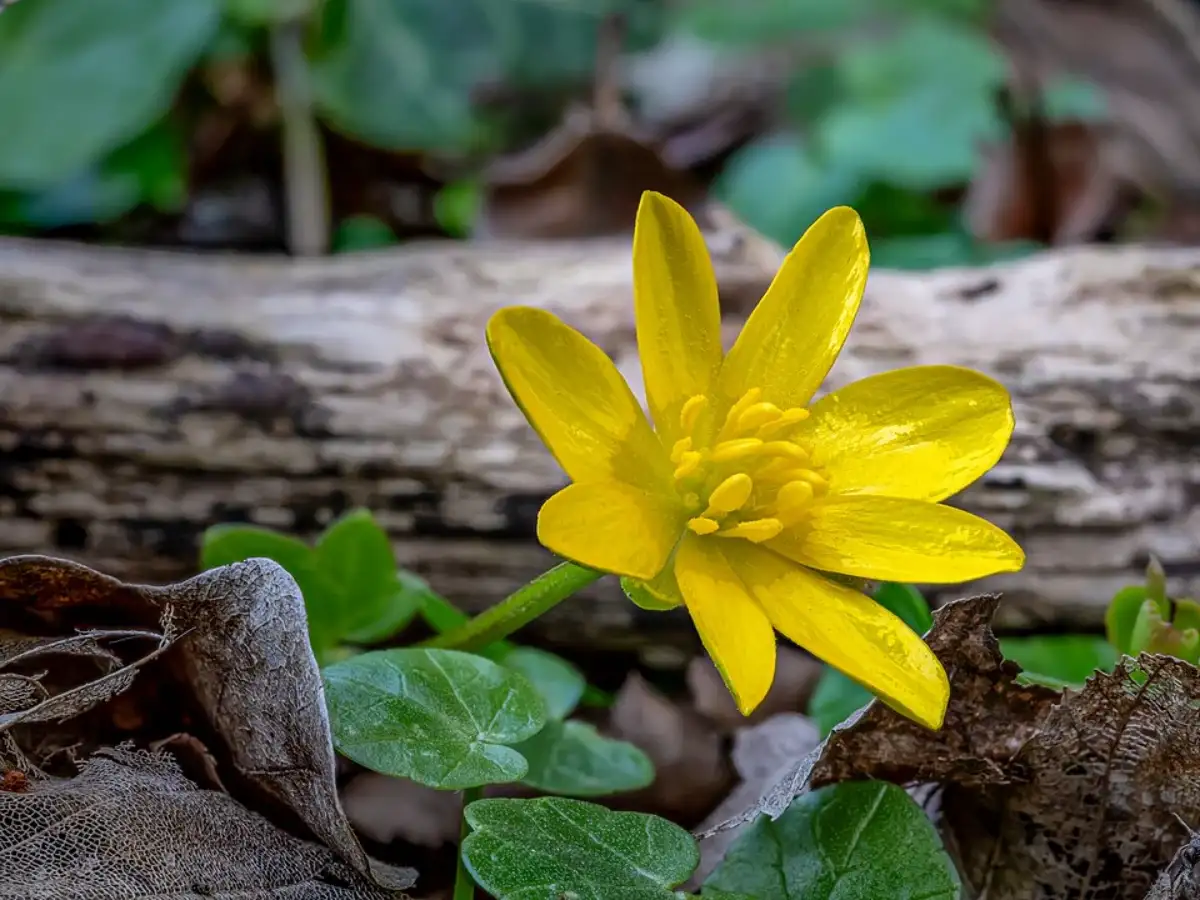
Lesser celandine was introduced to the United States as an ornamental plant, prized for its bright yellow flowers that appear in early spring. But the plant, native to Europe and parts of Asia, eventually escaped gardens and spread into woodlands, wetlands and stream banks. Its ability to form dense carpets before many native wildflowers emerge has made it a concern for conservationists trying to protect native plant communities. According to the Minnesota Department of Agriculture, lesser celandine ( Ficaria verna ), also known as fig buttercup, has spread to 31 US states. In one Ohio park, it covers an estimated 400 acres. The plant’s early growth, rapid reproduction and ability to regenerate from underground structures make established infestations difficult to remove.
From ornamental planting to invasive spread