Get all your news in one place.
100's of premium titles.
One app.
Start reading
The Economic Times
The Economic Times

In the early 2000s, researchers explained why woodpeckers don't get head injuries despite striking trees at 15 mph

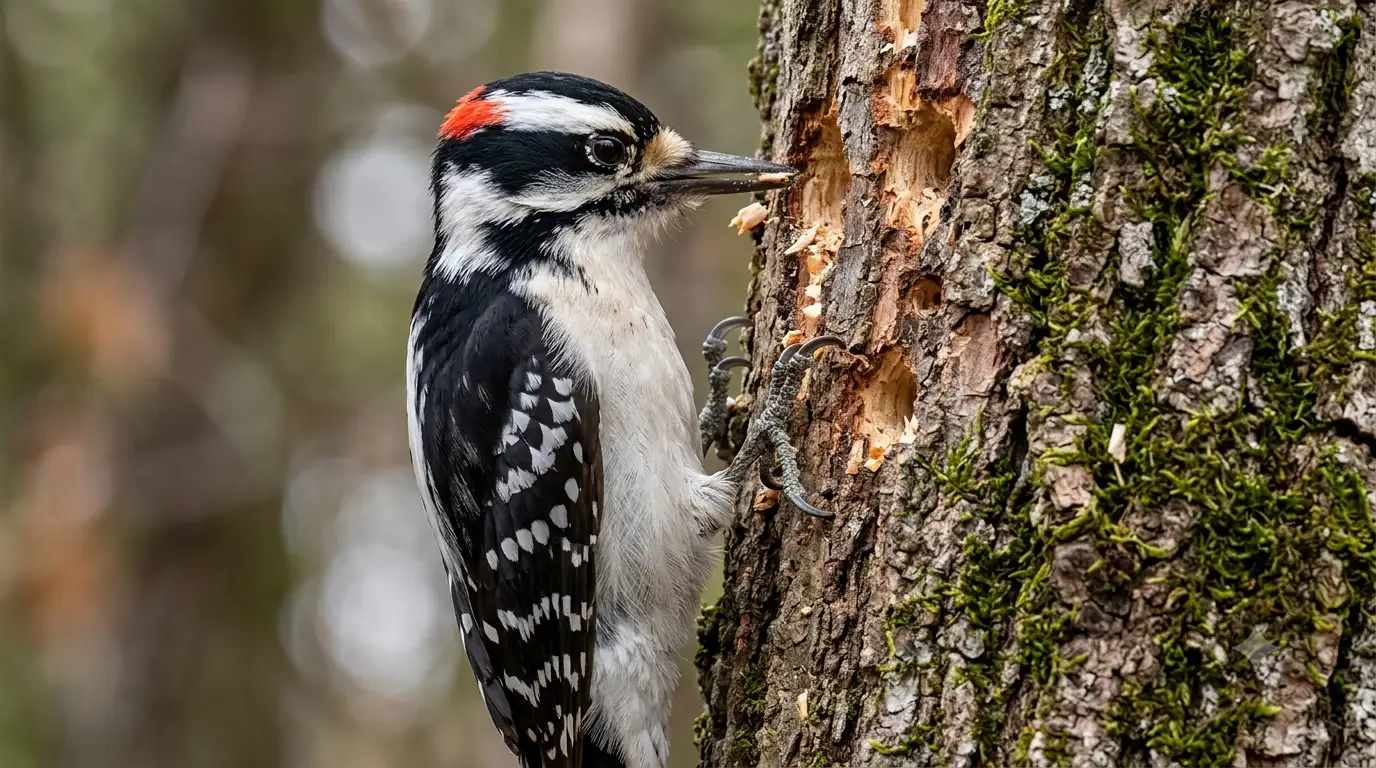
  • Woodpecker facts : Pileated woodpeckers, the largest woodpeckers in North America, strike trees with their heads at speeds of about 15 mph up to 20 times every second. Their powerful blows led University of California, Davis ophthalmologist Ivan Schwab to investigate why the birds do not suffer the kinds of head injuries humans would, as per a report.
  • Schwab's research, published in the 'British Journal of Ophthalmology,' helped explain how woodpeckers protect their brains and eyes during these repeated impacts. His work later earned him an Ig Nobel Prize.


    A question inspired by head injuries

    Schwab said his interest in the subject came from treating people with head injuries.

    He said, "If you get hit hard in the head, you can break blood vessels behind the eye or traumatize nerves behind eye," adding, "Seeing patients in car accidents and knowing what woodpeckers do made me wonder why these injuries don't happen in woodpeckers," as quoted by Livescience.

    How woodpeckers protect their brains while pecking trees

    According to the research, a woodpecker's body is specially adapted to reduce the force of each strike.

    About one millisecond before its bill hits a tree, dense neck muscles contract. Some of the impact is absorbed through these muscles, reducing the force reaching the skull. A compressible bone in the skull also helps cushion the blow.

    The bird's thick inner eyelid closes just before impact. It protects the eye from flying wood fragments and helps keep the eyeball firmly in place.

    Schwab said, "The eyelid acts like a seat belt and keeps the eye from literally popping out of the head," adding, "Otherwise, acceleration would tear the retina," as quoted by Livescience.

    The outer part of the eye is also firm and filled with blood, helping support the retina during repeated impacts.

    Why woodpeckers don't suffer brain damage from constant pecking

    Unlike humans, woodpeckers have very little cerebrospinal fluid surrounding the brain. In people, the brain can move within this fluid during a head injury, but woodpeckers' brains remain much more rigid during repeated pecking.

    Schwab said scientists cannot be certain that woodpeckers never get headaches, but noted that the birds appear to be highly tolerant of repeated impacts.

    During courtship, male woodpeckers may drum on trees up to 12,000 times a day.

    Sign up to read this article
    Read news from 100's of titles, curated specifically for you.
    Already a member? Sign in here
    Related Stories
    Top stories on inkl right now
    One subscription that gives you access to news from hundreds of sites
    Already a member? Sign in here
    Our Picks
    Fourteen days free
    Download the app
    One app. One membership.
    100+ trusted global sources.