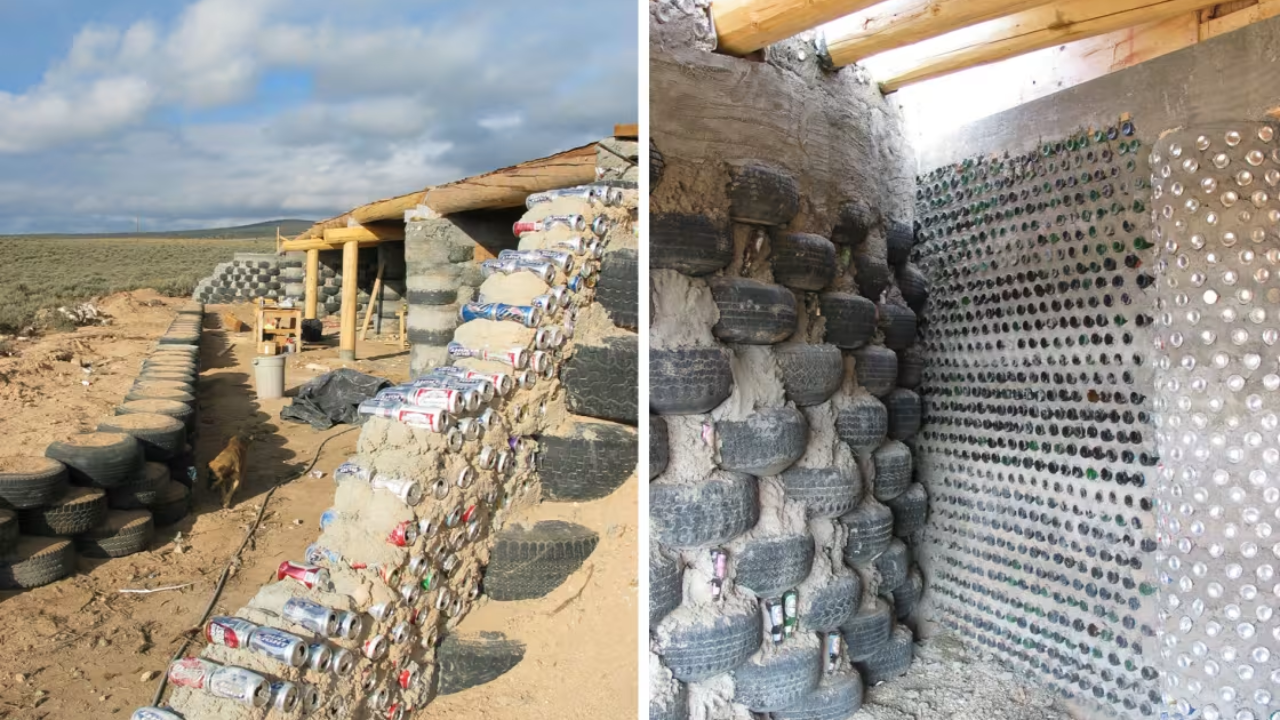
In the New Mexico desert, discarded car tyres, beer cans and bottles became the unlikely foundations of a different kind of home. Architect Michael Reynolds began developing his Earthship idea in the early 1970s, turning waste materials into thick walls designed to hold heat and houses built to produce and manage many of their own basic needs. For decades, the strange-looking buildings remained a niche experiment, often running into planning rules and scepticism. Now the idea is being viewed through a different lens. As hurricanes, floods, tornadoes and power failures leave conventional homes cut off from essential services, Earthships are attracting renewed attention for their ability to operate independently of the grid. What began as an experiment in using rubbish has gradually become a model for thinking about how homes might cope when the infrastructure around them stops working. Their design combines passive solar heating, rainwater collection, food production and systems for treating wastewater, reducing reliance on outside supplies. In an era of increasingly unpredictable weather and fragile infrastructure, that self-sufficient approach is prompting architects and homeowners to reconsider what a resilient house could look like.
Get breaking news anytime, anywhere. Download the TOI app now!