Get all your news in one place.
100's of premium titles.
One app.
Start reading
The Economic Times
The Economic Times

In the 1960s, giant Red King crabs were introduced to the Barents Sea by the Soviets, then everything changed

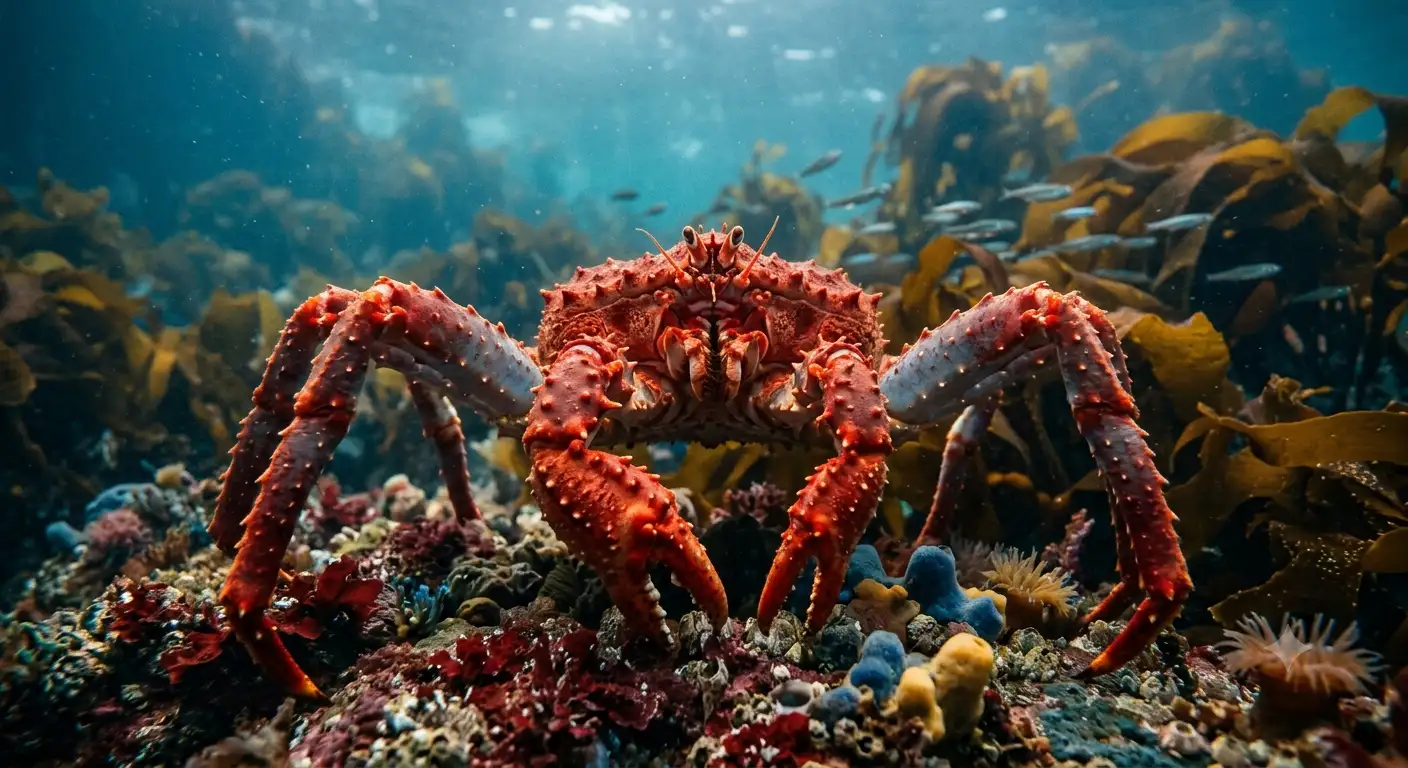
Giant red king crabs : More than 60 years ago, Soviet scientists introduced red king crabs into the Barents Sea with one goal: to create a reliable new seafood resource. The plan worked, but researchers say it also changed parts of the Barents Sea ecosystem, as per a report.

Today, the species supports a valuable commercial fishery in Russian and Norwegian waters. At the same time, scientists say it has altered seafloor communities as it feeds.

Why Red King crabs were introduced

Red king crabs are native to the North Pacific. In the 1960s, Soviet scientists moved them thousands of miles west and released them near Murmansk.

Official records show that around 1.5 million larvae were released in 1961. Between then and 1969, another 10,000 juveniles and 2,609 adults were introduced, followed by 1,200 more adults in the late 1970s, as per an Eco News report.

About a decade later, the crabs had established a breeding population, and by 1976 they had reached Norwegian waters.

READ ALSO: Quote of the day by Neil Armstrong: 'All in all, for someone who was immersed in, fascinated by, and dedicated to...' - thought-provoking quote by American astronaut teaches inspiring life lessons on dreams, timing, opportunity, success and why it's never too late to make history

Why the crabs spread so quickly

A 2011 scientific review examined why the introduction was so successful.

The researchers concluded that the crabs were able to spread because they travel long distances, use a variety of habitats and eat many different types of prey. They also faced little fishing pressure and appeared to have few parasites while becoming established.

According to a NOAA species profile, red king crabs can measure up to 5 feet across and weigh up to 24 pounds, although most are smaller, as per the Eco News report.

Scientists found changes on the seafloor

Red king crabs feed on animals that live on or beneath the seafloor, including mussels, clams, worms, sea stars, sea urchins and other crustaceans.

The review found that areas with large numbers of crabs had lower species diversity and less total bottom-dwelling life.

A related study in Varangerfjorden also reported degraded sediment and lower oxygen levels below the surface at several invaded sites. Researchers linked those changes to the loss of burrowing animals that normally mix the sediment and circulate oxygen-rich water through it, as per the Eco News report.

READ ALSO: In 2015, scientists linked a 650-year drought to the fall of a once-thriving ancient Mesoamerican city of Cantona

A successful fishery with lasting impacts

Norway opened an experimental red king crab fishery in 1994, followed by commercial harvesting in the early 2000s. More than 1,000 vessels participated in the country's quota-regulated fishery in 2024.

However, the species also creates challenges for other fishers by becoming bycatch in gill nets and longlines, resulting in lost fishing time and damaged equipment.

Norway now manages the species under two different systems. East of a line near North Cape, the crab is treated as a valuable commercial stock and is managed through quotas and size regulations. West of that line, commercial fishing is unrestricted and live crabs cannot be returned to the sea in an effort to slow their spread, as per the Eco News report.

READ ALSO: In 1999, a farmer donated land for a children's park, now it's home to a $1 billion data center sparking a bitter community fight

Sign up to read this article
Read news from 100's of titles, curated specifically for you.
Already a member? Sign in here
Related Stories
Top stories on inkl right now
One subscription that gives you access to news from hundreds of sites
Already a member? Sign in here
Our Picks
Fourteen days free
Download the app
One app. One membership.
100+ trusted global sources.