
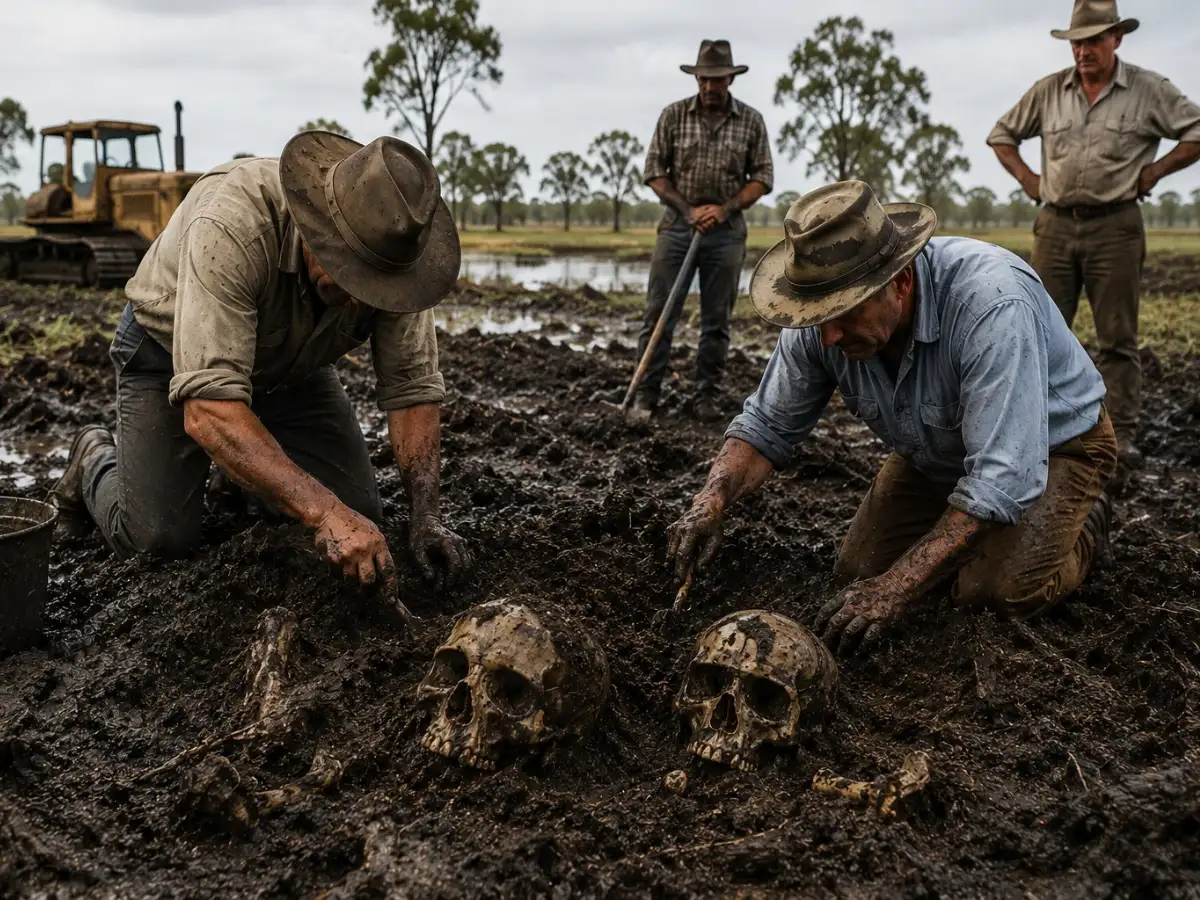
A lucky find made in rural Australia was what sparked one of the most enduring arguments over fossilized bones in the country. Human fossils with exceptionally strong skulls found at the Kow Swamp wetlands in Northern Victoria, adjacent to the research area in Queensland, where public interest was piqued subsequently, left scientists puzzled with a tricky query: are these early settlers merely modern man with extraordinary features, or did they retain elements of a more ancient human lineage?
These fossils appeared particularly remarkable at first. Fossils with skulls shaped rather broadly and thick, coupled with pronounced eyebrow ridges and wide faces, reminded early paleoanthropologists of characteristics that were once typical of archaic humans like Homo erectus. As per findings available through PubMed databases, the Kow Swamp fossils were pivotal in debates around the subject of “archaic features” within the field of Australian paleoanthropology.













