Get all your news in one place.
100's of premium titles.
One app.
Start reading
The Times of India
The Times of India
World
TOI World Desk

In the 1960s, a Swedish immigrant’s family began protecting a Canadian island from urban development; after 50 years, he donated it away forever

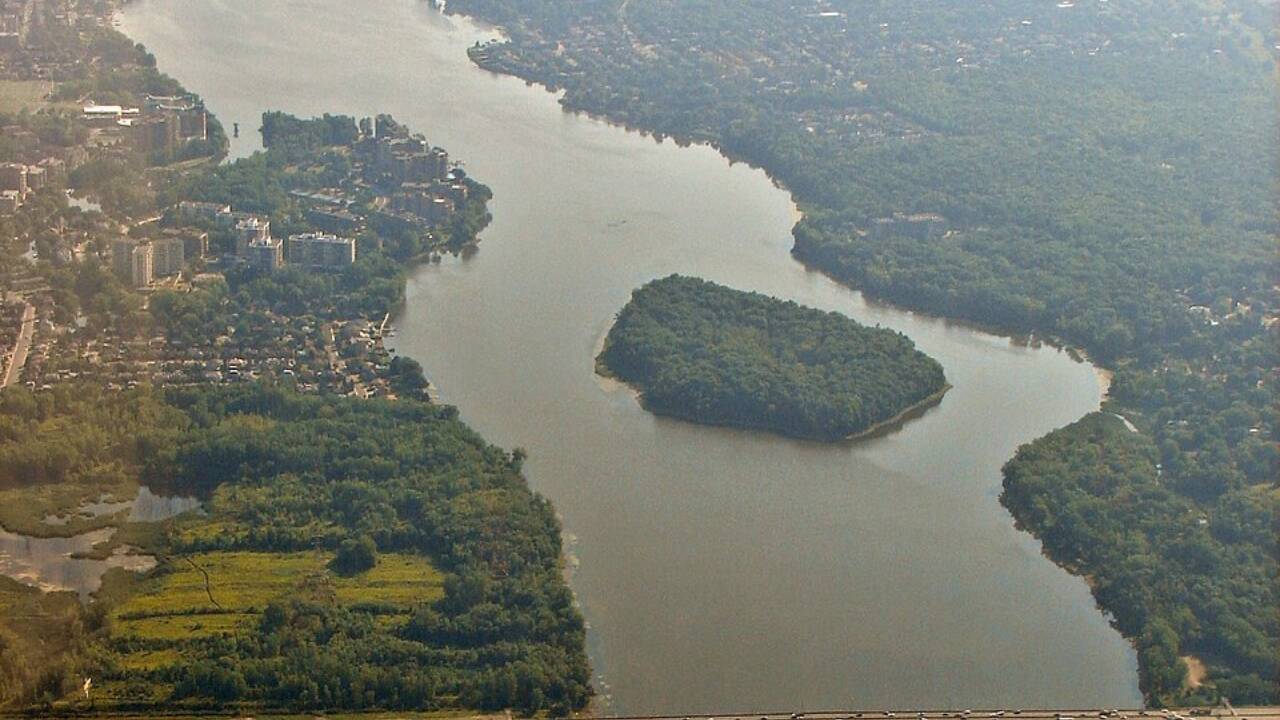
In the 1960s, Swedish immigrant Thor Vikström arrived in Quebec and built a family home in Laval overlooking Île Ronde, a small, undeveloped island nestled in the Rivière des Prairies between Montreal and Laval.Eventually, Vikström persuaded its owner to sell him the roughly three-hectare (7.4 acres) Île Ronde, which he envisioned not as a development opportunity but as a place worth preserving. For more than five decades, Vikström and his family maintained the island while Montreal and Laval developed and expanded around it. In December 2021, the 93-year-old donated his private property to the Nature Conservancy of Canada (NCC), thus ensuring that the island would remain protected for the foreseeable future.

Get breaking news anytime, anywhere. Download the TOI app now!

An island surrounded by a developed city

Montreal and Laval surround Île Ronde in a heavily urbanised part of Quebec, yet its shoreline remained mostly untouched and natural. According to the NCC, the island is a biodiversity hotspot that contains forest, wetland and shoreline habitat. Furthermore, the island’s banks provide basking areas for map turtles, while wood ducks and other waterfowl use the island’s habitat and surrounding waters.

Thor Vikström’s decision to retain the property became more significant as development intensified around it. An article by The Washington Post reported that developers had repeatedly approached him with offers for Île Ronde, proposing road developments, high-rise buildings and bridges. One account said offers began decades ago at about $500,000, vastly exceeding the $5,000 Vikström reportedly paid for the island in the late 1960s. He consistently refused to sell, maintaining that the island’s natural resources mattered more than its potential real estate value.

The Swedish family treated the island as a private nature sanctuary instead of a conventional vacation property. They had imposed simple rules to minimise disturbance, including avoiding fires and litter. NCC noted that Vikström’s attentive stewardship helped keep the island in a largely natural state while neighbouring shores were progressively developed.

A refuge for turtles and rare trees

The property’s conservation value is closely tied to its shoreline, as map turtles, which are federally listed as a species of special concern and considered vulnerable in Quebec, regularly use Île Ronde’s banks for basking. Undisturbed shorelines are increasingly scarce in a densely populated region like Montreal because development has already transformed many riverbanks. Research on northern map turtles shows why preserving natural riverbanks matters: the species depends on aquatic habitats and uses shoreline areas for basking and nesting. Conservation authorities have consequently identified habitat alteration and shoreline development as important concerns for the population in southern Quebec.

Additionally, the property contains shagbark hickory, a distinctive tree whose bark separates into long, loose strips. Regional conservation materials say the island’s habitat is especially valuable because mature examples of the tree are uncommon in southern Quebec. The landscape’s wetlands also provide habitat suitable for fish and amphibian reproduction. Therefore, Île Ronde is valuable not only because it contains ecologically significant trees and birds, but also because it retains a relatively undisturbed piece of river-edge habitat inside an increasingly urban landscape.

A private promise that turned into a permanent protection

As he reached his 90s, Vikström grew concerned about the long-term survival of the ecosystem. While his children and grandchildren expressed their willingness to maintain the property, the family concluded that transferring ownership to an established land trust would guarantee permanent protection. Consequently, in December 2021, Vikström officially deeded Île Ronde to the Nature Conservancy of Canada (NCC) to be managed as a permanent natural sanctuary. The acquisition marked the organisation's first protected territory on the Rivière des Prairies. Following Vikström’s passing in 2024, this legal framework ensures his private act of stewardship survives as an enduring environmental legacy.

Ultimately, Île Ronde stands as a green oasis in an increasingly paved landscape, proving that local conservation can triumph over urban sprawl. While the surrounding cities continue to expand, the Vikström family’s decades of quiet resistance ensure that this tiny patch of river wilderness will remain wild, quiet, and protected for generations to come.

Sign up to read this article
Read news from 100's of titles, curated specifically for you.
Already a member? Sign in here
Related Stories
Top stories on inkl right now
One subscription that gives you access to news from hundreds of sites
Already a member? Sign in here
Our Picks
Fourteen days free
Download the app
One app. One membership.
100+ trusted global sources.