Get all your news in one place.
100's of premium titles.
One app.
Start reading
The Times of India
The Times of India
World
TOI World Desk

In the 1950s, California oceanographer John D. Isaacs proposed towing an 8-billion-tonne Antarctic iceberg to San Diego, but the frozen reservoir never arrived

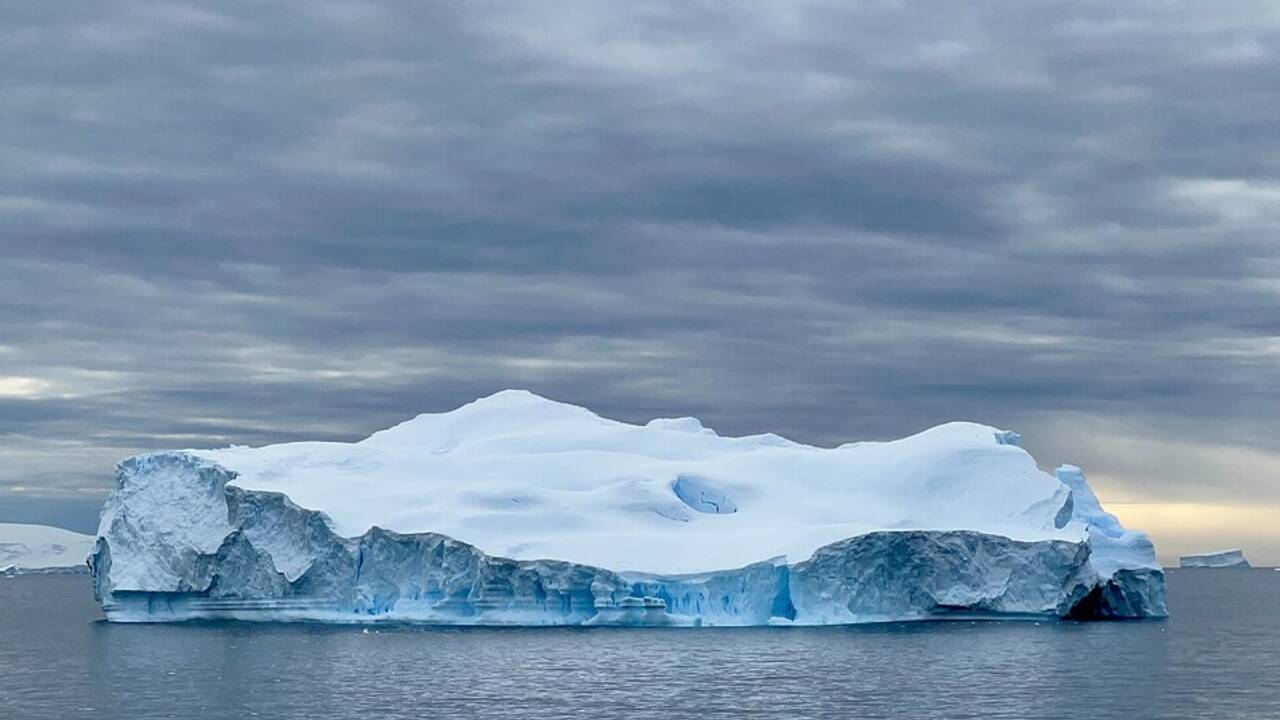
Long before desalination plants became common and climate change intensified concerns regarding water security, one California oceanographer proposed an idea that sounded more like science fiction than engineering. In the mid-1950s, Dr John D. Isaacs of the Scripps Institution of Oceanography suggested towing a colossal Antarctic iceberg across the Pacific Ocean to Southern California. Notably, his original proposal, formulated in his 1949 classes and expanded in the February 1956 issue of Science Digest, specifically suggested utilizing the Humboldt Current to deliver the Antarctic iceberg to the coast of Southern California to supply water to Los Angeles. According to NOAA’s historical bibliography , Icebergs for Use as Freshwater, Isaacs envisioned using a fleet of powerful tugboats to haul a tabular iceberg that weighed about 8 billion tonnes to San Diego, where the berg’s freshwater could help meet the requirements of a growing population. While the project never progressed beyond the conceptual stage, it sparked decades of scientific and engineering research into whether icebergs could one day be used as freshwater reservoirs during drought-heavy situations.

Get breaking news anytime, anywhere. Download the TOI app now!

A radical solution to California’s growing water requirement

According to NOAA bibliography and historical reviews published in the Annals of Glaciology , Isaacs believed Antarctica contained an immense reserve of freshwater locked inside naturally calved tabular icebergs. Rather than mining glaciers or constructing vast reservoirs, he proposed to capture one of these floating ice masses and to tow it northward using several oceangoing tugboats. As the NOAA report notes, earlier estimates suggested the voyage could take several months, and materials or protective covering might reduce melting during transport. It is worth noting that while Isaacs never formally published an engineering paper on the proposal, his calculations were widely discussed in scientific circles and popular science publications during the 1950s, thus inspiring researchers to analyse whether transporting freshwater in the form of an iceberg could be technically feasible.

The concept drew more attention during the 1970s as freshwater shortages became a growing global concern. According to the NOAA bibliography, researchers at the RAND Corporation produced detailed feasibility reports on transporting ice masses from Antarctica. Notably, the first International Conference on Iceberg Utilisation convened in Iowa in 1977, bringing together glaciologists, engineers and policymakers from around the world. The conference examined towing strategies, melting rates, engineering challenges and economic feasibility, marking the first coordinated international effort to evaluate iceberg harvesting as a potential water-crisis solution.

Why the proposal never made further progress

According to the Annals of Glaciology, scientists quickly identified major barriers to the proposal, including melting, wave erosion, towing forces, iceberg stability and operational costs. They explained that a single Antarctic iceberg large enough to justify transport would require several high-powered tugboats operating continuously for months while navigating unpredictable ocean conditions and storms. Furthermore, the researchers of the Annals of Glaciology recognised that waves erode bergs' edges much faster than simple atmospheric melting, meaning a significant proportion of the freshwater could disappear before reaching its destination.

Despite this, Isaacs’ idea fundamentally changed scientific thinking, as according to NOAA’s bibliography, the concept inspired decades of research into iceberg towing, drag measurements, insulation systems and freshwater economics. Notably, later studies investigated ice mass transport not only to Southern California but also to Saudi Arabia, Australia and other water-stressed regions. Advances in numerical modelling, satellite observations and polar engineering have since provided far more sophisticated tools for evaluating the concept than were available in the past.

While no Antarctic iceberg has ever been towed to California, Isaacs’ ambitious vision continues to influence modern research. Recent iceberg towing studies suggest that advances in marine engineering and climate science have transformed what was once dismissed as an eccentric proposal into a subject of serious study. Meanwhile, desalination, recycling and conservation efforts remain the dominant solutions for water scarcity; the notion of using Earth’s largest floating freshwater reservoirs has never completely disappeared.

Sign up to read this article
Read news from 100's of titles, curated specifically for you.
Already a member? Sign in here
Related Stories
Top stories on inkl right now
One subscription that gives you access to news from hundreds of sites
Already a member? Sign in here
Our Picks
Fourteen days free
Download the app
One app. One membership.
100+ trusted global sources.