Get all your news in one place.
100's of premium titles.
One app.
Start reading
The Times of India
The Times of India
World
TOI World Desk

In the 1950s and 60s, British scientists secretly released harmless bacteria in London’s Underground to study how biological agents could spread

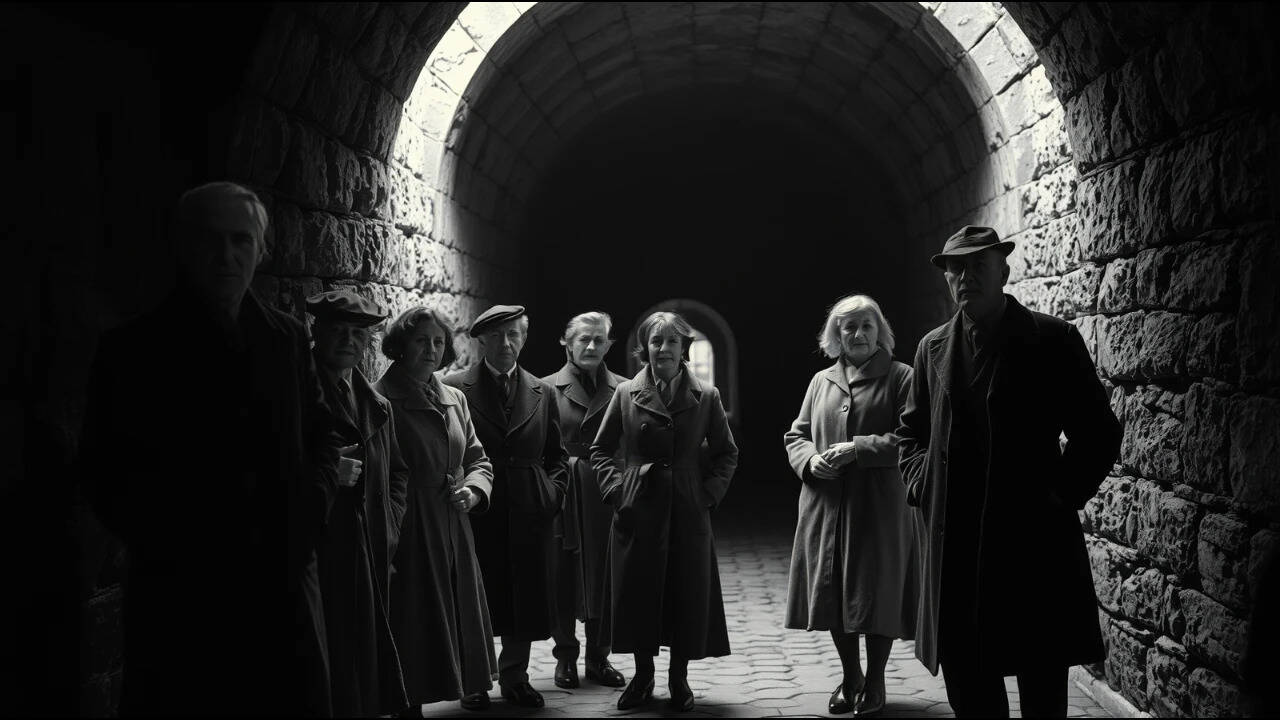
For several decades during the Cold War, British government scientists carried out a covert program testing how biological agents might spread through crowded public spaces, and the London Underground became one of their test sites. Researchers linked to the Microbiological Research Establishment at Porton Down dropped small containers of bacterial spores from moving trains and released organisms in station tunnels, then tracked how far the material travelled and how long it lingered in the air. None of the substances used was actual biological weapons. They were simulants, organisms chosen to behave in ways researchers believed a real biological agent might, allowing them to study dispersal patterns without exposing the public to anything considered genuinely lethal. Ordinary commuters riding those trains had no idea any of it was happening.

Get breaking news anytime, anywhere. Download the TOI app now!

Why Britain wanted to know how germs would move through the Underground

The Underground trials formed part of a much larger defensive research effort rather than an isolated experiment. According to a 2002 parliamentary answer, the British government confirmed that Porton Down had conducted numerous experiments studying the spread and transmission of bacterial spores since its Biology Department was first established in 1940, carried out across laboratories, open ranges, coastal waters and public sites. The stated aim behind the work was defensive, assessing how vulnerable British cities and infrastructure would be to a biological attack, and the government noted that the Underground trials specifically were carried out with the knowledge of government ministers, London Underground officials and the Biological Research Advisory Board at the time.

What actually happened on the Northern line during the trial

One of the most detailed accounts of an individual Underground test describes two government scientists boarding a Northern line train at Colliers Wood in south London. As the train travelled toward Tooting Broadway, they released a small container holding spores of a bacterium intended to mimic how anthrax might spread through an enclosed transport system. Researchers later ran the same kind of test again, this time dropping simulant material as a train moved between Colliers Wood and Tooting Broadway. When samples were collected from stations further along the line three days and then two weeks after the release, the spores were found to have travelled as far as Camden Town, roughly 10 miles from where they had first entered the tunnel network, illustrating just how effectively London's Underground system could carry airborne material across the city.

Why the exact dates of the Underground trials remain unsettled

The precise timing of these tests is not fully consistent across the available public record, and it is worth being upfront about that uncertainty rather than picking a single date to smooth the story over. The government's 2002 parliamentary answer states that Underground trials took place in 1963 and 1964. Newspaper investigations examining declassified files have described the Colliers Wood to Tooting Broadway release differently across separate reports, with one placing it in 1963 and another dating a similar release on the same stretch of line to 1956. What is consistent across every account is that the tests happened, that they involved simulant bacteria rather than lethal pathogens, and that the public travelling on those trains was never informed at the time.

How the Underground fit into wider tests on trains and government buildings

The Underground work was only one part of a broader pattern of covert dispersal testing carried out on British transport and infrastructure during the same era. In 1955, researchers released non-lethal organisms in tunnels beneath central London, with one experiment resulting in what officials at the time described internally as heavy contamination across three separate government departments, alongside further tests conducted in tunnels beneath Whitehall. Rail testing extended outside London as well, with organisms released in tunnels and inside train carriages along a line between Exeter and Salisbury during 1953 and 1954, allowing researchers to study how simulant material dispersed both around fellow passengers and throughout the physical structure of the trains themselves.

Why officials kept the Underground trials hidden from the public

At the time, the Underground experiments were given the deliberately vague internal label of ventilation trials, a description chosen specifically to obscure their real purpose from anyone outside the small circle of officials who had approved them. Records from the period describe an official who considered the research necessary for national defence while also acknowledging that public knowledge of it could prove politically embarrassing for the government. That combination of perceived necessity and deliberate secrecy defined much of Porton Down's wider testing program throughout this period, extending well beyond London to include coastal trials between 1961 and 1968 that reportedly exposed more than a million people along England's south coast to sprayed simulant organisms released from a research vessel offshore.

What later reviews concluded about the health risks involved

Following public disclosure of the programme, Porton Down commissioned outside scientists to review the safety of its historical tests, and both reviewers concluded the releases had not posed a broader public health risk to those exposed. One review did note a narrower caveat, suggesting that elderly people or those with existing respiratory conditions could potentially have faced serious harm had they inhaled a sufficient quantity of the material. Some families living near the areas where testing took place pushed back against the official assurances and called for a full public inquiry into the programme, though the government's position has remained that the historical record, including files on the Underground trials specifically, has been held publicly at the national archives for public review for a number of years.

Stay updated with the latest news on Times of India. Get all the trending City News, India News, Business News, and Sports News. For Entertainment News, TV News, and Lifestyle Tips, visit Etimes.
Sign up to read this article
Read news from 100's of titles, curated specifically for you.
Already a member? Sign in here
Related Stories
Top stories on inkl right now
One subscription that gives you access to news from hundreds of sites
Already a member? Sign in here
Our Picks
Fourteen days free
Download the app
One app. One membership.
100+ trusted global sources.