
Get all your news in one place.
100's of premium titles.
One app.
Start reading
The Times of India
The Times of India
World
TOI World Desk

In the 1930s, Louisiana imported nutria for fur farming; their population later exploded and damaged thousands of acres of coastal wetlands

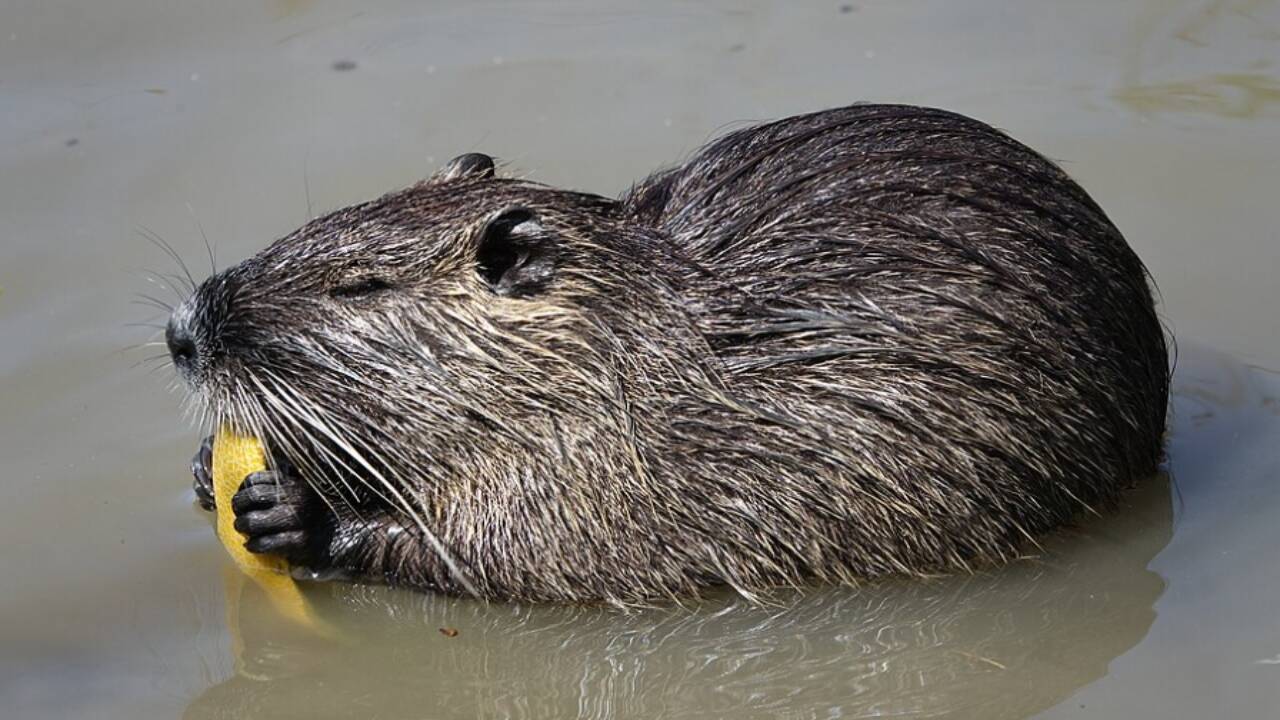
In the 1930s, fur farmers brought a large South American rodent called nutria into Louisiana, hoping to build a new industry around its soft, valuable pelt. Decades later, the same animal is blamed for chewing through thousands of acres of the state's coastal wetlands every single year.

Get breaking news anytime, anywhere. Download the TOI app now!

Nutria, scientifically known as Myocastor coypus, are large semi-aquatic rodents native to Argentina, Brazil, Bolivia, Chile, Paraguay, and Uruguay. According to the Louisiana Department of Wildlife and Fisheries , nutria were imported into the state during the 1930s for the fur-farming industry and were later released into Louisiana's coastal marshes, either intentionally or by accident. According to the Historic New Orleans Collection , fur traders introduced the species to Louisiana during that decade, and nutria became part of the state's broader trapping industry alongside mink and muskrat. A 1959 report from the state's own Wildlife and Fisheries Commission, the agency now known as the Department of Wildlife and Fisheries, described nutria at the time as a voracious and prolific vegetarian but argued the species still formed an important part of the state's economy through its fur value.

Why nutria are more harmful to wetlands than native species

Nutria are herbivores that feed heavily on wetland plants, and it is specifically how they eat that makes them so destructive. According to reporting from nola.com, nutria go straight for a plant's roots rather than its leaves, unlike Louisiana's native muskrat, which typically chews leaves off a plant and lets it recover afterwards. Michael Massimi, invasive species coordinator for the Barataria-Terrebonne National Estuary Program, told nola.com that eating the roots makes it far harder for a plant to recover, unlike muskrat damage, which usually allows regrowth. Once vegetation dies and leaves the marsh soil bare, that exposed organic soil becomes vulnerable to erosion from ordinary tidal action. If the area cannot revegetate quickly enough, it can convert permanently into open water as the tide continues to strip away soil and lower the elevation of what used to be solid marsh.

The scale of the damage, acre by acre

According to the Louisiana Department of Wildlife and Fisheries, nutria-related wetland damage stood at approximately 16,424 acres statewide as of 2018, though the figure has fluctuated considerably from year to year depending on nutria population levels and the intensity of control efforts. Before any organised control programme existed, damage estimates ran as high as 102,585 acres, documented across at least 11 project sites in the Barataria-Terrebonne basins alone, and officials considered even that figure conservative since aerial surveys can only reliably detect the most severe, most obvious damage. The problem briefly eased on its own when European demand for nutria fur kept trapping economically worthwhile through the 1970s, with harvests peaking in 1976 at 1.8 million pelts worth more than $15 million to trappers that year. That market collapsed hard during the 1980s, driven by a glut of farmed European fur, a broader shift in fashion trends away from long-haired wild fur, and the rise of animal rights activism. Once the financial incentive to trap nutria evaporated, their population rebounded quickly, and wetland damage rose with it.

How Louisiana is fighting back today

Louisiana established the Coastwide Nutria Control Program in 2002 specifically to address the crisis, aiming to remove up to 400,000 nutria each season from coastal areas of the state. The programme pays hunters and trappers a bounty for each nutria tail turned in, and the Department of Wildlife and Fisheries reports that damage has decreased by more than 90 per cent since the programme began, compared to the levels recorded before it started. Louisiana was once a leading producer of mink and muskrat fur pelts in North America, and coastal wetlands remain a resource the state continues to protect. The broader lesson from Louisiana's nutria experience is a familiar one in conservation circles: that an animal introduced for a narrow economic purpose can end up reshaping an entire ecosystem long after the original industry that brought it there has faded.

Sign up to read this article
Read news from 100's of titles, curated specifically for you.
Already a member? Sign in here
Related Stories
Top stories on inkl right now
One subscription that gives you access to news from hundreds of sites
Already a member? Sign in here
Our Picks
Fourteen days free
Download the app
One app. One membership.
100+ trusted global sources.


