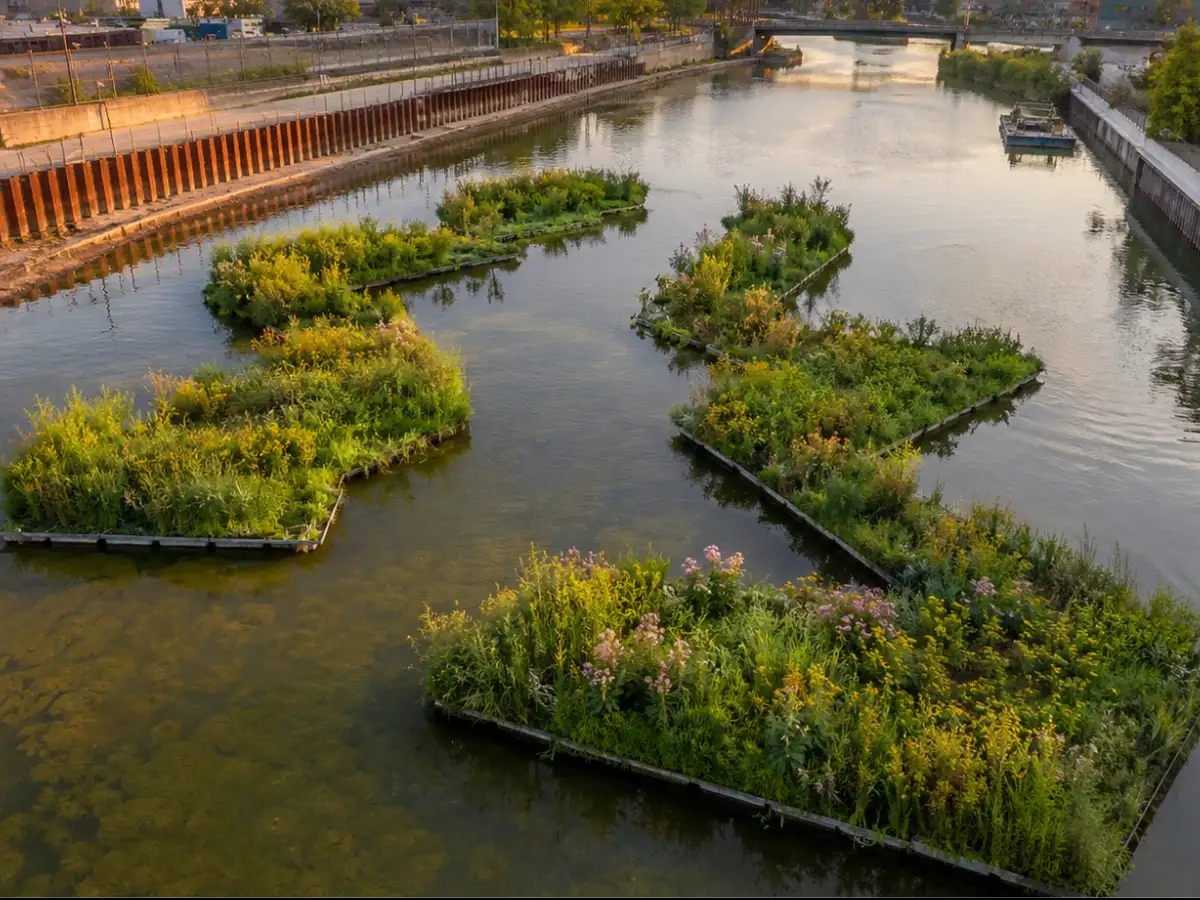
Today, five tiny islands, each about the size of a backyard swimming pool, are floating on Bubbly Creek, part of a floating wetland project built by the nonprofit Urban Rivers and Shedd Aquarium. The Chicago River got its nickname more than 100 years ago, according to local history, when nearby stockyards dumped so much animal waste into the water that gas bubbles formed on the surface. Now those same waters play host to a different experiment. Constructed floating wetlands are designed to filter out pollution and provide a home for wildlife. However, a 2023 study titled in Science of the Total Environment found that even small floating wetland installations like this one can measurably improve water quality over several years. This kind of project matters because cities everywhere face the same problem: decades of industrial waste and stormwater runoff in urban waterways. Floating wetlands are a modular, low-cost solution that doesn't require tearing down existing infrastructure.
What is a floating wetland?