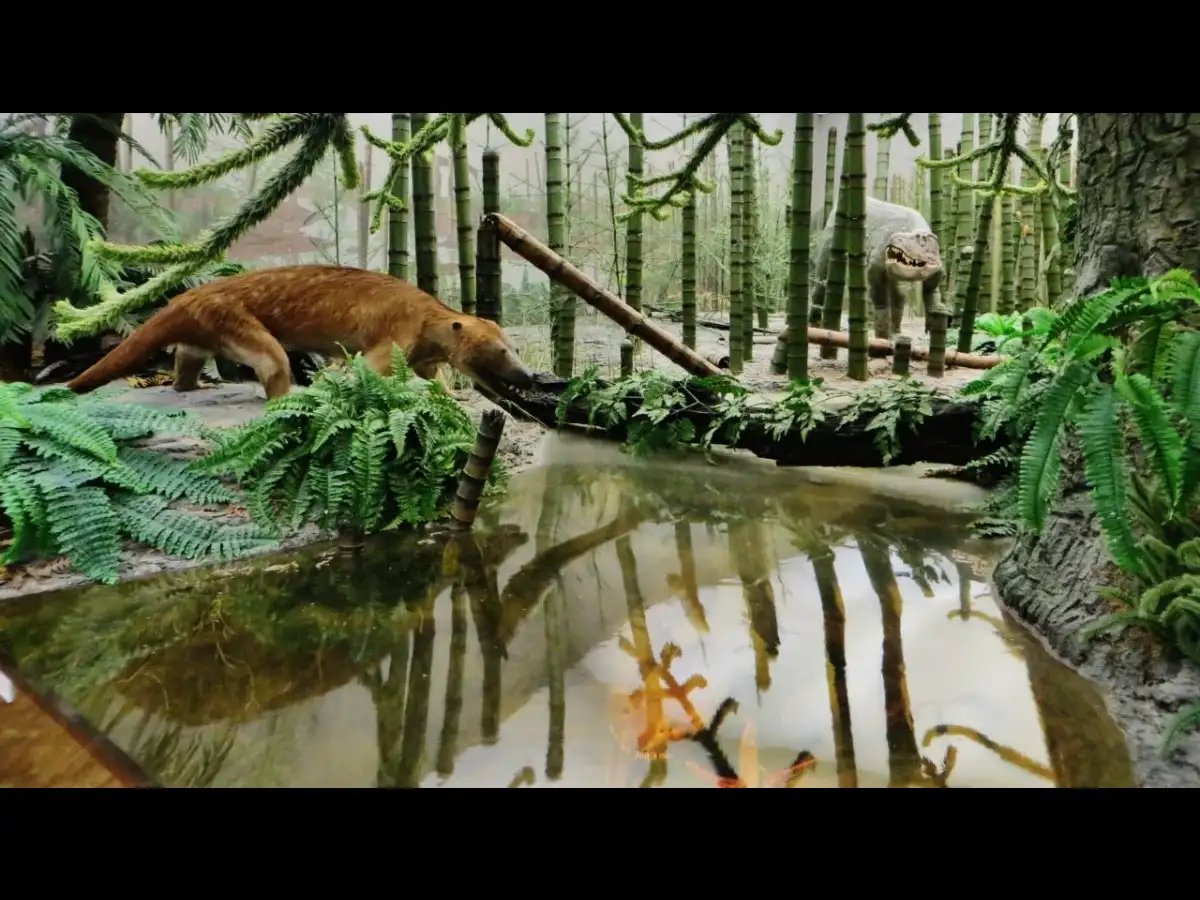
A fossil from Argentina is giving scientists a new look at one of the biggest unanswered questions in mammalian evolution. The animal, Chiniquodon theotonicus , lived about 236 million years ago, long before the first true mammals appeared. For years, cynodonts like it were generally thought to have laid eggs. Now, researchers say a rare growth mark preserved inside a fossil bone suggests something very different: this ancient animal may have given birth to live young. The finding could push the origin of live birth in the mammalian lineage back by as much as 95 million years.
The study was published in Frontiers in Mammal Science: Gaetano LC, Miceli Baro MÁ, Cerda IA and Mancuso AC (2026), “Early origin of viviparity in the mammalian lineage.”