
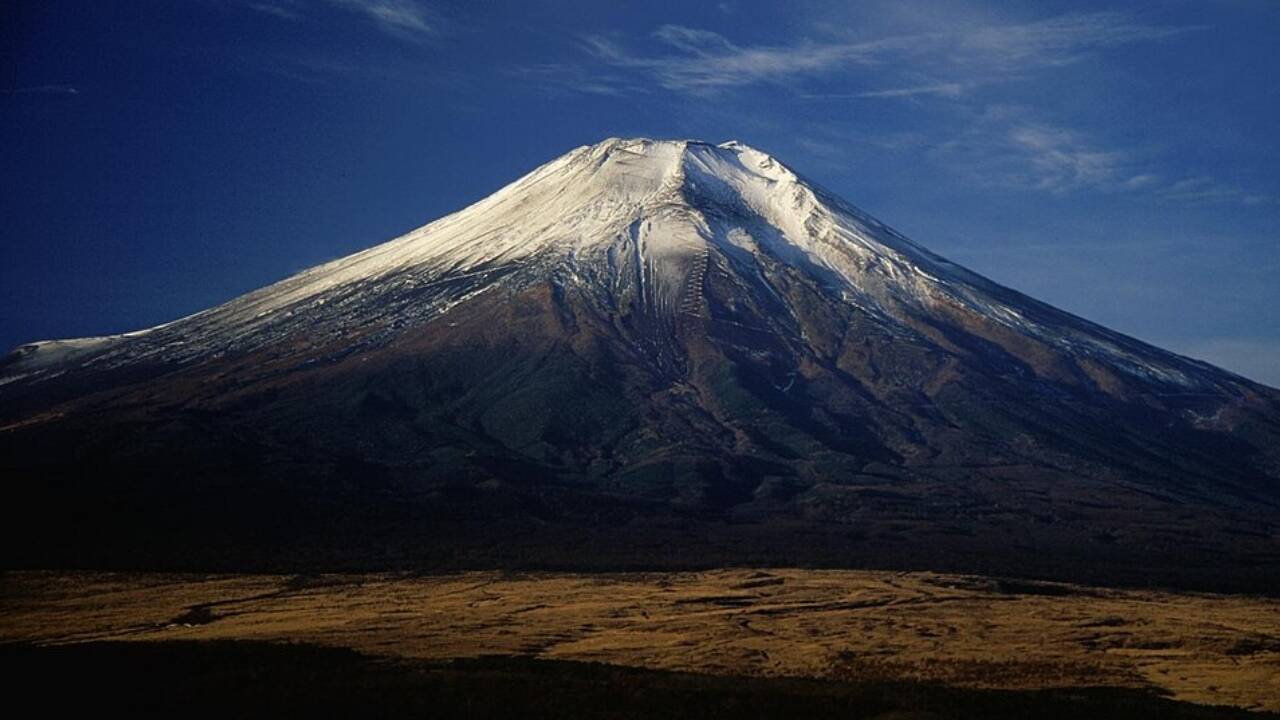
A narrow lava tunnel hidden beneath the forests at the northern foot of Japan’s Mount Fuji tells a story that spans geology, religion and cultural memory. Known as the Funatsu Tainai Lava Tree Mold, the cave was formed after one of the volcano’s eruptions in 937 CE, when molten lava flowed across forests, engulfing fallen trees before cooling into rock. According to UNESCO and Japan’s Ministry of Land, Infrastructure, Transport and Tourism (MLIT) , the trees burned away inside the hardened lava, leaving behind long tubular cavities whose ribbed walls resemble the contours of a human womb. Centuries later, pilgrims came to regard these natural wombs as sacred, believing that passing through the cave symbolised spiritual rebirth before ascending Japan’s highest mountain. The cave is now a part of the UNESCO-listed Mount Fuji World Heritage Site, highlighting how a geological phenomenon evolved into an enduring place of faith.
Get breaking news anytime, anywhere. Download the TOI app now!













