Get all your news in one place.
100's of premium titles.
One app.
Start reading
The Economic Times
The Economic Times
Team Global

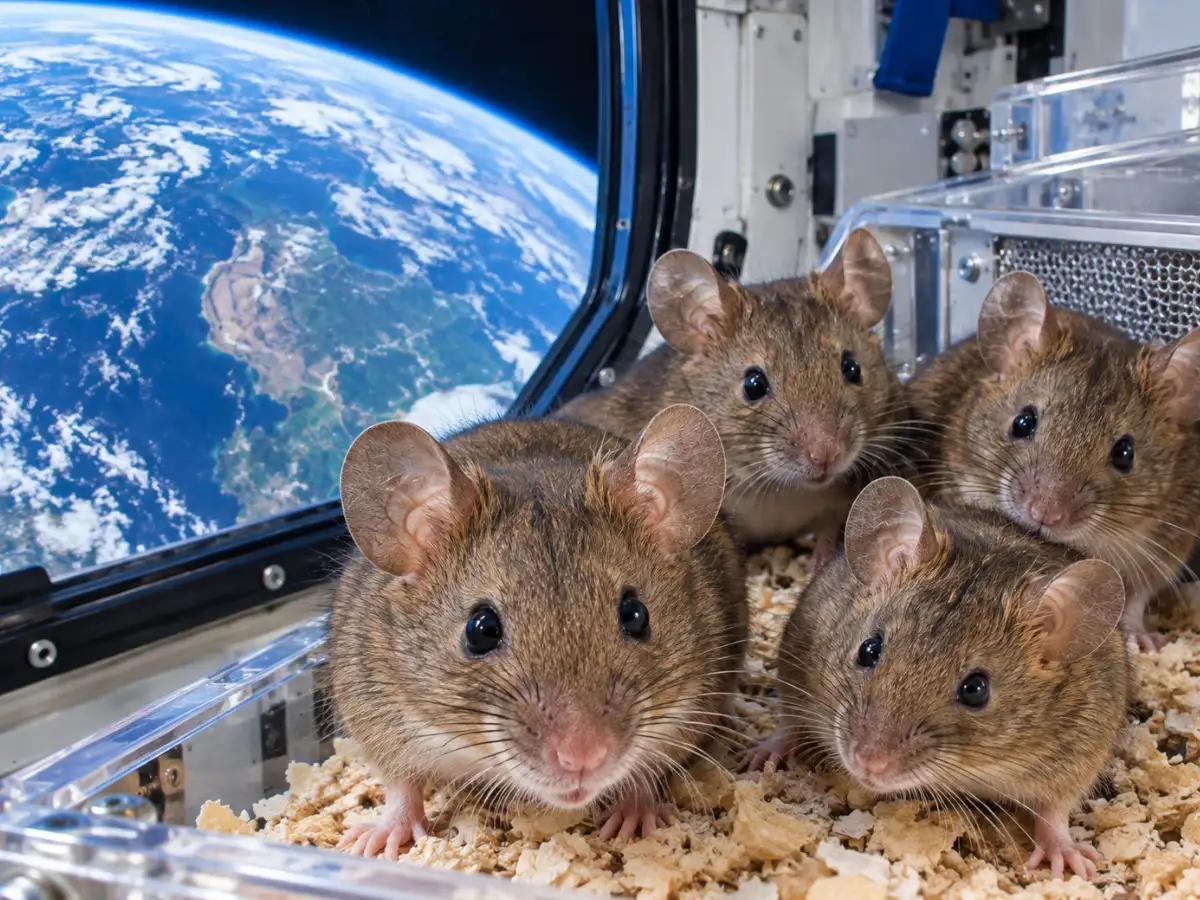
In 2025, China sent four mice to Tiangong for about two weeks; one female later produced three litters of 9, 10, and 9 pups after returning to Earth

A mouse spent two weeks in space, then returned to Earth and produced more pups than the average lab mouse on the ground. That's one reason researchers are interested in how the experiment informs future space biology studies. According to a report, ‘China's "space mouse" Births Third Healthy Litter,’ published by the Chinese Academy of Sciences in 2026, four mice were launched aboard the Shenzhou-21 spacecraft on October 31, 2025, as part of China's first experiment with small mammals in space. The animals lived in a specially adapted habitat for two weeks in zero gravity before returning to Earth on November 14. The experiment drew widespread attention.

Back on Earth, the female mouse became pregnant within weeks.

Shortly after returning, one of the female mice became pregnant and gave birth to her first litter of nine pups on December 10, according to China Media Group and the Chinese Academy of Sciences' Institute of Zoology. She also had two more litters of ten and nine pups, the same sources reported. According to the Chinese Academy of Sciences, each litter was larger than the five-to-seven-pup average commonly cited for laboratory mice, though litter sizes in outbred strains can range more broadly. Researchers at the Institute of Zoology, Chinese Academy of Sciences, noted the result as part of the mission's findings.

Three litters, three distinct personalities

The first litter of pups, born soon after the mother returned from the mission, was less adventurous and stayed close to the walls of its enclosure. The second generation had more exploratory personalities. The third litter, however, was described by the scientists as the most confident and well-adjusted. Researchers will now observe how the animals develop and whether they can produce healthy offspring of their own. Because all three litters were conceived and born on Earth after the mother's return, the personality differences likely reflect environmental and birth-order factors rather than an inherited effect of spaceflight.

Sign up to read this article
Read news from 100's of titles, curated specifically for you.
Already a member? Sign in here
Related Stories
Top stories on inkl right now
One subscription that gives you access to news from hundreds of sites
Already a member? Sign in here
Our Picks
Fourteen days free
Download the app
One app. One membership.
100+ trusted global sources.