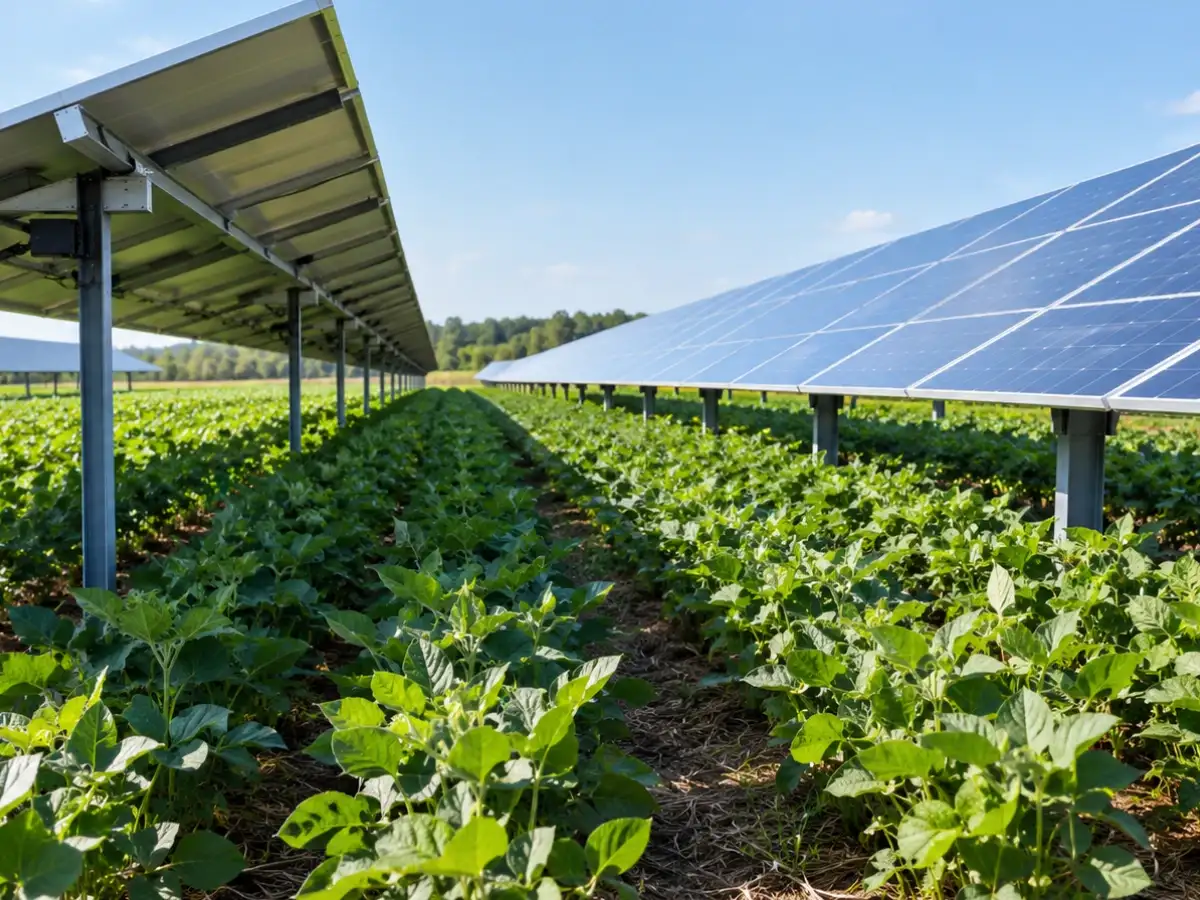
For farmers, solar panels have long represented both an opportunity and a dilemma. They can provide a new source of clean electricity and farm income, but conventional solar installations can also take productive agricultural land out of cultivation. Agrivoltaics attempts to solve that problem by placing photovoltaic panels above or alongside crops, allowing the same land to produce food and energy.
According to Rutgers University, the first 2024 soybean harvest at its southern New Jersey agrivoltaics site found no statistically significant yield difference between the single-panel and double-panel solar designs. Both systems, however, recorded higher yields than the unpanelled control plots. The experiment suggests solar panels and soybean crops can share the same land without necessarily reducing output. Rutgers cautioned, however, that the results were preliminary, based on a single growing season, and required further testing.