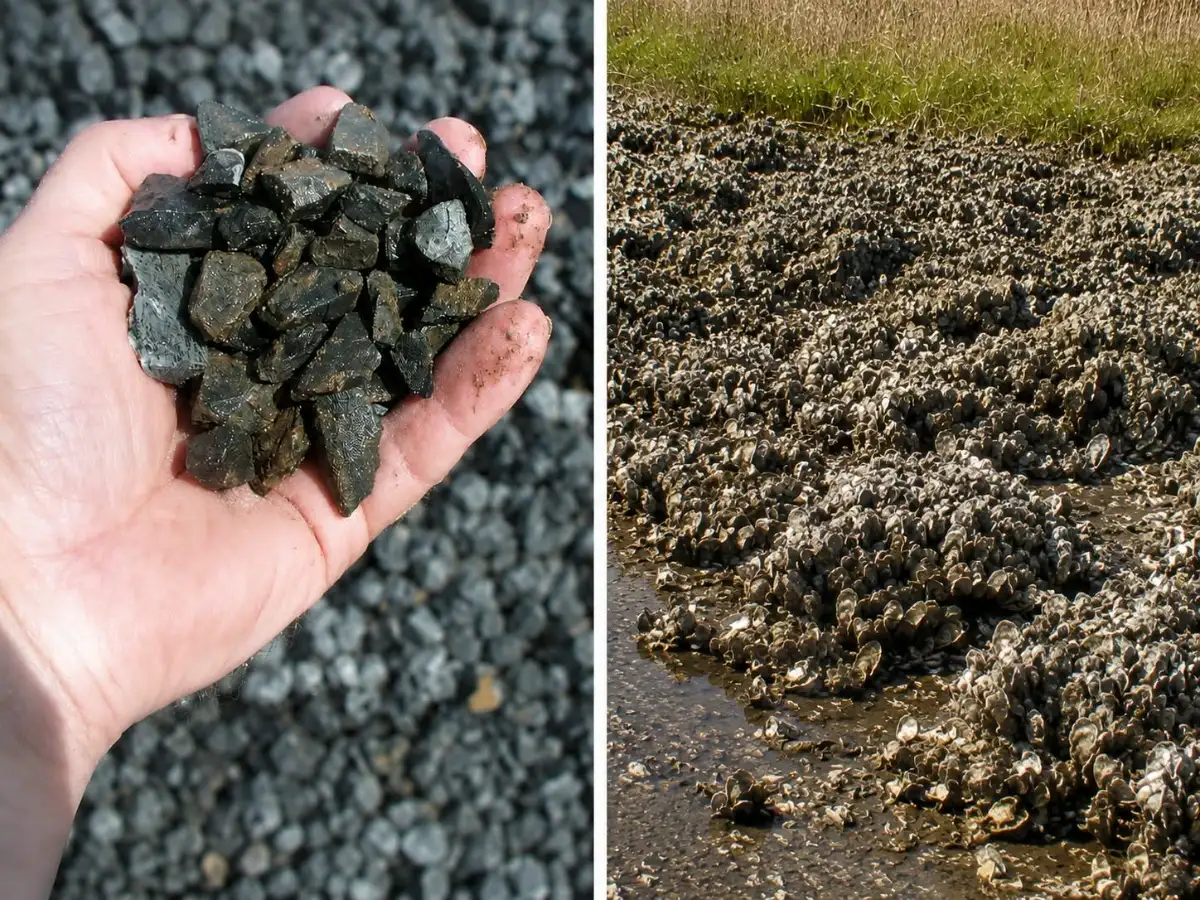
Using a slab of rubble from a demolished parking lot as a nursery for oyster babies sounds fascinating and it's precisely what's happening in the Chesapeake Bay. According to a 2024 peer-reviewed study titled “Recycled Concrete Aggregate for Oyster Aquaculture,” published in the journal Waste, the scientists from Morgan State University and the University of Delaware spent several months checking if the crushed and recycled concrete, the kind taken from roads and parking lots, could be safely substituted for the rare oyster shells to form the habitats in the Chesapeake Bay.
The answer was: yes, it did work, and the building debris that the scientists used did not leak any dangerous chemicals. If you thought that there is no room for "concrete" and "marine ecosystem" in a single sentence, you are not wrong to feel a little skeptical about it. Oyster reefs are not simply heaps of shells lying under the sea; they are alive and contribute to the ecological function of the estuaries. But the restoration of oyster reefs faces an evident obstacle: there must be some place for the oysters to attach to and grow on. Traditionally, natural oyster shells are used for this purpose, and they can sometimes be hard to come by. This is where recycled material might be useful, provided that it passes the ecological safety test.