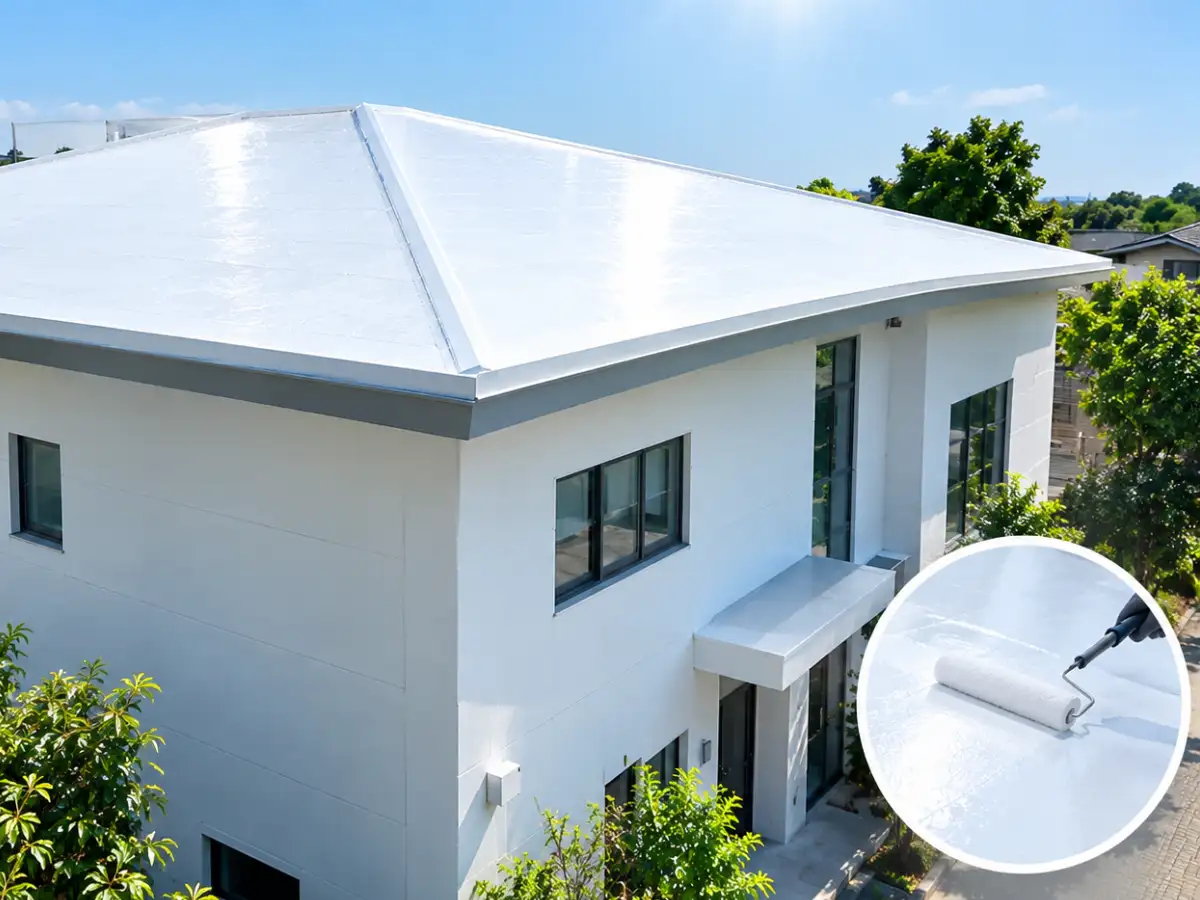
In 2024, a group of engineers in Singapore tested a solution to a problem many urban areas face: hot roadways and buildings that trap and store heat throughout the afternoon. The team created a coating to reflect sunlight and reduce heat absorption, and tested it on the roof, walls, and roadways of a single industrial block. They then left the neighboring industrial block alone as the control group and took temperature readings after two months. According to Nanyang Technological University (NTU), Singapore , afternoon air temperature at the experimental site was up to 2 degrees C cooler than at the uncoated counterpart. Pedestrians on the ground also felt up to 1.5 degrees C cooler.
Why the researchers tested a full city block
According to NTU, most previous studies on cool paint coatings have been simulation-based or tested in scaled-down models. Real-world environments are more complicated than any computer model or scaled replica can capture, so the NTU team wanted to test their theory on actual buildings. They found four buildings that formed a sort of two-building "street canyon" in an industrial park on the west side of Singapore. The team applied their specially treated reflective paint to the roofs, walls, and road surface of one canyon, leaving the other alone as a control. For two months, sensors measured temperature, humidity, radiant energy, and convection in the air between the buildings every day.
As a result, during the hottest time of day around 4 p.m., the painted side of the canyon emitted up to 30 percent less heat from its buildings than the unpainted side. Roofs with the paint reflected 50 percent more sunlight and retained about 40 percent less heat during peak hours than standard building materials. That should mean less heat is released back into the air later on, so the cooling effect lasts longer than just a few minutes after sunset.