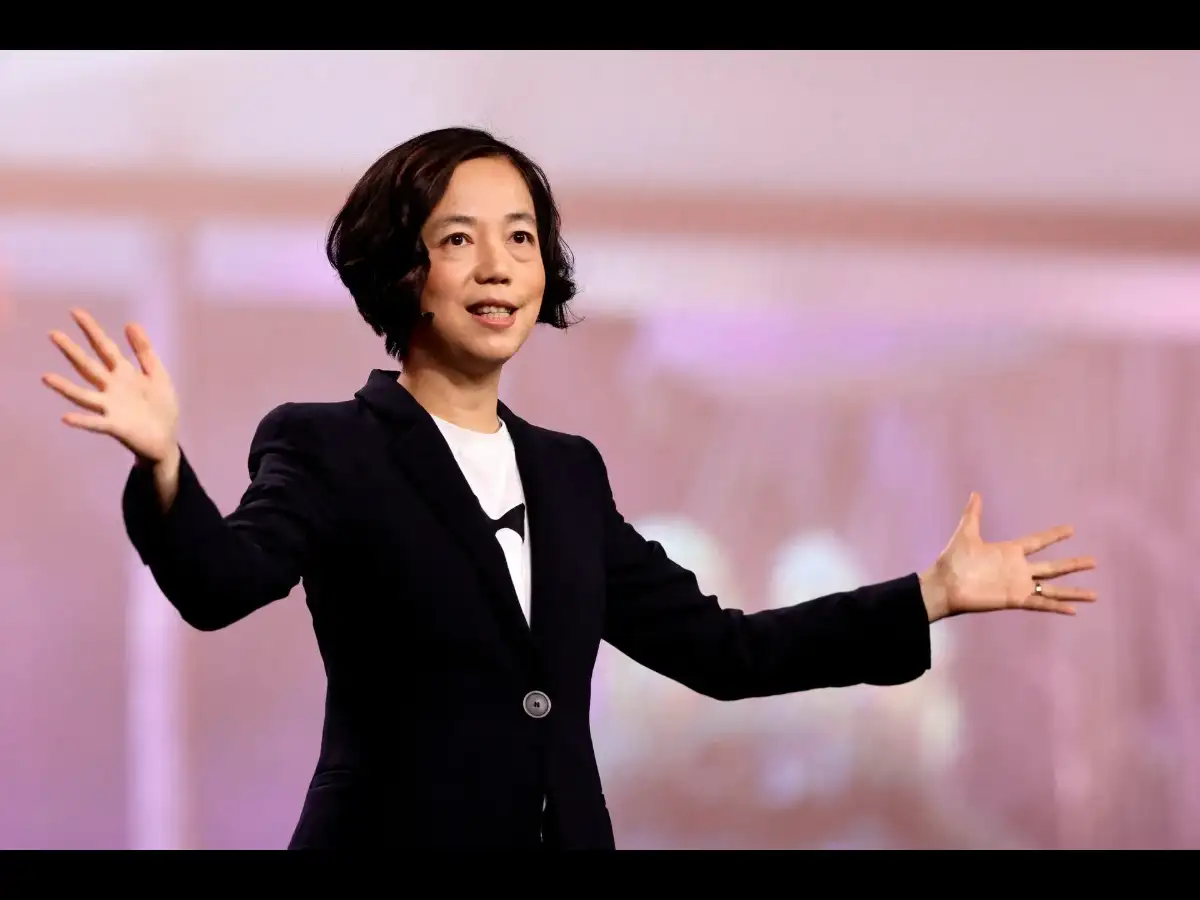
Chip maker Advanced Micro Devices-AMD has announced that it has acquired World Labs, an artificial intelligence company founded by Prominent computer scientist and researcher Fei-Fei Li sometimes referred to as "The Godmother of AI."
The deal is valued at approximately $8.2 billion and will make Li, a Stanford computer science professor, chief scientist at AMD. Li founded World Labs to develop what she calls "spatial intelligence" -- technology that can simulate 3D environments from images, video and text. The company researches so-called world models, which work differently than the popular AI systems that generate text and images.

Instead of creating new content, world models learn how the physical world actually works so they can simulate and predict what happens. The research has applications in robotics and virtual simulations.
AMD this month became the latest equity to reach a $1 trillion valuation due to the massive investment boom over artificial intelligence. Even with the latest surge, AMD's valuation significantly trails rival chip company Nvidia, considered the pace-setter in artificial intelligence.
Fei-Fei Li Raises $1 billion
Earlier in February, 2026, Fei-Fei Li's World Labs raised $1 billion in a funding round as the startup accelerates its efforts to advance "spatial intelligence." The startup said that the investors included chip companies AMD, Nvidia, software firm Autodesk, Emerson Collective, Fidelity Management & Research Company and Sea.
Spatial intelligence, a novel approach to AI, refers to the ability to reason how the 3D world works — rather than relying on 2D data like flat images or text. World Labs' foundational models can perceive, generate and interact with the 3D world.
Launch of World Labs
Widely known as the "godmother of AI," Li raised $230 million in September 2024 to launch World Labs. Li has said spatial intelligence models could be put to use in the future for augmented and virtual reality or robotics.
World Labs, along with Google DeepMind and other startups, is working on so-called "world models" that can process visual data from the physical environment around them to develop advanced reasoning.
Li made her name in the AI field by developing a large-scale image dataset called ImageNet that helped usher in a generation of computer vision technologies that could identify objects reliably for the first time.
The book, “The World I See,” also portrays her formative years that abruptly shifted from China to New Jersey and follows her through academia, Silicon Valley and the halls of Congress as growing commercialization of AI technology brought public attention and a backlash.