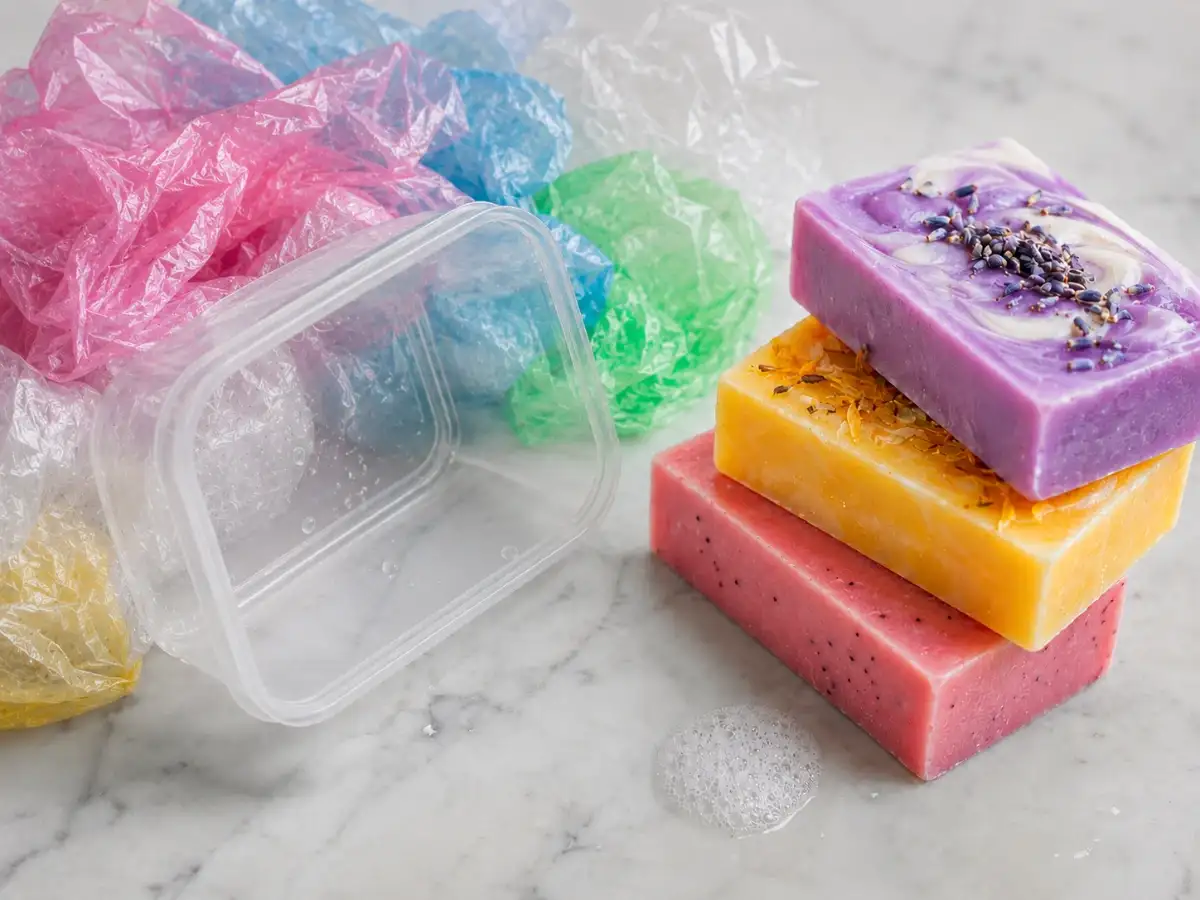
Most plastic bags, food containers, and milk jugs you see around you eventually end up in landfills. However, researchers from Virginia Tech have found a creative way to turn this everyday waste into something useful: soap. According to the study, ‘Chemical upcycling of polyethylene, polypropylene, and mixtures to high-value surfactants,’ published in the journal Science in August 2023, common plastics could be broken down and rebuilt into surfactants, the compounds that make soap and detergent work. The economic potential of this process makes sense as well since polyethylene sells at $1,150 per metric ton, while the surfactants it can become are worth up to $3,550 a ton.
A fireplace evening sparked the idea
The breakthrough didn’t start in a lab; it began by a fireplace when Guoliang "Greg" Liu, an associate professor of chemistry at Virginia Tech, saw smoke rising from burning wood one winter night. He started thinking about how wood is made of long chains of natural polymers, and how plastic is built the same way, except that it is made of carbon-based molecules instead. That thought led him somewhere unexpected. Polyethylene is one of the most popular plastics on the planet and happens to have a chemical structure very similar to that of fatty acids, which are used to build soap. Both have long chains of carbon molecules, but the only difference lies in the presence of an additional molecular structure at one end of the fatty acid molecule. Liu began to wonder if there was a way to bridge that gap.
Breaking down plastic, step by step
Turning that idea into a working method took years of trial and error. Liu worked with his two PhD students, Zhen Xu and Eric Munyaneza, to develop a reactor that heats plastic from the bottom while keeping the upper side cool. This technique, known as temperature-gradient thermolysis, breaks long polyethylene chains into shorter ones, stopping the breakdown at the wax stage before the chains degrade all the way into gaseous molecules. The researchers then oxidized this wax through the use of a manganese oxide-based catalyst to produce fatty acids, which are molecules similar to the ones used to make soap. A few more chemical steps convert those fatty acids into surfactants, which can be shaped into bars of soap or used in liquid detergent. The process is not limited to milk jugs and grocery bags. In fact, according to the research, this technology can also work with polypropylene, which is also a common plastic that can be found in various everyday products such as yogurt containers and bottle caps. These two types of plastics do not have to be separated prior to being processed in the reactor.