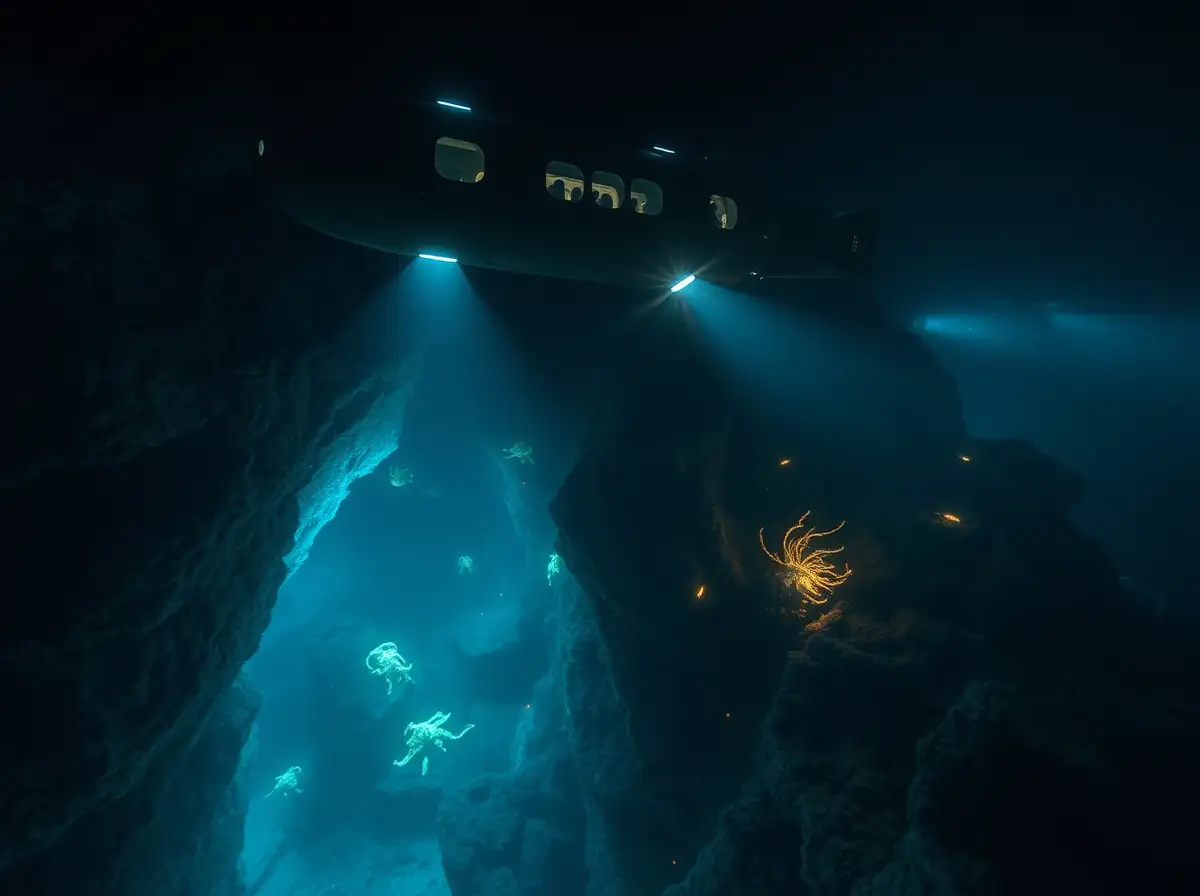
A remarkable scientific investigation beneath the Atlantic Ocean is providing new clues about one of Earth’s most unusual deep-sea ecosystems. In 2023, researchers aboard the JOIDES Resolution drilled approximately 4,160 feet (1,268 meters) into the seafloor at Atlantis Massif, a giant underwater mountain near the Mid-Atlantic Ridge. Years later, analysis of fluids recovered from beneath the ocean floor revealed a chemical signature indicating that some of the water had previously experienced temperatures approaching 572°F (300°C). The discovery is important because it may help explain how fluids reach the remarkable Lost City hydrothermal field, where alkaline vents have sustained a distinctive ecosystem for hundreds of thousands of years. Rather than simply revealing hot water underground, the research provides evidence of a hidden geological pathway connecting deep subsurface processes with life at the seafloor.
The story begins with Atlantis Massif, an enormous geological formation rising several kilometers above the surrounding ocean floor. Unlike conventional volcanic hydrothermal systems, the region exposes mantle rocks that have been altered through interaction with seawater. The Lost City hydrothermal field sits on the massif and is famous for tall white carbonate chimneys that release warm, highly alkaline fluids.