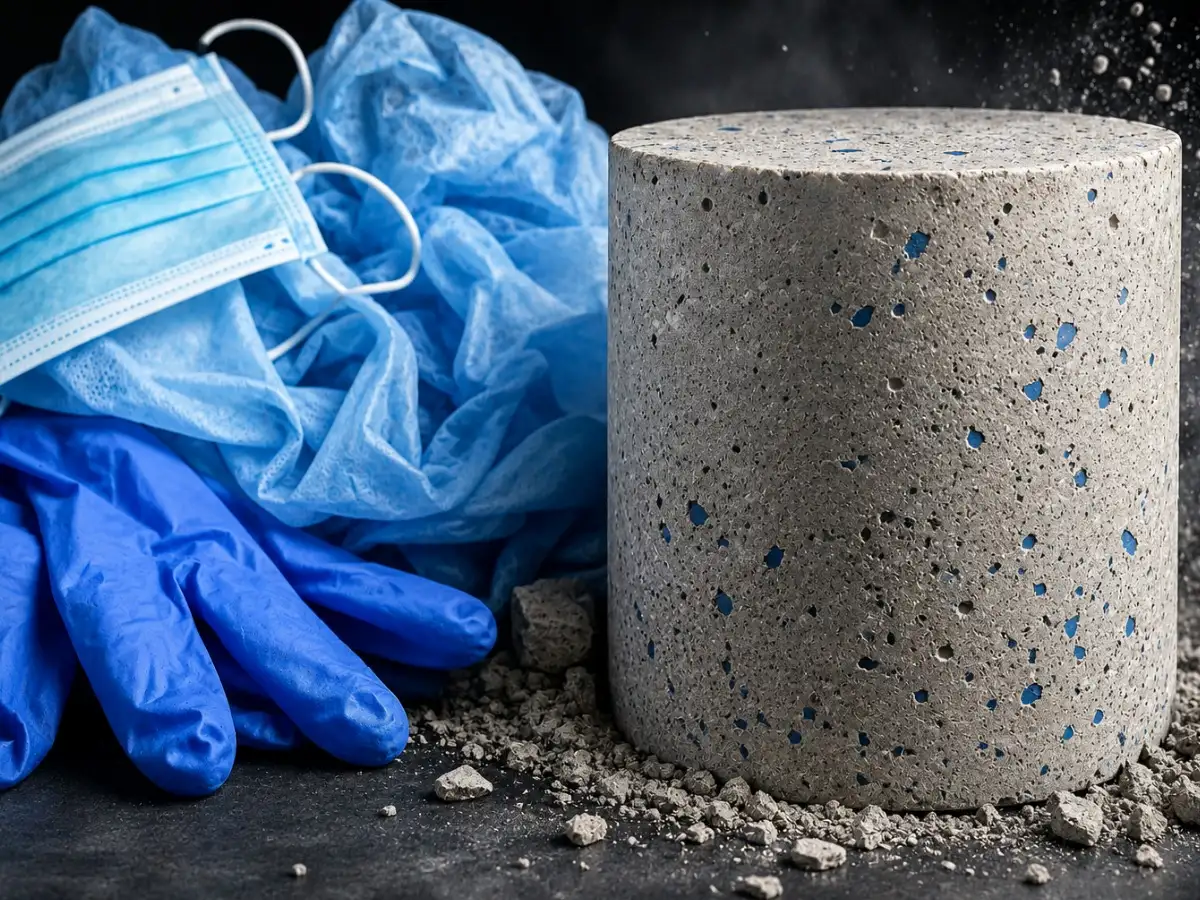
Every day since the pandemic began, an estimated 54,000 tonnes of PPE waste has been generated worldwide, according to RMIT University's research announcement. Almost all of it went straight to a landfill. In 2022, RMIT shredded masks, rubber gloves and isolation gowns and mixed them into concrete. Gloves increased strength by 22 percent, and masks increased compressive strength by up to 17 percent, according to that same announcement.
For years, disposable masks were everywhere you looked. You might see someone wearing a mask for a shift at work, on a subway ride, or during a quick grocery run, only to throw the disposable mask away right after. Billions of people had this habit, and the pile of trash grew much bigger than most of us ever realized. Around the world, people produced about 54,000 tonnes of PPE waste every day during the pandemic, and roughly 129 billion disposable face masks were used and discarded each month worldwide. Most of that trash ended up in a landfill, because disposable masks, gloves, and gowns are made of plastics that do not break down easily and cannot go in a normal recycling bin. A huge gap existed between the amount of PPE waste and the limited ways to reuse it. This prompted the RMIT School of Engineering team to look for a use for the PPE waste.