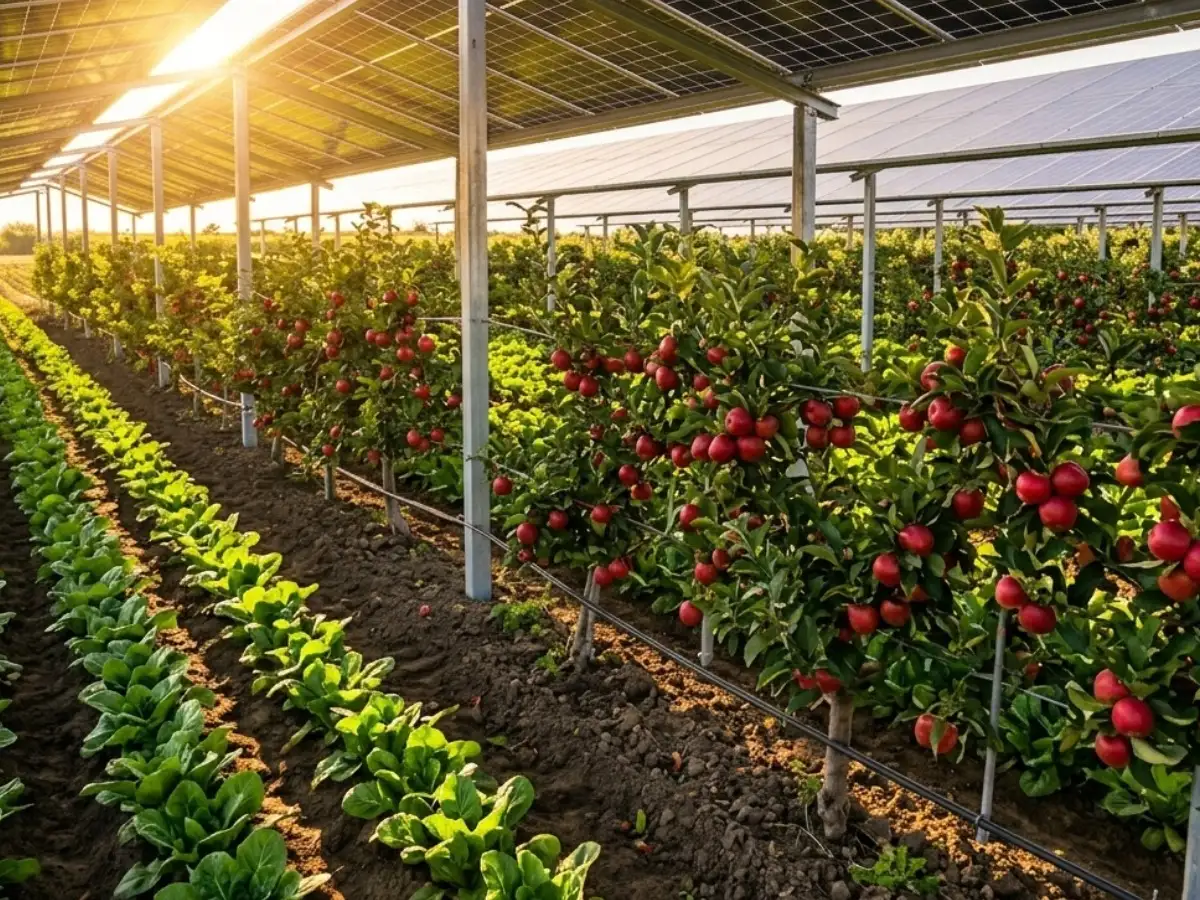
In 2022, sunburn threatened 13% of the apple harvest in a French field trial. That same season, researchers tested whether panels installed above a separate set of trees, shading them during the sun's most intense hours, could reduce that damage. A field study shared in the AgriVoltaics Conference Proceedings showed that the shaded trees had just 2% sunburned fruit, compared to 13% on the unshaded control trees grown right alongside them.
Why apple sunburn is a bigger deal than it sounds
This skin damage lowers the apple's visual quality and market grade, which can reduce its value in the fresh produce market. The fruit may no longer be suitable for fresh-market sale. As a result, growers often sell the fruit cheaply, usually for juice. That matters because apples take a full season to grow. Early-season and prolonged heat waves are becoming more problematic for growers in apple-growing regions.
How the French researchers tackled the problem
Shading the trees is straightforward in principle. Doing so without harming the tree is another matter. Scientists at Sun'Agri used an agrivoltaic system in the study. The system placed solar panels above the tree canopy. These panels adjust their positions throughout the day. The panels rotate to block the strongest sun and then turn away to let light through.